

Can You Use Odor Neutralizers on Leather Gear?
Table of Contents
- Why Leather Gear Holds Odor (and Why It's Different)
- Is Odor Neutralizer Safe for Leather? What to Check First
- How to Remove Odor from Leather in 5 Steps
- How to Get Sweat Smell Out of Leather Gear
- How to Clean Leather Sports Gear Without Ruining It
- When Treatment Fails: Warning Signs and Next Steps
- Frequently Asked Questions
Last Updated: October 13, 2026
Why Leather Gear Holds Odor (and Why It's Different)
Leather is skin, and skin absorbs. That is the short answer to why your son's lacrosse gloves smell like a locker room three days after practice. Leather's porous surface soaks up sweat, oils, and moisture, and once bacteria settle into those fibers, a simple wipe-down won't reach them.
Most gear care advice treats leather like fabric. It isn't. Fabric releases odor when you wash it. Leather holds onto it.
So the answer to "can you use odor neutralizers on leather gear" is yes, with conditions. The product has to be leather-safe, you have to spot test first, and you have to apply it sparingly. Skip any of those three, and you risk stiff patches, discoloration, or a finish that cracks.
Here's what most guides miss: the problem usually isn't the spray. It's the buildup underneath it.
Is Odor Neutralizer Safe for Leather? What to Check First
A leather-safe odor neutralizer is one that neutralizes odor molecules instead of masking them, contains no alcohol or bleach, and lists its ingredients clearly. If a spray hides the smell under heavy fragrance, it's covering up the problem, not solving it.
Before you buy anything, read the label for these red flags:
- Alcohol dries leather and speeds up cracking
- Bleach or ammonia strips dyes and finishes
- Heavy synthetic fragrance masks odor and can trigger allergies
- No ingredient list means you're guessing
Look for water-based formulas that break down odor at the source. Zero Smell's Z-Spray uses a bio-based formula with microorganisms that destroy the chemical bonds causing the smell, and it's unscented, non-toxic, and alcohol-free.

Match the Product Type to the Leather, Not the Other Way Around
Most people pick a neutralizer first and then hope it works on their gear. Flip that order. The leather's finish decides which product class is even eligible, and the four common product types behave very differently on it.
| Product Type | How It Works | Best For | Risk on Leather |
|---|---|---|---|
| Leather-formulated cleaner/neutralizer | Water-based surfactants lift soil and odor residue | Finished and semi-aniline leather | Low when applied sparingly |
| General-purpose neutralizer | Encapsulates or oxidizes odor molecules | Finished/coated leather, synthetic blends | Medium, surfactants can dull topcoat with repeat use |
| Enzyme product | Bacteria or enzymes digest odor-causing organic matter | Linings, padding, fabric panels | High on bare leather, enzymes need moisture to work and can stain aniline |
| Household remedies (vinegar, baking soda, vodka) | Acid, adsorption, or solvent action | Emergency spot use only | High, acetic acid and alcohol both attack finishes |
A common pattern is that the product that works best on a car seat is the worst choice for a pair of aniline gloves, because the car seat has a protective topcoat the gloves don't. That topcoat is the whole ballgame.
Leather Types and Finishes: What Each One Tolerates
Not all leather behaves the same way. A finished, coated leather (common on furniture and vehicle interiors) handles light misting well. Aniline or unfinished leather (common on high-end gloves and bags) soaks up liquid fast and stains easily. Porous surfaces demand a more cautious approach, as the delicate nature of cleaning vintage leather requires specialized techniques to avoid permanent discoloration.
| Leather Type | Common On | Liquid Tolerance | Best Approach |
|---|---|---|---|
| Finished/coated | Furniture, car seats | High | Light mist, wipe dry |
| Semi-aniline | Vests, bags | Medium | Damp cloth, never soak |
| Aniline/unfinished | Gloves, premium gear | Low | Dry methods first |
| Suede/nubuck | Boots, some gloves | Very low | Pouch or dry treatment |
Suede and nubuck are the riskiest. Water spots them permanently. For those, use a hanging odor pouch instead of a spray.
Spot Test Before You Spray
Test on a hidden area first. Spray once on the inside seam or the back of a strap, wait an hour, and check for darkening, stiffness, or color bleed. If the leather looks unchanged, you're clear to treat the visible surface.
This one step prevents most leather damage we hear about.
How to Remove Odor from Leather in 5 Steps
Removing odor from leather takes about 20 minutes of hands-on work plus drying time. Follow this order, and don't rush the dry phase.
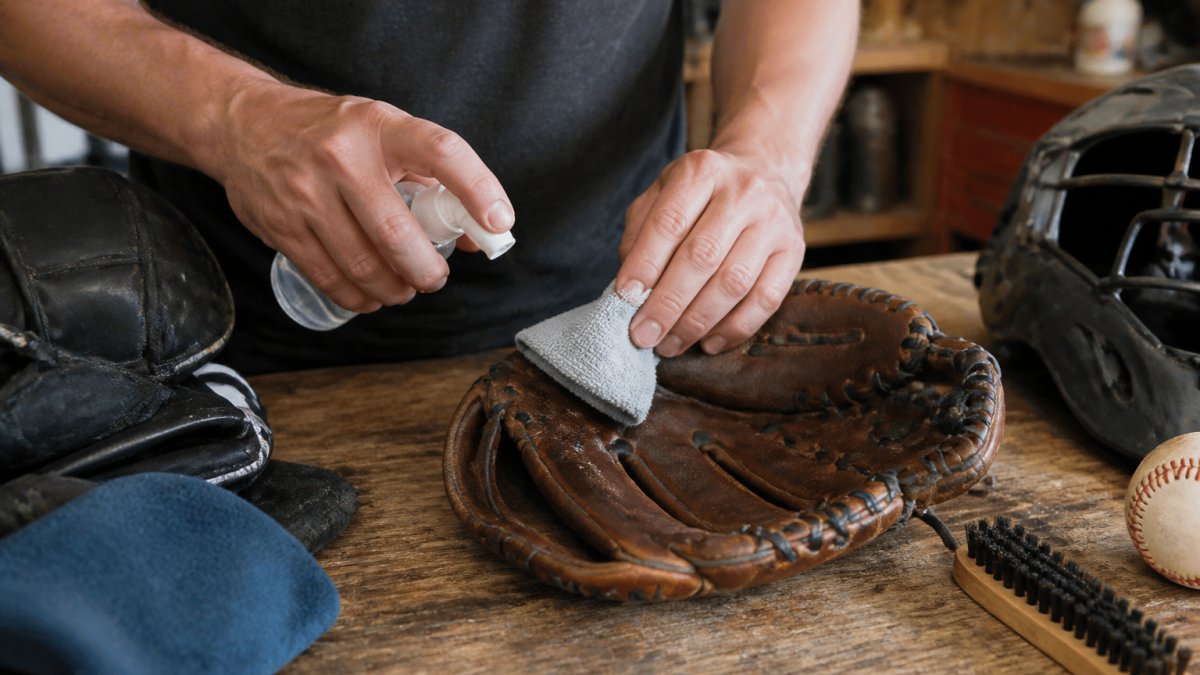
What You'll Need
- A leather-safe odor neutralizer (spray or pouch)
- Two microfiber cloths, one damp, one dry
- A soft bristle brush
- A well-ventilated space
Step 1: Diagnose the odor source. Sweat, mildew, smoke, and absorbed smells each need a slightly different approach. Mildew means moisture is trapped somewhere.
Step 2: Clean first. Wipe the surface with a barely damp cloth. Dirt and salt block the neutralizer from reaching the fibers.
Step 3: Apply sparingly. Mist two or three times from about six inches away. Never soak the leather.
Step 4: Let it work. Give the formula time to break down odor molecules. Don't wipe it off immediately.
Step 5: Air-dry away from heat. Direct sun and radiators stiffen leather. A shaded, ventilated spot works best.
How to Get Sweat Smell Out of Leather Gear
Sweat smell comes from bacteria feeding on trapped moisture, so killing the smell means breaking that cycle. Wiping the outside won't help if the lining is still damp.
Diagnose Where the Odor Actually Lives
Before you treat anything, figure out which of three zones is holding the smell. Each one needs a different approach, and treating the wrong zone is why gear smells fresh for a day and then reverts.
- Surface zone (outer leather). Smell is faint up close and fades after a wipe. This is the easy case, a light mist of leather-safe neutralizer handles it.
- Lining and seam zone. Smell is strong when you open the item but weak on the outside. Bacteria are colonizing the fabric lining and the stitching channels where sweat wicks and stalls. Sprays rarely reach here; a hanging pouch or targeted lining treatment does.
- Padding and foam zone. Smell persists after every treatment and gets worse in humidity. Foam holds moisture for days and is the hardest to fix. This is the zone where repeated wetting does more harm than good, and where replacement padding is sometimes the honest answer.
A quick field test: press a clean dry cloth into the deepest part of the item, hold it there for ten seconds, then smell the cloth. If the cloth smells worse than the surface, the odor is in the lining or padding, not the leather.
Treat by Gear Type
- Gloves. The inside is the problem. Turn them inside out if the construction allows, treat the lining with a pouch or a lightly misted cloth, and let them dry open, not folded.
- Boots and cleats. Pull the insoles every single time. Insoles are foam and hold odor longer than the leather. Treat insoles separately and dry them flat.
- Vests and chest protectors. Focus on straps, padding, and the liner. The outer shell is usually the cleanest part.
- Helmets. The shell is the least of your worries, the foam and pad inserts are. Remove them if the helmet allows, and keep sprays off the shell's finish.
- Saddles and tack. Leather this thick tolerates less moisture than people assume. Dry methods and conditioning beat spraying.
Habits That Actually Break the Cycle
- Air gear out within an hour of use, not overnight in a bag
- Rotate two pairs of gloves so each fully dries
- Store gear in a ventilated spot, never a closed plastic bin
- Treat linings and straps, not just the visible surface
- Never store gear damp, one humid night in a bag can undo a week of treatment
For gear that lives in a bag, a hanging odor pouch absorbs smells between uses. Zero Smell's Z-Pouch uses minerals and active microorganisms to keep small spaces fresh, and it comes with a case you can hang inside a gear bag or locker.

How to Clean Leather Sports Gear Without Ruining It
Cleaning leather sports gear safely means matching your method to the item, not treating everything the same. A helmet needs different handling than a vest.
Footwear, Gloves, and Helmets
Boots and cleats collect the worst odor because they trap sweat against leather for hours. Pull insoles out, treat them separately, and let both dry fully before the next wear. Gloves need the inside treated, since that's where the bacteria live. Helmets are mostly foam and padding, so focus there and keep sprays off the shell's finish.
Vests, Bags, and Vehicle Interiors
Tactical vests, equipment bags, and car seats are usually finished leather or heavy synthetic blends, which tolerate light misting. Spray a cloth first, then wipe, rather than spraying directly. This keeps overspray off vinyl, fabric, and stitching.
Zero Smell's Z-Spray is designed for exactly this range: tactical vests, helmets, gloves, footwear, vehicle interiors, sport pads, gym lockers, and pet gear. One bottle covers the whole rotation.
When Treatment Fails: Warning Signs and Next Steps
If odor keeps returning after two or three treatments, stop and reassess. Repeated wetting does more damage than the smell itself.
Watch for these warning signs:
- White powdery residue means mildew is growing inside the leather
- Stiff, brittle patches mean the leather has dried out and needs conditioning
- Dark spots that spread mean moisture is trapped in the lining
- A chemical smell that won't fade means you've over-applied
For mildew, move the gear to a dry, ventilated space and treat with a dry method like a pouch before spraying again. For stiff patches, condition the leather after it fully dries. If the smell survives all of that, the lining may need professional replacement.
Leather gear odor is a moisture problem wearing a smell costume, and treating it right takes the same care you'd give any leather item you want to keep for years. Zero Smell built its bio-based formula for exactly this job: it neutralizes odor at the source instead of masking it, stays unscented and non-toxic for homes with kids and pets, and works on footwear, gloves, vests, bags, and vehicle interiors with just a few sprays.
Frequently Asked Questions
Can you spray odor neutralizer directly on leather?
You can spray directly on finished leather, but apply sparingly and from about 6 to 8 inches away. Test a hidden area first. Unfinished or suede-like leather absorbs liquid quickly and may stain, so spray onto a cloth and wipe instead. Let the gear air-dry away from direct heat. A bio-based formula like Z-Spray 16.9oz/500ml ($19.98) is unscented, non-toxic, and alcohol-free, which makes it a safer choice for leather gear than fragranced or solvent-heavy sprays.
How do you remove sweat smell from leather gear?
Sweat odor comes from bacteria feeding on salts and oils left on the leather surface and lining. Start by wiping the surface with a damp cloth, then apply an odor neutralizer that breaks down the odor source instead of masking it. Let the gear air-dry completely. For footwear and gloves, stuff with newspaper to absorb moisture inside. Repeat after heavy use. Treating gear within a day of use prevents bacteria from settling deeper into stitching and padding.
Will odor eliminator damage or discolor leather?
Most damage comes from harsh solvents, bleach, or alcohol-heavy formulas, not from bio-based neutralizers. Check the label before you spray. Avoid anything with petroleum distillates or strong fragrance oils. Always spot test on a hidden area like the inside of a strap or the tongue of a boot. Wait 24 hours to confirm no darkening, cracking, or color transfer. Water-based, unscented formulas are the safest starting point for finished leather.
When should you use a leather cleaner or conditioner instead of an odor neutralizer?
Use a leather cleaner when you can see dirt, salt stains, or sticky residue on the surface. Use a conditioner when the leather feels dry, stiff, or starts to crack. Use an odor neutralizer when the gear looks clean but still smells. Often you need two steps: clean first, then neutralize. Applying neutralizer over dirt traps odor underneath. Clean, let dry, then treat with a leather-safe odor neutralizer, and condition if the leather feels dry afterward.