

Effective Odor Removal for Car Seats: 2026 Guide
Table of Contents
- Why Car Seat Odors Linger and What Actually Works
- How to Remove Car Interior Odors Without Chemicals
- How to Deep Clean Cloth Car Seats Step by Step
- Best Car Seat Odor Eliminator for Sweat and Gym Gear
- Leather vs. Cloth Seats: Material-Specific Safety Warnings
- Professional Detailing vs. DIY: Cost and Results Compared
- Preventing Future Odors in Your Car Interior
- Frequently Asked Questions
Last Updated: September 13, 2026
Why Car Seat Odors Linger and What Actually Works
Effective odor removal for car seats starts with chemistry, not dirt: odor molecules bind to porous materials like foam and fabric until something breaks those bonds.
That is why air fresheners fail: they add fragrance on top of a problem deep inside the cushion. Zero Smell's bio-based formula takes the opposite approach, beneficial microorganisms that break down the smell's source instead of covering it.
Coffee, sweat, pet dander, and spilled milk feed the same cycle: moisture settles into the foam, bacteria and mildew take hold, and warm days reactivate the stench. Ventilation cannot reach the bottom layer.
The good news: most odors respond to a predictable sequence of absorb, break down, extract, and dry. Skip any step and the smell returns within weeks.
How to Remove Car Interior Odors Without Chemicals
You can remove car interior odors without chemicals by combining absorbent powders, mild acids, and mechanical extraction. The EPA's guidance on safer cleaning products points to baking soda and white vinegar as two of the most effective household staples for neutralizing odors without harsh ingredients.
Here is the sequence that works:
- Vacuum every seam, crevice, and track to lift loose debris
- Sprinkle baking soda over the fabric and let it sit for several hours
- Vacuum the powder up completely
- Apply a diluted vinegar solution to the surface
- Blot, then extract with a wet vacuum
- Dry the seat fully before anyone sits in it
Each step does a different job: vacuuming removes the food source, baking soda absorbs moisture and acidic compounds, vinegar shifts pH so bacteria stop multiplying, and extraction pulls residue out instead of pushing it deeper.
Baking Soda and Vinegar Solutions for Stubborn Smells
For stubborn smells, use baking soda and vinegar as a two-stage treatment, not mixed together, combined they fizz and neutralize each other, but applied separately they work in sequence.
Dust baking soda generously across the seat, work it into the seams with a soft brush, leave it at least four hours (ideally overnight), then vacuum.
Next, mix one part white vinegar with one part water, mist lightly without soaking, let it sit five to ten minutes, then blot with a clean microfiber cloth.
Repeat for odors built up over months. A musty smell surviving two rounds usually means trapped moisture in the foam, which calls for extraction, not more surface treatment.
How to Deep Clean Cloth Car Seats Step by Step
Deep cleaning cloth car seats takes about 90 minutes per seat and follows six steps: vacuum, pre-treat, agitate, extract, neutralize, and dry. Skipping drying is the most common reason odors return.
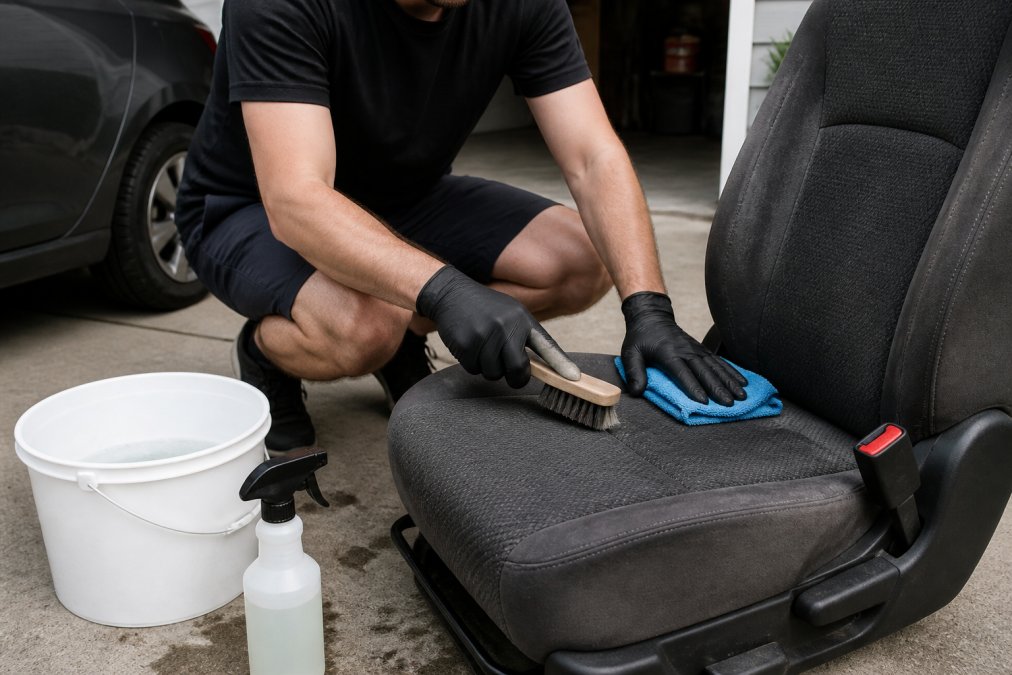
Step 1: Vacuum thoroughly. Use a crevice tool along the seams and a brush attachment across the surface. Remove floor mats first.
Step 2: Pre-treat stains. Apply a small amount of diluted vinegar or a dedicated fabric cleaner to visible stains and let it sit for five minutes.
Step 3: Agitate the fabric. Work a soft-bristled brush in small circles to lift odor molecules and residue to the surface.
Step 4: Extract. Use a wet vacuum or upholstery attachment to pull solution and debris from the fibers in slow, overlapping passes.
Step 5: Neutralize. Once the seat is dry to the touch, apply a bio-based odor eliminator that breaks down remaining odor compounds at the source rather than masking them.
Step 6: Dry completely. This is where most DIY jobs fail. See the next section for the specifics.
A foaming spray works well for step two on heavily soiled seats because the foam clings to vertical surfaces instead of running off.
Drying Techniques That Prevent Mildew and Musty Odors
Mildew grows when moisture stays in the foam more than a day, the mechanism behind a musty car interior, and it is preventable (the EPA).
Park in direct sun with windows cracked an inch so heat drives moisture from the foam, then run the A/C on recirculate for ten minutes with windows up to pull remaining humidity from the cabin.
A box fan aimed at the seat or a portable dehumidifier on the floor works faster than passive drying.
Never close up a car with damp seats. If you must drive before they dry, keep windows down and airflow running, trapped moisture turns a clean seat musty within 48 hours.
Best Car Seat Odor Eliminator for Sweat and Gym Gear
The best car seat odor eliminator for sweat is a bio-based product that breaks down the compounds bacteria produce, not a fragrance that covers them. Sweat odor comes from bacteria digesting proteins in perspiration and persists as long as they have a food source. Eliminating these biological residues is essential for maintaining a pristine interior, just as addressing physical imperfections like repairing car seat damage restores the overall integrity of your vehicle upholstery.
Most sprays fall short: a fragrance-based refresher layers scent over an active problem and the two combine into something worse. A true odor eliminator attacks the chemical bonds creating the smell.
Zero Smell's Z-Spray 16.9oz uses a proprietary blend of beneficial microorganisms to break down odor molecules on contact. It contains no harsh chemicals and is safe around kids and pets, which matters when the source is a teenager's lacrosse bag in the back seat.

For recurring sweat odors, the larger Z-Spray 33.8oz covers more surface area per bottle. A few sprays on the seat, floor mats, and gear bag is usually enough. Customers like Ashley J. and Jacob R. use it on everything from car seats to hockey equipment for exactly that reason.

Leather vs. Cloth Seats: Material-Specific Safety Warnings
Leather and cloth require different treatment, and the wrong method can cause permanent damage, the part most guides skip, and where expensive mistakes happen.
| Material | Safe Methods | Avoid | Main Risk |
|---|---|---|---|
| Standard cloth (polyester, nylon blend) | Baking soda, diluted vinegar, wet extraction, bio-based spray | Excess liquid, stiff brushes | Mildew in foam padding |
| Finished leather | pH-balanced leather cleaner, microfiber wipe, bio-based spray | Vinegar, baking soda, steam, soaking | Cracking, discoloration, stiffening |
| Perforated leather | Light mist, immediate wipe, soft brush | Any liquid applied directly to holes | Liquid entering the foam layer |
| Alcantara / suede-like microfiber | Dry foam cleaner, soft horsehair brush, minimal moisture | Vinegar, baking soda, wet extraction, scrubbing | Matting, pilling, permanent water rings |
| Heated or ventilated seats | Light mist on cloth, immediate wipe on leather | Soaking, steam, wet vacuums over the element | Shorting or corroding the heating/cooling element |
| Seats with side-airbag seams | Surface-only cleaning around the seam | Scrubbing across the seam, steam, saturation | Weakening the seam that the airbag deploys through |
Cloth tolerates moisture, agitation, and absorbent powders. Leather does not: vinegar and baking soda are too acidic or alkaline for finished leather and strip its protective coating over time.
Alcantara is the material most guides get wrong. It is a synthetic microfiber, not leather or standard fabric, and it hates water, a routine wet extraction can leave a permanent water ring. Treat it like suede: dry foam, a soft horsehair brush, minimal liquid.
Steam cleaning works well on cloth because heat kills bacteria and extraction pulls moisture out, but on leather it can shrink and crack the surface, and on Alcantara it mats the fibers. Keep steam to standard fabric seats only.
Two hidden risks matter more than most people realize:
- Seat sensors and wiring. Many modern seats contain occupancy sensors, weight sensors, and wiring harnesses under the foam. Saturating the cushion can push liquid into connectors and trigger a dashboard warning or a failed airbag sensor. If a seat has any electronic function, treat it as a low-moisture surface.
- Heated and ventilated seats. The heating element and fan sit just under the upholstery. A wet vacuum pulled hard across a heated seat can damage the element. Use light mist and a microfiber wipe instead of extraction.
For leather, apply any treatment to a microfiber cloth first, then wipe. Never spray directly onto the surface, especially if the seats are perforated. Liquid that enters those holes reaches the foam and creates a mildew problem you cannot see or reach.
Professional Detailing vs. DIY: Cost and Results Compared
Professional detailing costs more upfront but reaches deeper into the foam than most home setups, typically including hot water extraction, ozone treatment, and enzyme cleaners applied with commercial equipment.
DIY costs far less and handles most everyday odors. The trade-off is time and equipment: a wet vacuum, brushes, and a few hours of labor handle surface and mid-level odors.
Here is the honest breakdown most guides avoid:
| Factor | DIY | Professional Detail |
|---|---|---|
| Typical cost | Cost of supplies you likely already own, plus a wet vacuum if you do not have one | Mid-range to high, depending on vehicle size and odor severity |
| Time | 60-90 minutes per seat, plus drying time | Drop-off, often same-day or next-day pickup |
| Depth reached | Surface fibers and upper foam | Full foam saturation and extraction |
| Odor types handled | Recent spills, sweat, food, pet dander, mild smoke | Embedded smoke, mildew, biohazards, unknown sources |
| Equipment | Shop vac or wet vacuum, brushes, spray bottles | Hot water extractor, ozone generator, commercial enzymes |
| Risk | User error can set a stain or over-wet foam | Operator skill varies; ozone requires proper ventilation |
Choose professional detailing when:
- The odor source is unknown and two DIY attempts have failed
- The smell is embedded smoke, mildew, or a biohazard (vomit, urine, blood)
- The car is being prepped for sale and the buyer will inspect it
- The seats are Alcantara, perforated leather, or have heated/ventilated elements you do not want to risk
Choose DIY when:
- The odor is recent, localized, or tied to a specific spill you can identify
- The seats are standard cloth or finished leather
- You have a wet vacuum and a few hours
- The smell is sweat, food, or pet dander rather than smoke or mildew
The middle path works for most people: handle the cleaning yourself, then finish with a bio-based odor eliminator that neutralizes what remains. That covers the vast majority of real-world car odor problems without the cost of a full detail.
One note on ozone: it is a professional tool, not a DIY shortcut. Generators require an empty cabin, proper ventilation, and a waiting period before re-entry; used incorrectly, ozone damages rubber, vinyl, and plastics and irritates airways (the EPA). If a detailer offers ozone, ask how they ventilate and how long they wait before returning the car.
Preventing Future Odors in Your Car Interior
Prevention comes down to moisture control and quick response. Odors need three things to take hold: organic material, moisture, and time. Remove any one and the smell never develops.
- Vacuum the seats and floor mats every two weeks
- Wipe up spills immediately rather than letting them dry
- Keep a charcoal absorber or a bio-based pouch in the cabin
- Crack the windows on sunny days to improve air circulation
- Store gym gear in a sealed bag, not loose on the seat
- Treat recurring sweat odors with an odor eliminator before they set in
A Z-Pouch & Case is a practical option for ongoing control: it sits in a cup holder or door pocket and keeps working between deep cleans, useful for pet owners and anyone hauling sports gear weekly.

Ventilation is the cheapest tool you have: air circulation stops moisture from settling, and moisture feeds mildew. Ten minutes with the windows down does more than most people expect.
Car odors rarely come from one source, and they rarely respond to a single spray. The fix is a sequence: remove the food source, break down the odor molecules, extract the residue, and dry the surface completely. Zero Smell makes that middle step simple with a bio-based formula that neutralizes odors at the source instead of masking them, is safe around kids and pets, and needs only a few sprays per treatment. With over 10,000 households already using it on car seats, gear bags, and pet beds, it is a straightforward addition to any cleaning routine. Get started with Zero Smell and keep your car smelling clean without harsh chemicals.
Frequently Asked Questions
How to get stinky smell out of car seats?
Start by vacuuming loose debris, then apply a baking soda paste or vinegar solution to the fabric. Let it sit for 15-20 minutes before blotting. For deep odors, use a bio-based car seat odor eliminator that breaks down odor molecules instead of masking them. Finish by drying the seats completely with airflow to prevent mildew.
What do car detailers use to remove odors?
Professional detailers often use steam cleaning, hot water extraction, and ozone generators for severe odors. Ozone machines require proper ventilation and cannot be used while people or pets are in the vehicle. Many detailers now prefer non-toxic, bio-based odor eliminators that neutralize odors at the source without harsh chemicals, making them safer for families.
My car seat smells like sweat. How can I get rid of it?
Sweat odors soak into foam and fabric, so surface sprays alone won't work. First, deep clean the cloth car seats with a vinegar and water solution to break down salts and oils. After drying, apply a bio-based car seat odor eliminator for sweat that uses microorganisms to destroy the odor molecules. Repeat every few weeks for gym bags or sports gear stored in the car.
Can you remove odors from car seats without using harsh chemicals?
Yes. Baking soda, white vinegar, and bio-based odor eliminators neutralize odors without harsh chemicals. These methods are safe for children and pets. A bio-based formula uses beneficial microorganisms to break down the chemical bonds that create odors, rather than covering them with fragrance. This approach works well for sweat, pet accidents, and food spills.