

Eliminate Dog Bed Odors Naturally: 7 Steps
Table of Contents
- Why Dog Bed Odors Persist and How to Eliminate Them
- Step 1: Vacuum and Remove Surface Debris
- Step 2: Use Baking Soda for Pet Odors
- Step 3: Apply Enzymatic Cleaners to Break Down Odor Molecules
- Step 4: Wash the Dog Bed with Proper Techniques
- Step 5: Choose a Safe Pet Odor Eliminator for Spot Treatment
- Step 6: How to Remove Dog Urine Smell from Fabric Bedding
- Step 7: Dry Properly and Maintain Freshness
- Frequently Asked Questions
Last Updated: September 28, 2026
Why Dog Bed Odors Persist and How to Eliminate Them
Dog bed odors build up over time from sweat, dander, bacteria, and urine accidents that sink deep into fabric fibers. This guide covers methods to eliminate dog bed odors naturally and keep your pet's sleeping space fresh.
Most odor solutions only mask the smell with fragrance, which is why odors return within days. Real odor elimination targets the bacteria and organic compounds creating the smell. When you eliminate dog bed odors naturally, you're destroying the source, not covering it up.
Step 1: Vacuum and Remove Surface Debris
Remove loose hair, dirt, and debris from the bed surface using a vacuum with strong suction. Pay special attention to seams and corners. For stubborn hair, use a lint roller first. This 5-10 minute step is essential because trapped particles hold moisture and bacteria.
| Step | Duration | Why It Matters |
|---|---|---|
| Vacuum thoroughly | 5-10 minutes | Removes debris that traps moisture and bacteria |
| Check seams and corners | 2-3 minutes | These areas hold the most trapped particles |
| Use lint roller if needed | 2-3 minutes | Catches hair the vacuum leaves behind |
Step 2: Use Baking Soda for Pet Odors
Baking soda neutralizes odors by absorbing odor molecules directly from the fabric. Sprinkle a full cup across the bed and let it sit for at least 30 minutes (overnight for stubborn odors), then vacuum thoroughly. Baking soda works best when combined with enzymatic cleaners for eliminating dog bed odors naturally.
Step 3: Apply Enzymatic Cleaners to Break Down Odor Molecules
Enzymatic cleaners contain beneficial microorganisms that break down the organic compounds causing odors. Apply to problem areas and let sit 12-24 hours, then rinse thoroughly before washing. Unlike fragrance-based solutions, enzymatic cleaners work on the problem itself, not just the surface.
Step 4: Wash the Dog Bed with Proper Techniques
The right washing technique depends on your bed's material. Incorrect washing can trap odors deeper or damage the bed.
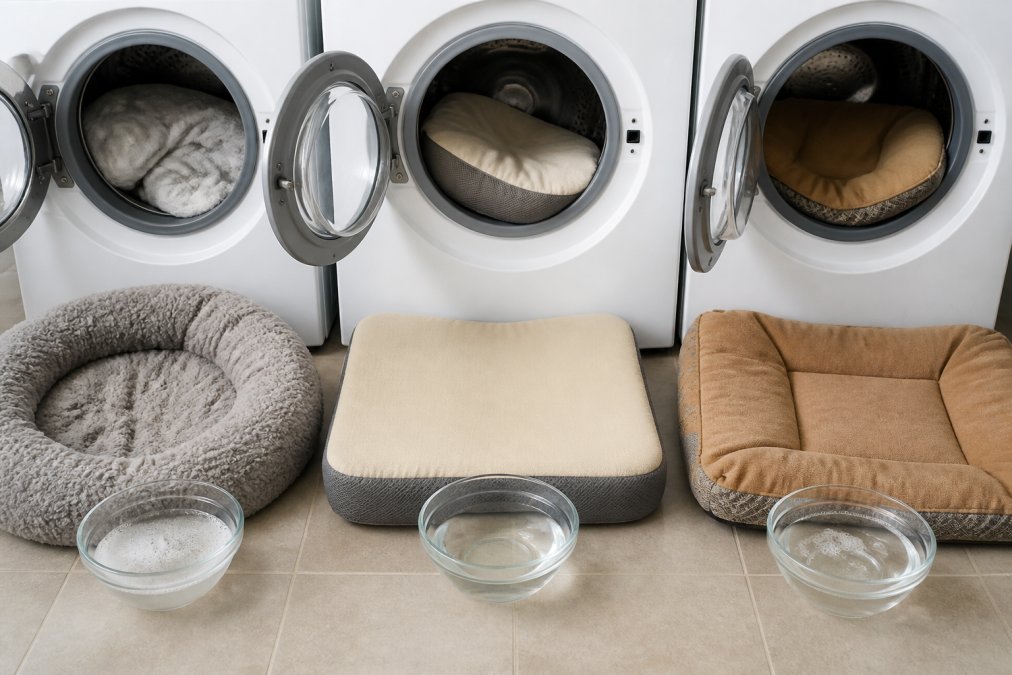
For Cotton and Canvas Beds: Cotton handles hot water well and benefits from it. Use the hottest water safe for the fabric (check the care tag, typically 130°F or higher). Hot water kills bacteria and helps break down odor-causing compounds. Add one cup of white vinegar in place of regular detergent or alongside a mild, pet-safe detergent. Vinegar cuts through odors and kills bacteria naturally without harsh chemicals. Run a full wash cycle on the heavy-duty or bedding setting. For heavily soiled beds, run two cycles: the first removes surface dirt, the second tackles odors deeper in the fabric.
For Memory Foam Beds: Memory foam is sensitive to heat and water saturation. Never machine wash a memory foam dog bed, this will damage the foam's structure and cause it to clump or deteriorate. Instead, spot-treat the removable cover separately if it's machine-washable, and hand-wash the foam core. Fill a bathtub or large basin with cool water (around 70-80°F) and add one cup of white vinegar. Submerge the foam bed and gently squeeze the vinegar solution through the material for 5-10 minutes. Do not scrub aggressively. Rinse thoroughly with cool water by squeezing clean water through the foam until the vinegar smell is gone. This gentler approach removes odors without damaging the foam's integrity.
For Synthetic Blend and Microfiber Beds: Synthetic materials can handle warm water (around 90-110°F) but not extreme heat. Use the warm water setting on your washing machine, not hot. Add white vinegar as with cotton beds. Avoid fabric softeners and heavily scented detergents, these trap odors in synthetic fibers rather than eliminating them. Stick with unscented or lightly scented options designed for pet bedding. Run a normal or delicate cycle depending on the bed's construction; check the care tag. Synthetic materials dry faster than cotton, which is an advantage for odor prevention.
Universal Washing Rules: Don't overload the washing machine. Your dog bed needs room to move around in the water. Cramming it in with other items prevents proper cleaning and rinsing. Wash the bed separately from other laundry to avoid cross-contamination and to ensure the vinegar treatment isn't diluted by other detergents. If your dog has had accidents on the bed, pre-treat those spots with an enzymatic cleaner for 12-24 hours before washing (as described in Step 3). This breaks down uric acid crystals that regular washing alone cannot remove.
Step 5: Choose a Safe Pet Odor Eliminator for Spot Treatment
After washing, spot treatments help maintain freshness between full washes. Not all pet odor eliminators are created equal. Many products just cover smells with fragrance. You need something that actually eliminates odors at the source.
Look for products made with bio-based formulas that neutralize odors rather than mask them. These are safe for pets and children, so you don't have to worry about chemical exposure in your home.
Zero Smell Z-Spray offers an option for spot treatment. It uses beneficial microorganisms to break down odor molecules naturally. The formula is non-toxic, alcohol-free, and safe for use around pets and kids. A few sprays on problem areas work to eliminate dog bed odors naturally without harsh chemicals. You can find Z-Spray 16.9oz/500ml here: https://tryzerosmell.com/products/z-spray or Z-Spray 33.8oz/1000ml here: https://tryzerosmell.com/products/z-spray-large.


Apply spot treatments after the bed is completely dry. Spray lightly across any areas that still hold odor. Let it dry naturally. The microorganisms in the product continue working as it dries.
Step 6: How to Remove Dog Urine Smell from Fabric Bedding
Dog urine creates the most stubborn odors because uric acid crystals bond to fabric fibers. Regular washing alone often won't remove these crystals completely. You need a targeted approach.
First, identify all urine-soaked areas. Use a black light or simply look for discolored spots. Mark these areas so you don't miss them during treatment.
Apply enzymatic cleaner directly to urine-affected spots. Let it soak for 24 hours. The enzymes need extended contact time to break down uric acid crystals. This is not optional for removing dog urine smell from fabric bedding effectively.
After enzymatic treatment, rinse the area thoroughly with cool water. Hot water can set urine odors deeper into the fabric, so use cool water for rinsing. Squeeze out excess water gently.
Wash the entire bed in hot water with white vinegar as described in Step 4. The combination of enzymatic treatment plus vinegar washing removes urine odors that single-step methods miss.
For severe cases, soak the bed in a solution of equal parts water and white vinegar for 2-4 hours before washing. This extra step helps dissolve stubborn uric acid crystals.
Step 7: Dry Properly and Maintain Freshness
How you dry your dog bed matters as much as how you wash it. Improper drying traps moisture and allows bacteria and mold to regrow, undoing all your odor-elimination work. In fact, the persistent 'wet dog' smell that returns days after washing is usually caused by moisture trapped in the bed's core, not residual urine or bacteria from the original odor.
Why Moisture Causes Odor to Return: Bacteria and mold thrive in damp environments. If your dog bed retains even 20-30% moisture after washing, bacteria colonies can double in size within 24 hours. This is especially true for memory foam and thick orthopedic beds, which absorb and hold water longer than thin fabric beds. The smell that emerges 2-3 days after washing is typically mold or bacterial regrowth in the damp core, not the original odor source.
| Maintenance Task | Frequency | Why It Prevents Odor |
|---|---|---|
| Vacuum bed | Weekly | Removes hair and debris that trap moisture and bacteria |
| Apply baking soda | Every 2 weeks | Absorbs odor molecules and surface moisture before they build up |
| Full wash cycle | Every 4-6 weeks | Removes bacteria, resets the bed, and prevents moisture accumulation |
| Spot treatment spray | As needed | Maintains freshness and prevents bacterial regrowth between washes |
Frequently Asked Questions
How do I know if a product will eliminate dog bed odors or just mask them?
True odor elimination breaks down the bacteria and organic compounds causing the smell, rather than covering it with fragrance. Look for products with enzymatic cleaners or bio-based formulas that target odor molecules at the source. Z-Spray uses beneficial microorganisms to neutralize odors instead of masking them, a key difference from fragrance-based sprays. You can find Z-Spray 16.9oz/500ml here: https://tryzerosmell.com/products/z-spray or Z-Spray 33.8oz/1000ml here: https://tryzerosmell.com/products/z-spray-large. If a product relies only on scent, it's masking, not eliminating.
Is it safe to use baking soda for pet odors on my dog's bed?
Yes, baking soda is safe for pets and is one of the most effective natural odor absorbers. Sprinkle it generously on the dog bed, let it sit for 15-30 minutes, then vacuum thoroughly. It absorbs moisture and neutralizes odor molecules without chemicals. However, ensure your dog doesn't inhale the powder during application, and vacuum completely to avoid residue.
How often should I wash my dog's bed to prevent odors from building up?
Wash your dog's bed every 1-2 weeks if your dog spends significant time on it, or weekly if odors develop quickly. Between washes, use baking soda or a safe pet odor eliminator spray to maintain freshness. Regular washing prevents bacteria and dander from accumulating, which are the root causes of persistent dog bed odors.
Can I use essential oils to deodorize my dog's bed safely?
Essential oils require caution around pets. Many oils are toxic to dogs if ingested or inhaled in concentrated amounts. If you choose essential oils, dilute them heavily, use pet-safe varieties like cedarwood in very small amounts, and ensure thorough drying before your dog uses the bed. Safer alternatives include enzymatic cleaners, white vinegar, or bio-based odor eliminators designed for pet environments.