

How to Clean Shin Guards Without Damaging Padding
Table of Contents
- What You'll Need to Clean Shin Guards Safely
- Step-by-Step: How to Clean Shin Guards Without Damaging Padding
- How to Stop Shin Guards from Smelling
- Can You Put Shin Guards in the Washing Machine?
- How to Disinfect Shin Guards Without Harsh Chemicals
- How to Dry Shin Guards Properly
- Common Mistakes That Damage Padding
- Conclusion
- Frequently Asked Questions
Last Updated: October 7, 2026
What You'll Need to Clean Shin Guards Safely
Learning how to clean shin guards without damaging padding starts with the right supplies. The wrong products break down foam, crack the outer shell, and leave a smell worse than sweat. Gather these first:
- Two soft microfiber cloths (one for washing, one for drying)
- A mild soap like dish soap or castile soap
- Warm water in a small bowl
- A soft-bristle brush (an old toothbrush works well)
- A disinfectant spray made for sports gear
- A ventilated drying spot, never a heater or dryer
That's the whole kit. You don't need bleach, pure alcohol, or heavy chemical sprays. In fact, those cause most of the damage we see.
Here's the rule that matters most: shin guards are built from foam padding wrapped in fabric or synthetic leather, topped with a hard plastic shell.
Keep reading, and we'll walk through every step, plus how to handle odor, machine washing, and drying without wrecking your gear.
Step-by-Step: How to Clean Shin Guards Without Damaging Padding
The safe method takes about ten minutes per pair. Work in this order so you never push dirt deeper into the foam.
- Shake out loose dirt outside or over a trash can.
- Wipe the outer shell with a damp cloth and a drop of mild soap.
- Clean the inner lining with a barely damp cloth, not a soaked one.
- Spot-treat straps and velcro with a soft brush.
- Wipe everything again with a clean, damp cloth to remove soap.
- Air-dry completely before the next use.
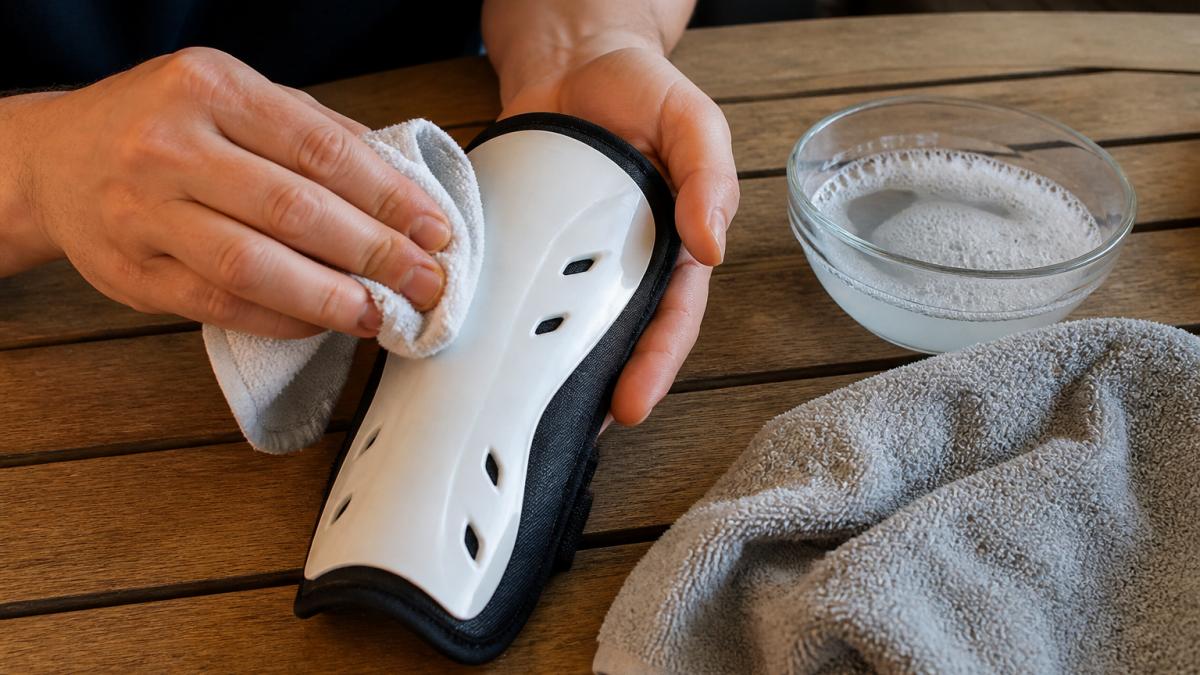
Wiping Down the Outer Shell
The outer shell is the tough part, so it handles a little more contact. Mix a few drops of mild soap into warm water. Dip your cloth, wring it out until it's damp, not dripping.
Never scrub hard or use an abrasive pad. You'll scratch the surface and dull the finish. For stuck-on mud, let the damp cloth sit on the spot for a minute, then wipe again.
Cleaning the Inner Lining and Padding
The inner lining is where the damage happens. Foam soaks up water like a sponge, and once it's wet inside, it stays wet for days. That's how mildew starts.
Use a cloth that's only slightly damp. Wipe the lining gently, then go over it with a dry cloth to pull out moisture. If the padding is removable, hand-wash it separately in cool water with mild soap, then press it between two towels to squeeze out water.
How to Stop Shin Guards from Smelling
Odor comes from bacteria feeding on sweat, not from the sweat itself.
A common mistake is spraying perfume or body spray on the pads. That masks the smell for an hour and makes it worse later.
At Zero Smell, we built our formula around that idea.
A few sprays on the lining and shell after each practice keeps bacteria from settling in.
Can You Put Shin Guards in the Washing Machine?
Most shin guards should not go in a washing machine. The agitation bends the shell, the heat warps foam, and the spin cycle can tear stitching and straps.
There's one exception. If the padding insert is removable and the care tag says it's machine washable, you can wash just that insert on a cold, gentle cycle.
For everything else, hand washing is the safe call. It takes ten minutes and saves you from replacing gear mid-season.
| Method | Safe for Most Guards? | Risk |
|---|---|---|
| Hand wash with mild soap | Yes | Low, if you air-dry |
| Machine wash (removable insert only) | Sometimes | Warping, torn straps |
| Soaking in water | No | Foam holds moisture, mildew |
| Dishwasher | No | Heat warps shell and foam |
How to Disinfect Shin Guards Without Harsh Chemicals
You can disinfect gear without bleach or pure alcohol. Both strip finishes, dry out foam, and leave a chemical smell that lingers on skin.
Safer options:
- A disinfectant spray made for sports equipment
- A vinegar solution (one part white vinegar to three parts water) on the shell only
- A bio-based odor eliminator that neutralizes bacteria-driven smells Consistent application of these methods prevents the buildup of grime and odors, establishing a reliable routine for maintaining sports riding gear that extends the lifespan of all your protective equipment.
Whatever you choose, test it on a small hidden spot first. Some plastics and synthetic leather react to vinegar or strong cleaners. Patch testing takes seconds and prevents a ruined pair.
How to Dry Shin Guards Properly
Air-drying is the only safe method, but "just let them air out" is where most people go wrong. Heat is what destroys shin guards, so keep them away from clothes dryers, space heaters, radiators, hair dryers, and direct sun through a car window. Warm air feels efficient and quietly warps the shell and crumbles the foam.
The goal is moving air, not warm air. A box fan on low, a ceiling fan, or an open window with a cross-breeze all work. Position matters more than time:
- Open the straps and velcro so they aren't folded against the shell.
- Pull the lining away from the shell to create a gap. Foam dries from its exposed edges inward, so a trapped liner keeps the core damp.
- Stand guards upright or hang them rather than laying them flat on a towel. Flat guards seal moisture against one side.
- Leave a few inches between the pair. Two guards touching dry roughly twice as slowly.
How Long Shin Guards Take to Dry
Most pairs reach dry in 12 to 24 hours in normal indoor air, but that range swings with humidity and how wet the padding got. A barely damp wipe-down can be dry in a few hours. A guard that soaked through the liner during a rainy match may need a full day or more. Cool, humid weather and a closed-up gear bag both stretch the timeline.
How to Tell If the Padding Is Still Damp
Surface feel lies. The shell can feel bone-dry while the foam core is still holding water. Check in this order:
- Press the padding with two fingers. If it feels cool to the touch, moisture is still evaporating.
- Squeeze gently at the thickest part of the foam. Any give that feels spongy rather than springy means it's wet.
- Smell the lining. A faint sour or musty note means bacteria are still active and the guard isn't fully dry.
- Check the seams and strap anchors, where water wicks in and lingers longest.
If any check fails, give it more airflow time. Never speed it up with heat.
Signs You're Drying Wrong
- Stiff, crunchy padding after drying usually means heat exposure, not dryness.
- A lingering damp smell after 24 hours points to poor airflow or a guard that was stored too soon.
- Warped or bowed shell is a heat problem, not a water problem.
For a quick-care routine between deep cleans, wipe the lining after every practice and let the guards air out overnight before they go back in the bag. A small travel spray in the gear bag makes the field-side wipe-down easy, and it means the guards start drying the moment you get home instead of sitting damp in a locker.
Common Mistakes That Damage Padding
Most ruined shin guards fail for the same handful of reasons, but the fix depends on what your guards are actually made of. Here's how to match your care to your gear, plus the mistakes that shorten its life.
Match Your Cleaning Method to the Material
| Material | Safe to Use | Avoid |
|---|---|---|
| Foam padding (open-cell) | Barely damp cloth, air-dry, gentle press between towels | Soaking, wringing, heat, direct liquid |
| EVA foam | Damp cloth, mild soap, spot clean | Alcohol, bleach, machine agitation |
| Fabric liner | Damp cloth, soft brush on stains, hand wash if removable | Hot water, dryer, fabric softener |
| Synthetic leather | Damp cloth, mild soap, dry immediately | Abrasive pads, vinegar left to sit, sun |
| Hard plastic shell | Damp cloth, mild soap, soft brush on mud | Scrubbing pads, pure alcohol, bleach |
Open-cell foam is the most fragile. It drinks water through exposed edges and holds it, which is why a soaked guard can smell for days. EVA is denser and tolerates a damp wipe better, but it still warps under heat. Fabric liners can take a soft brush on stains, but hot water sets odor and shrinks stitching. Synthetic leather looks tough but dulls fast under abrasives.
Cleaning Frequency: Quick Care vs. Deep Clean
Frequency beats intensity. A two-minute wipe-down after every use prevents most damage, and it means you rarely need a deep clean at all.
- After every use: wipe the lining with a barely damp cloth, spray the interior, air-dry overnight with straps open.
- Weekly (in season): wipe the shell, spot-treat straps and velcro with a soft brush, check seams for grit.
- Monthly or as needed: full hand wash of removable liners, deeper clean of the shell, inspect foam for cracking or compression.
- End of season: deep clean, dry fully, store open and unbagged.
Mistakes That Damage Padding
- Soaking guards in water. Foam traps moisture and grows mildew from the inside out.
- Using the dryer or a heater. Heat warps the shell and cracks foam.
- Scrubbing with harsh chemicals. Bleach and pure alcohol break down materials and strip finishes.
- Spraying perfume to hide odor. It masks the smell and feeds bacteria.
- Storing gear damp in a bag. No airflow means odor and mold.
- Skipping the dry step. Damp padding loses shape and cushioning.
When to Replace Instead of Clean
Some damage can't be cleaned away. Replace guards when the foam feels permanently compressed, when the shell is cracked or bowed, when straps or velcro no longer hold, or when a musty smell returns within a day of a full clean. Compressed foam stops absorbing impact, and that's a protection problem, not a freshness one.
Clean, disinfect, and dry after every use, and match your method to the material. Frequency beats intensity, and a two-minute wipe-down prevents most damage.
Conclusion
Keeping shin guards fresh comes down to one habit: clean and dry them after every practice, not once a month.
That's where Zero Smell fits in. Our bio-based spray neutralizes odor at the source instead of masking it, and it's unscented, non-toxic, and safe around kids and pets.
Get started with Zero Smell and keep your family's gear fresh all season. SHOP NOW

Frequently Asked Questions
What is the safest way to wash shin guards?
The safest method is hand washing with a damp cloth and mild soap. Remove inserts if possible, wipe the outer shell, then gently clean the padding without soaking. Rinse the cloth and wipe again to remove soap residue. Avoid submerging guards in water, as moisture can break down foam and cause odor. For disinfection, use a spray like Zero Smell that is non-toxic and alcohol-free, then air-dry completely away from heat.
How often should you clean shin guards?
Clean shin guards after every use with a quick wipe-down, and do a deeper clean weekly during active seasons. If your child plays daily, a daily wipe and weekly disinfecting spray keeps odor under control. During off-season, clean before storing. Consistent post-training care prevents sweat and bacteria from setting into the padding, which is the main cause of persistent smell.
Can you put shin pads in the washing machine?
Most shin pads should not go in a washing machine. The agitation and heat can warp hard plastic shells, break down foam padding, and damage synthetic leather or fabric covers. Always check the manufacturer's care label. If machine washing is explicitly allowed, use a gentle cycle with cold water and air-dry. For most guards, hand washing with mild soap and water is safer and just as effective.
How do you disinfect shin guards without damaging the material?
Use a non-toxic, alcohol-free disinfectant spray designed for sports gear. Pure alcohol and harsh chemicals can dry out foam, crack synthetic leather, and irritate skin. After cleaning with mild soap, spray the inner lining and padding lightly, then let air-dry. Products like Zero Smell use bio-based ingredients to break down odor at the source without leaving harmful residue, making them safe for regular use on shin guards.