

How to Neutralize Dog Bed Odors: 7 Proven Steps
Table of Contents
- Why Dog Beds Develop Odors
- Diagnose the Odor Source Before You Clean
- How to Deodorize a Dog Bed Without Washing
- How to Get Urine Smell Out of a Dog Bed
- How to Clean a Dog Bed with Foam
- How Often to Wash a Dog Bed for Odor Prevention
- Troubleshooting Persistent Dog Bed Odors
- Frequently Asked Questions
Last Updated: October 8, 2026
Why Dog Beds Develop Odors
Dog beds trap moisture, bacteria, and odor-causing compounds over time. Your pet's oils, sweat, saliva, and accidents accumulate in the fabric and filling, then break down into that stale, musty smell.

The problem worsens in humid environments or when the bed doesn't dry completely between cleanings, since bacteria thrive in damp conditions and multiply rapidly.
Pet urine is especially problematic: its uric acid crystals don't fully wash away with standard detergent and reactivate when the bed gets wet again. That's why a dog bed can smell fresh after washing, then stink within days of an accident.
At Zero Smell, we know that how to neutralize dog bed odors starts with understanding what's causing them. Once you know the source, fixing it becomes straightforward.
Diagnose the Odor Source Before You Clean
Identifying the cause saves time, because different odors require different solutions.
Musty or stale smell usually means bacteria and mildew are growing in the fabric from dampness or poor air circulation. The fix is thorough washing and extended drying.
Strong urine smell means your dog had an accident. It requires enzymatic treatment to break down uric acid crystals, which regular detergent won't touch.
General funk or "dog smell" comes from body oils and sweat buildup. Weekly washing keeps it from becoming a major issue.
Sour or rotten smell suggests mold or severe bacterial growth. If it's overwhelming, the bed may need deep cleaning or replacement.
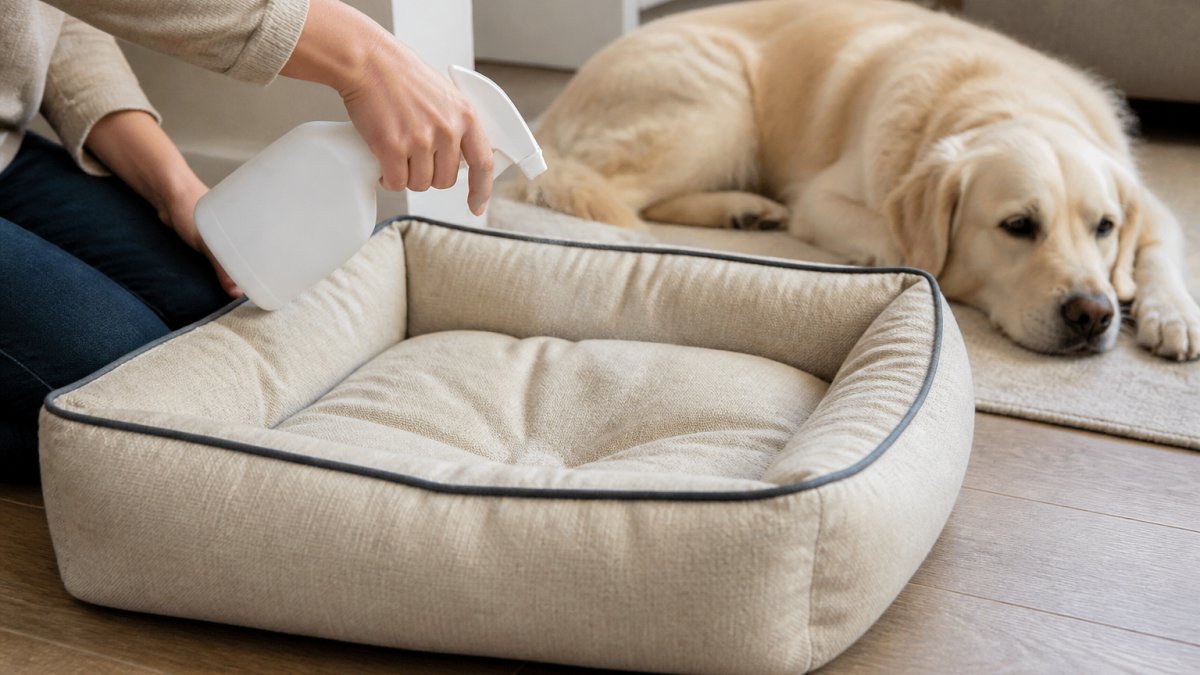
Check the label for machine washability, note the filling (foam, memory foam, and batting each need different care), and sniff near the seams and underside, where odors hide most.
How to Deodorize a Dog Bed Without Washing
Sometimes you need a quick fix between washes. These methods work fast and require no water.
Baking soda is your first line of defense. Sprinkle it generously across the bed, let it sit at least 30 minutes (longer is better), then vacuum thoroughly. The longer it stays, the more odor it absorbs.
White vinegar neutralizes odors on problem areas. Mix equal parts white vinegar and water, mist the spots lightly without soaking, and let it air dry completely. The vinegar smell fades as it dries, taking the odor with it.
Enzymatic sprays break down odor at the source. These products contain beneficial microorganisms that consume the bacteria and compounds creating the smell. Unlike fragrance-based sprays that just mask odors, enzymatic solutions actually eliminate them. Pet odor elimination science confirms that enzyme-based treatments are highly effective for pet-related smells.
Sunlight and fresh air are free deodorizers. Hang the bed outside on a sunny day: UV light kills bacteria naturally, and air circulation dries the moisture where odors breed.
For quick odor control between washes, many pet owners turn to Zero Smell's spray formula. Our bio-based spray targets odor at the source without harsh chemicals, and it's safe for pets and kids, so you don't worry about chemical residue on your dog's bed.

How to Get Urine Smell Out of a Dog Bed
Urine odor needs specific treatment because regular washing doesn't fully remove it; the uric acid crystals require enzymatic breakdown.
Step 1: Identify all affected areas. Check seams, corners, and the underside by smell. Urine often soaks through to the foam insert or base, so mark these spots.
Step 2: Treat with enzymatic cleaner. Apply an enzymatic pet odor remover directly to urine spots and let it sit for 24 hours if possible, giving the enzymes time to break down the uric acid crystals.
Step 3: Wash the bed. Use hot water if the fabric allows, since it activates the enzymatic cleaner and kills more bacteria. Add regular detergent plus a cup of white vinegar.
Step 4: Air dry completely. Urine smell returns if the bed stays damp, so hang it outside in the sun or use a dryer on low heat if the label permits. Heat plus air circulation removes moisture where odor bacteria hide.
If accidents continue, address the underlying issue: medical problems, anxiety, or marking behavior need attention, and a clean bed won't solve a persistent behavior.
How to Clean a Dog Bed with Foam
Foam is the hardest part of a dog bed to deodorize because it's an open-cell sponge. Urine, saliva, and body oils wick past the cover into the cell walls, where they stay dark and slightly damp. Detergent reaches the surface but rarely the interior, which is why a cover can smell clean while the insert still stinks.
Before you touch water, identify what kind of foam you are dealing with. The care label and the bed's construction tell you which method is safe.
Polyurethane foam (the most common fill). Standard block foam in most crate mats and bolster beds. It tolerates a gentle machine wash if the label allows, but crushes and loses loft if wrung, spun hard, or dried on heat. Cold or warm water, gentle cycle, mild detergent, and no fabric softener, which coats the cells and traps odor.
Memory foam. Denser and slower to release water than standard foam, so soaking ruins it: water reaching the core can take days to escape, growing mildew where you can't see it. Spot clean with a damp cloth and mild soap, then blot, don't rub. For odor, sprinkle baking soda on, let it sit several hours or overnight, and vacuum.
Shredded or chopped foam fill. Loose fill holds far more moisture and odor than a solid block. If the insert has a zipper, empty the foam into a mesh laundry bag, wash the shell, and air dry the foam spread thin. Without a zipper, treat the whole insert as spot-clean only.
Waterproof liners and covers. The liner between cover and foam protects the foam and is the first thing to fail. Wash it gentle and cold, and never hot-dry it, which delaminates the coating. Once it cracks or peels, urine reaches the foam and the bed is much harder to save.
How to dry foam so odor does not come back. This is the step most people rush. Squeeze (don't wring) excess water out, press the foam between two dry towels, then stand it on its edge so air moves through both faces. Point a fan at it, flip it every few hours, and run a dehumidifier in humid conditions.
When to stop cleaning and replace the insert. If the foam has been soaked with urine more than once, or smells sour even after a full dry, the interior is colonized and no surface treatment will fix it.
For memory foam and other inserts that shouldn't get wet, a spray-on odor eliminator is safer: it reaches odor compounds without adding the moisture that damages foam.
How Often to Wash a Dog Bed for Odor Prevention
Washing frequency depends on your dog's size, activity level, and accidents.
| Dog Situation | Washing Frequency | Why |
|---|---|---|
| Small, clean dog, no accidents | Every 2-3 weeks | Minimal odor buildup |
| Medium dog, occasional accidents | Weekly | Prevents odor from setting in |
| Large dog or multiple dogs | Twice weekly | More body oils and moisture |
| Dog with frequent accidents | 2-3 times weekly | Urine requires frequent cleaning |
| Dog with skin issues or allergies | Weekly | Moisture and bacteria multiply faster |
Weekly washing is the sweet spot for most households: it prevents odor from becoming overwhelming without over-washing the fabric.
Between washes, use baking soda or a deodorizing spray to keep the bed fresh and extend the time between full washes.
Troubleshooting Persistent Dog Bed Odors
If the bed still smells after a full wash and dry, work through the causes in order so you don't waste wash cycles guessing.
Step 1: Confirm the bed is actually dry. This is the most common and easiest-to-miss cause.
Step 2: Check the insert separately from the cover. Wash the cover, then smell the bare insert. If the cover is clean and the insert isn't, the odor is inside the foam or batting where surface washing won't reach. Soak a removable insert in diluted enzymatic cleaner for several hours, wash gently, and dry thoroughly.
Step 3: Rule out urine you did not notice. A bed can smell fresh out of the wash and turn within a day if your dog has small accidents you're missing. Feel the bed in the morning and after naps; dried urine is easy to miss by sight but not by smell.
Step 4: Check your washing machine. Detergent residue, fabric softener buildup, and mildew in the drum or gasket can leave a sour smell on anything you wash.
Step 5: Check your detergent dose. More isn't better: excess detergent stays in the fabric, holds moisture, and creates a stale smell that mimics the original odor. If the bed smells worse after washing, halve the detergent and run an extra rinse.
Step 6: Match the treatment to the odor type. Baking soda and vinegar handle fresh, mild, surface-level smells but don't break down urine, saliva, or bacteria deep in foam. If the smell is sharp, ammonia-like, or returns within a day, use an enzymatic or bio-based eliminator that breaks odor compounds down rather than absorbing or masking them.
Step 7: Consider the dog, not just the bed. If a clean bed turns smelly within a day or two, the source may be your dog: skin conditions, ear infections, anal gland issues, and dental problems all produce strong odors that transfer to bedding. Older dogs and dogs with incontinence need more frequent washing and a waterproof liner.
When to replace the bed. If you've dried it fully, treated the insert, cleaned the machine, and the smell still returns, the filling is saturated beyond recovery. Replacement is then cheaper and more hygienic, and a waterproof liner on the new bed prevents the same problem.
Pet odor control best practices notes that stubborn pet odors often need more than one approach. If a single method has not worked after two attempts, switch categories rather than repeating it.
Frequently Asked Questions
Can I sprinkle baking soda on my dog's bed to neutralize dog bed odors?
Yes, baking soda is an effective odor absorber. Sprinkle it generously over the entire bed surface, let it sit for 15-30 minutes, then vacuum thoroughly. For best results, combine baking soda with a bio-based odor eliminator like Z-Spray, which neutralizes odors at the source rather than just masking them. This two-step approach addresses both surface odors and deeper smells.
How do I deodorize a dog bed without washing it?
Use baking soda, white vinegar spray, or a bio-based odor eliminator. Sprinkle baking soda, let it sit 15-30 minutes, then vacuum. Alternatively, spray the bed lightly with a 1:1 white vinegar and water solution and air-dry completely. For stubborn odors, Z-Spray targets the chemical bonds causing the smell without requiring a full wash, making it ideal for quick freshening between laundry cycles.
What's the difference between masking odors and neutralizing them?
Masking covers odors with fragrance, so the smell returns once the scent fades. Neutralizing breaks down the compounds causing the odor at the source. Bio-based products like Z-Spray use beneficial microorganisms to eliminate odors permanently, not temporarily. This is especially important for pet urine, which requires enzymatic action to fully eliminate the smell.
How often should I wash my dog's bed to prevent odors?
Wash weekly for most households, or every 2-3 weeks if your dog has minimal accidents. Households with multiple dogs, active dogs, or dogs prone to accidents should wash every 5-7 days. Between washes, use baking soda or Z-Spray to keep the bed fresh. Regular maintenance prevents odor buildup and extends the life of the bed.