

How to Remove Cat Urine From Hardwood
Table of Contents
- Identifying the Source of Cat Urine in Hardwood
- How to Tell if Cat Urine Soaked Into Subfloor
- Removing Pet Urine Stains From Sealed vs. Unsealed Wood
- Best Enzymatic Cleaner for Hardwood Floors
- Step-by-Step Removal Process for Fresh Urine
- Dealing With Old or Set-In Urine Stains
- Subfloor Remediation and Long-Term Damage Assessment
- Preventing Future Cat Urine Accidents
- Frequently Asked Questions
Last Updated: October 2, 2026
Identifying the Source of Cat Urine in Hardwood
Cat urine on hardwood floors creates a stubborn problem. The uric acid crystallizes deep into the wood grain, releasing an odor that won't fade with surface cleaning alone.
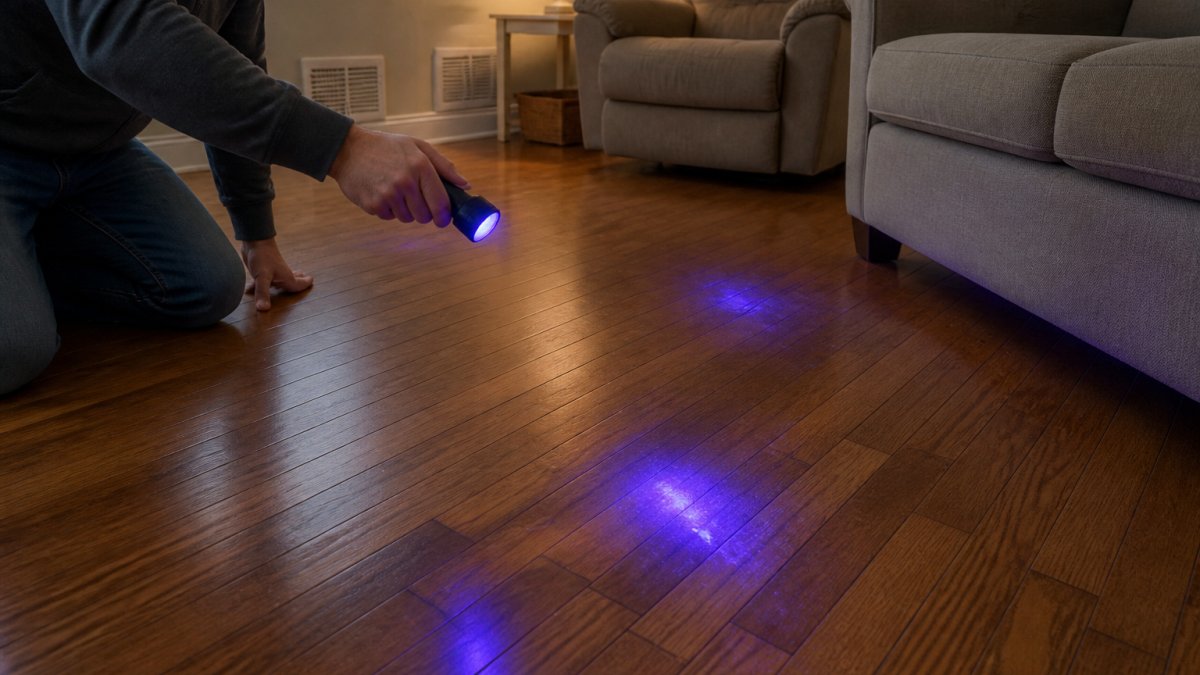
Fresh urine appears as a wet spot. Old urine dries and becomes invisible to the naked eye. That's where detection gets tricky.
How to Locate Fresh vs. Old Urine Stains
Fresh urine stains are easiest to spot. Look for wet patches or discoloration on the wood surface.
Old stains are harder to find. Dried urine turns brown or amber. Sometimes it leaves no visible mark at all.
Run your hand across the floor. Wet spots feel damp. Stained areas may feel slightly raised or rough.
Using a Blacklight to Find Hidden Spots
A blacklight reveals what your eyes cannot. Urine fluoresces under UV light, glowing blue or yellow-green.
Blacklights cost between $15 and $40. Use one in a dark room for best results. Scan the entire floor systematically.
Blacklights show fresh and old urine equally well. They're essential if your cat has had multiple accidents in the same room.
How to Tell if Cat Urine Soaked Into Subfloor
Surface urine stays on top. Deep urine penetrates the wood and reaches the subfloor below. This distinction matters because deep damage requires different treatment.
Signs of Deep Penetration and Moisture Damage
Urine that soaks through the wood creates moisture damage. The subfloor absorbs liquid and swells. Wood fibers break down.
Look for these warning signs:
- Soft or spongy spots when you press on the floor
- Warping or cupping of the wood (edges curve up)
- Dark stains that won't come clean with surface treatment
- Persistent odor even after cleaning the top
- Visible mold or mildew underneath the floor
If the wood feels soft, urine has likely reached the subfloor.
Sealed hardwood slows penetration. Unsealed or damaged wood absorbs urine quickly. Check whether your floor has a polyurethane finish or wax coating.
Removing Pet Urine Stains From Sealed vs. Unsealed Wood
Your treatment method depends on whether the floor is sealed. Sealed hardwood has a protective layer. Unsealed wood is porous and absorbs liquid directly.
Treating Sealed Hardwood Floors
Sealed hardwood has a polyurethane or wax finish on top. This layer protects the wood underneath. Urine sits on the surface longer before penetrating.
For sealed floors, start with the gentlest approach:
- Blot fresh urine immediately with paper towels
- Mix equal parts white vinegar and water
- Spray the solution lightly on the stain
- Wipe with a damp cloth within 5 minutes
- Dry thoroughly with a clean towel
Vinegar neutralizes the ammonia smell temporarily. It doesn't eliminate uric acid crystals. For old stains, you need enzyme-based treatment.
Apply an enzyme cleaner to sealed hardwood carefully. Excess moisture can damage the finish.
Treating Unsealed or Damaged Hardwood
Unsealed wood absorbs urine quickly. The liquid penetrates the wood fibers and may reach the subfloor.
For unsealed floors, enzyme treatment is essential.
Apply enzyme cleaner generously to unsealed wood. Let it soak into the wood for 24 to 48 hours.
If the stain is old and set-in, you may need to sand away the damaged surface layer.
Best Enzymatic Cleaner for Hardwood Floors
Enzyme-based cleaners dissolve uric acid crystals. They're the most effective option for how to remove cat urine from hardwood because they target the root cause, not just the smell.
Look for cleaners with these characteristics:
- Contains protease or urease enzymes (these break down uric acid)
- Non-toxic and safe for pets and children
- Unscented or lightly scented (masking agents hide the problem)
- Works on both sealed and unsealed wood
Bio-enzymatic cleaners use beneficial microorganisms to break down odor-causing compounds. These are safer than harsh chemical cleaners and work at the molecular level.
Apply enzymatic cleaners slowly and deliberately. Saturate the affected area but don't flood the floor.
Step-by-Step Removal Process for Fresh Urine
Fresh urine is easier to treat than old urine. Act quickly when you discover an accident. The first 24 hours are critical.
Step 1: Blot and Remove Surface Urine
Don't wipe or spread the urine. Blot it straight up with paper towels or cloth. Press down firmly to absorb as much liquid as possible.
Use multiple paper towels. Replace them as they become saturated. The goal is to remove liquid before it soaks deeper into the wood.
Once you've blotted the surface, move to enzyme treatment immediately.
Step 2: Apply Enzymatic Treatment
Spray or pour enzyme cleaner directly onto the stain. For sealed hardwood, spray lightly to avoid oversaturating the finish.
Let the cleaner sit undisturbed. Set a timer for the recommended duration, usually 24 to 48 hours. Don't walk on the area.
The enzyme needs time and moisture to work. Drying it too quickly stops the process.
Step 3: Neutralize Odor at the Source
After the enzyme has worked, remove the cleaner. Blot with clean, damp cloths. Rinse the area with plain water and blot again.
Let the floor air-dry completely. Open windows and run fans to speed drying. Residual moisture can cause mold.
Once dry, the odor should be gone. If a faint smell remains, apply enzyme treatment again.
Dealing With Old or Set-In Urine Stains
Old stains are harder to treat. The uric acid has crystallized deep in the wood. Surface treatment alone won't reach it.
Why Old Stains Require Deeper Treatment
Old urine has had time to penetrate. It's no longer liquid, it's crystallized into the wood fibers.
Surface cleaning removes the smell temporarily. But as humidity fluctuates, the crystals release odor again.
Enzyme treatment still works, but it needs more time and deeper penetration. You may need to treat old stains multiple times.
Sanding and Refinishing When Necessary
If enzyme treatment doesn't eliminate the odor after two or three applications, sanding becomes necessary.
Rent a floor sander from a hardware store.
After sanding, apply enzyme cleaner generously. Let it soak for 48 hours.
Once the enzyme has worked and the floor is completely dry, apply polyurethane sealer to match your existing finish.
Subfloor Remediation and Long-Term Damage Assessment
If urine has soaked through to the subfloor, surface treatment won't solve the problem. The subfloor needs direct treatment or replacement.
When Subfloor Replacement Is Needed
Subfloor damage is serious. If the wood is soft, spongy, or moldy, it's compromised. It won't support the floor properly and can spread mold to the rest of the house.
Signs that subfloor replacement is needed:
- Soft or squishy spots when you walk on the floor
- Visible mold or mildew underneath
- Persistent odor even after treating the surface
- Warping or sagging of the hardwood floor
- Water damage that extends beyond a small area
Replacing subfloor requires removing the hardwood flooring. This is a significant project that often requires a professional.
In some cases, you can treat the subfloor without replacing it.
Preventing Future Cat Urine Accidents
Prevention is simpler than treatment.
Cats urinate outside the litter box for specific reasons:
- Litter box is too dirty
- Box is in a location they don't like
- Medical issues (urinary tract infection, kidney disease)
- Stress or anxiety
- The litter box is too small
Keep the litter box clean. Scoop daily. Change litter completely once a week.
If your cat has had accidents, the odor lingers.
Use Zero Smell on the treated area once it's dry.
For persistent problems, consult your veterinarian. Medical issues like urinary tract infections or diabetes cause inappropriate urination.
Cat urine on hardwood is frustrating, but it's solvable. The key is finding the source quickly and treating it thoroughly with enzyme-based methods that break down uric acid crystals rather than masking the smell. For the most stubborn cases where urine has soaked deep into the wood, professional sanding and refinishing may be necessary. Once you've eliminated the odor completely, prevent future accidents by keeping the litter box clean and using Zero Smell's bio-based formula to neutralize any lingering scent that might draw your cat back to the same spot. The non-toxic formula is safe for pets and children while destroying odor at the molecular level, making it ideal for homes with sensitive family members.

Frequently Asked Questions
Will cat urine ruin hardwood floors permanently?
Cat urine can cause permanent damage if left untreated, but early intervention prevents lasting harm. Fresh urine that's cleaned within 24 hours rarely causes structural damage. Older stains penetrate the wood grain and can cause discoloration, warping, and odor that requires sanding or refinishing. If urine saturates the subfloor, replacement may be necessary. Treating the urine promptly with an enzymatic cleaner that neutralizes uric acid crystallization stops the damage from progressing.
How do you remove cat urine from hardwood floors that's soaked deep into the wood?
Deep urine penetration requires multiple treatment layers. First, identify how far the urine has soaked using a blacklight. For surface saturation, apply an enzymatic cleaner designed to break down uric acid. If the odor persists after enzymatic treatment, the urine has likely reached the subfloor. In this case, you may need to sand the affected area and refinish the wood with polyurethane sealer. For severe subfloor damage, consult a professional floor refinisher about replacement options.
What's the difference between treating sealed and unsealed hardwood floors?
Sealed hardwood has a protective polyurethane or similar finish that slows urine penetration, keeping damage mostly on the surface. You can treat sealed floors with enzymatic cleaners and odor neutralizers without worrying about deep wood fiber damage. Unsealed or damaged hardwood absorbs urine quickly, allowing it to penetrate wood fibers and subfloor. Unsealed floors require more aggressive treatment, including possible sanding and refinishing to remove discoloration and stop the odor from returning.
Does an enzymatic cleaner actually work better than vinegar and baking soda for cat urine?
Enzymatic cleaners specifically break down uric acid crystals that cause cat urine odor, making them far more effective than vinegar or baking soda alone. These products use beneficial microorganisms to neutralize odors at the source rather than masking them. Vinegar and baking soda can help with surface odors but don't eliminate the chemical compounds deep in the wood. A bio-based enzymatic cleaner designed for pet urine removes the root cause, preventing the smell from returning.