

How to Sanitize Wrestling Mats Naturally: A Step-by-Step Guide
Table of Contents
- Why Natural Cleaning Works for Wrestling Mats
- Supplies You Need for a Wrestling Mat Cleaning Routine
- Step 1: Remove Dust and Debris Before You Clean
- Step 2: Mix a Natural Wrestling Mat Disinfectant
- Step 3: Mop or Wipe the Mat Surface and Respect Contact Time
- How Often to Disinfect Wrestling Mats
- How to Dry Wrestling Mats After Cleaning
- Frequently Asked Questions
Last Updated: October 15, 2026
Why Natural Cleaning Works for Wrestling Mats
Wrestling mats take a beating. Every practice leaves behind sweat, skin cells, and bacteria that can cause infections if left unchecked. Many coaches and parents now ask how to sanitize wrestling mats naturally, without harsh chemicals that linger on a vinyl surface athletes touch with bare skin.
Our bio-based formula destroys odor at the source instead of masking it. That same principle applies here: clean the mat properly, and the smell and germs go with it.
Here's the core idea most guides skip. Natural cleaning works when you understand three separate jobs: cleaning, sanitizing, and disinfecting. Each one needs a different approach.
Cleaning vs. Sanitizing vs. Disinfecting: What's the Difference?
Cleaning removes visible dirt, dust, and sweat from the mat surface. Sanitizing lowers the number of germs to a safer level. Disinfecting kills most pathogens, including bacteria, fungi, and viruses.
You need all three, in that order. Skipping straight to a disinfectant leaves organic material behind that shields germs from the solution. This is the single biggest mistake we see in wrestling rooms.
A clean mat also protects athletes from skin infections like staph and ringworm, which spread easily on shared surfaces. The CDC guidance on preventing skin infections in athletes explains how these infections move between athletes on shared equipment.
Supplies You Need for a Wrestling Mat Cleaning Routine
A good wrestling mat cleaning routine needs only a handful of basic supplies. You probably already own most of them.
- Soft-bristled broom or dry mop
- Microfiber mops or mat wipes
- Spray bottles for solutions
- White vinegar
- Hydrogen peroxide (3%)
- Mild dish soap
- Clean water
- Clean towels for drying
Skip bleach on vinyl unless the mat maker approves it. Sodium hypochlorite can break down the surface over time and leave a slippery residue.
Step 1: Remove Dust and Debris Before You Clean
Dry sweeping comes first, always. Dust, hair, and debris act like sandpaper under a mop and grind grit into the vinyl surface.
Use a soft-bristled broom or dry microfiber mop. Work from one end of the mat to the other in overlapping passes. Pay attention to seams and edges, where debris collects.
Do this before any water touches the mat. Wet debris just smears around and pushes dirt deeper into the surface.
Step 2: Mix a Natural Wrestling Mat Disinfectant
A natural wrestling mat disinfectant uses simple ingredients you can mix at home. The key is getting the dilution right.
Vinegar solution: Mix equal parts white vinegar and water in a spray bottle. Vinegar's neutral pH makes it safe for most vinyl surfaces.
Hydrogen peroxide solution: Use 3% hydrogen peroxide straight from the bottle, or dilute it half-and-half with water for lighter jobs.
Soapy water: A few drops of mild dish soap in a quart of water handles everyday grime.
Never mix vinegar and hydrogen peroxide in the same bottle. Combined, they form peracetic acid, which irritates skin and lungs.
Vinegar, Hydrogen Peroxide, and Essential Oils: What Works
Vinegar handles light cleaning and deodorizing well. Hydrogen peroxide offers stronger germ-killing power against bacteria and fungi. Essential oils like tea tree or eucalyptus add scent, but they are not validated disinfectants on their own.
Test any solution on a small corner of the mat first. Wait 10 minutes and check for discoloration or surface damage. Spot testing takes two minutes and saves a mat.
Step 3: Mop or Wipe the Mat Surface and Respect Contact Time
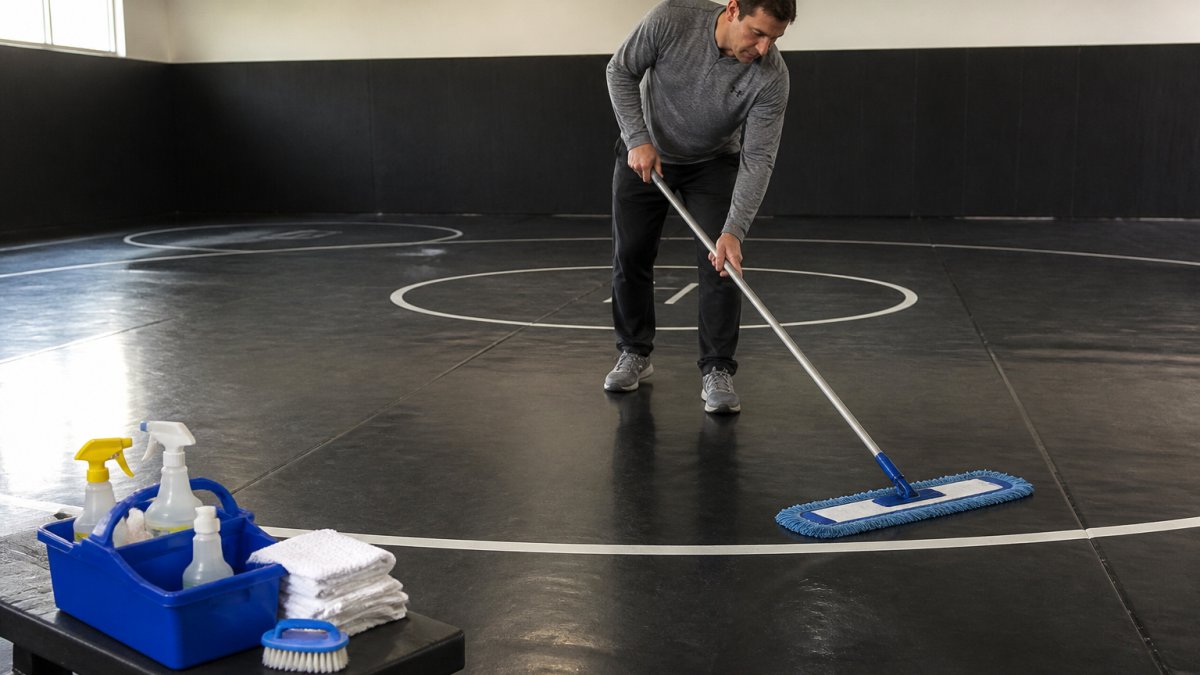
Contact time is how long a wet surface stays wet with the solution. It is the step most people rush.
Apply your solution with a microfiber mop or mat wipes. Work in sections so the whole surface gets even coverage. Let it sit for the full contact time before it dries.
Most natural solutions need several minutes of wet contact to work. If the surface dries too fast, reapply. A dry mat means the solution stopped working.
How Often to Disinfect Wrestling Mats
Disinfect after every practice, without exception. Sweat and skin contact happen every session, so germs rebuild fast. But frequency alone is not a routine. A routine assigns who does what, when, and how you verify it was done.
Here is a repeatable schedule you can post in the wrestling room. Assign names, not roles, so nothing falls through.
| Frequency | Task | Who | Time Needed | Done Check |
|---|---|---|---|---|
| Before practice | Dry sweep seams and edges | First coach in | 5 minutes | No visible grit under hand swipe |
| After every practice | Dry sweep, then mop with natural solution | Closing coach or team captain | 10-15 minutes | Surface dry to touch before lights out |
| Daily | Wipe high-contact edges, seams, and wall pads | Assistant coach | 5 minutes | No damp spots at seams |
| Weekly | Deep clean with hydrogen peroxide solution | Rotating athlete crew | 20-30 minutes | Full contact time observed, mat fully dry |
| Monthly | Inspect surface for wear, cracks, and lifting seams | Head coach | 10 minutes | Log any damage in a shared notebook |
Three details make this schedule actually work:
Drying check before storage. A mat that feels dry on top can still hold moisture at seams and backing. Press a clean paper towel along a seam. If it comes away damp, run a fan for another 15 minutes before rolling or covering.
Between-practice hygiene. Athletes should wash hands before and after practice and use alcohol-based hand sanitizer when stepping off the mat. The NCAA sports medicine guidance on mat hygiene treats hand hygiene as a key layer of infection prevention alongside surface cleaning.
Log the routine. A simple clipboard with date, initials, and any damage notes turns a good intention into a habit. When a skin infection appears, the log tells you whether the routine slipped.
How to Dry Wrestling Mats After Cleaning
Drying matters as much as cleaning. A damp mat grows bacteria and becomes a slip hazard. The reason is simple: moisture trapped in seams, backing, and the underside of a roll-out mat creates the warm, dark conditions where mildew and bacteria thrive. Once that starts, no surface wipe removes it.
Drying is not one step. It is three: remove standing water, move air across the surface, and verify the mat is dry before storage.
Remove standing water first. Use clean, dry towels to blot puddles. Do not push water toward seams, where it wicks into the backing. Work from the center outward and swap towels when they stop absorbing.
Move air, not just heat. Run fans or open windows to push air across the surface. Air movement evaporates moisture faster than still air at the same temperature. If the room is humid, a dehumidifier does more than a fan alone.
Lift the edges. Roll-out mats trap moisture underneath. Lift edges for 15-20 minutes so air reaches the backing and the floor beneath.
Verify before you store. Press a clean paper towel along a seam and under an edge. If it comes away damp, keep the fans running. Never roll up a wet roll-out mat. Mildew sets in within a day, and that smell is hard to remove later.
Frequently Asked Questions
How do you naturally sanitize a wrestling mat?
Start by dry sweeping or vacuuming to remove dust and debris. Mix a diluted solution of white vinegar and water (1:1 ratio) or use a hydrogen peroxide-based cleaner. Apply with a microfiber mop, let it sit for the recommended contact time, then wipe dry. For stubborn odors, a bio-based odor eliminator can neutralize sweat smells at the source without harsh chemicals.
Can vinegar be used to clean wrestling mats?
Yes, white vinegar is a safe natural option for wrestling mat disinfectant. Its acetic acid content helps break down organic material and kill some bacteria and fungi. Mix equal parts vinegar and water, apply to the mat, and let it sit for at least 10 minutes before wiping. Vinegar alone may not kill all pathogens like staph, so follow with a proven sanitizer if infection risk is high.
How often should wrestling mats be cleaned and disinfected?
Clean mats daily after every practice by removing debris and wiping with a natural cleaner. Disinfect thoroughly at least once a week, and more often during peak season or if an athlete has a skin infection. High-contact areas like the center circle and edges may need daily disinfection. A consistent wrestling mat cleaning routine prevents bacteria and fungi from building up.
How long should a wrestling mat air-dry after cleaning?
Most vinyl mats air-dry within 15 to 30 minutes if you use a microfiber mop and proper ventilation. Avoid leaving puddles, which can damage seams and create slip hazards. If humidity is high, use fans to speed drying. Never roll up a mat while it is still damp, as trapped moisture encourages mold and bacteria growth.
Keeping a wrestling room truly clean takes consistency, not harsh chemicals. Between practices, the gear itself often carries the smell that mats don't. Zero Smell neutralizes those odors at the source with a bio-based, non-toxic formula that's safe around children and pets, and it works in just a few sprays on bags, pads, and apparel. Get started with Zero Smell and keep your whole training space fresh.