

Interior Car Maintenance: DIY Cleaning & Care Guide
Table of Contents
- What You'll Need for Interior Car Maintenance
- Step-by-Step Interior Cleaning: Dust, Dirt, and Grime Removal
- How to Clean Fabric Car Seats and Upholstery
- Material-Specific Care for Leather, Vinyl, and Screens
- Remove Car Interior Odors Without Chemicals
- How Often to Detail Car Interior: A Maintenance Schedule
- Common Mistakes to Avoid
- Frequently Asked Questions
Last Updated: October 9, 2026
What You'll Need for Interior Car Maintenance
Interior car maintenance is the routine practice of cleaning, protecting, and deodorizing a vehicle's inside to keep surfaces, fabric, and air fresh. At Zero Smell, we've served 10,000+ households, and the biggest lesson is simple: most interior damage comes from waiting too long.
Below, we'll show you exactly how to build a repeatable routine that protects your car's value and your family's health. According to the American Lung Association's air quality guidance, poor indoor air quality can trigger allergies and asthma symptoms, and a car cabin is one of the smallest enclosed spaces you spend time in each day.
Basic Supplies Checklist
You don't need a pro detailing kit. You need the right basics and a system.
- Microfiber cloths (at least 6)
- Soft-bristle detailing brush
- Bio-based odor eliminator like Z-Spray ($19.98)
Skip paper towels. They leave lint and scratch screens.

Step-by-Step Interior Cleaning: Dust, Dirt, and Grime Removal
Work top to bottom, dry to wet. Dust falls, so cleaning seats first just re-dirties them when you hit the dashboard.
- Remove everything. Floor mats, trash, loose items, car seats.
- Vacuum first. Seats, carpets, floor mats, trunk. Use the crevice tool for seat rails and console gaps.
- Dust the dashboard and console. Dry microfiber first, then a damp cloth with a pH-neutral cleaner.
- Clean vents. A soft brush or a foam swab gets into the slats without bending them.
- Wipe down trim and plastics. Use a dedicated interior cleaner, not all-purpose spray.
- Clean interior glass last. Glass cleaner plus a fresh microfiber, buffed dry.
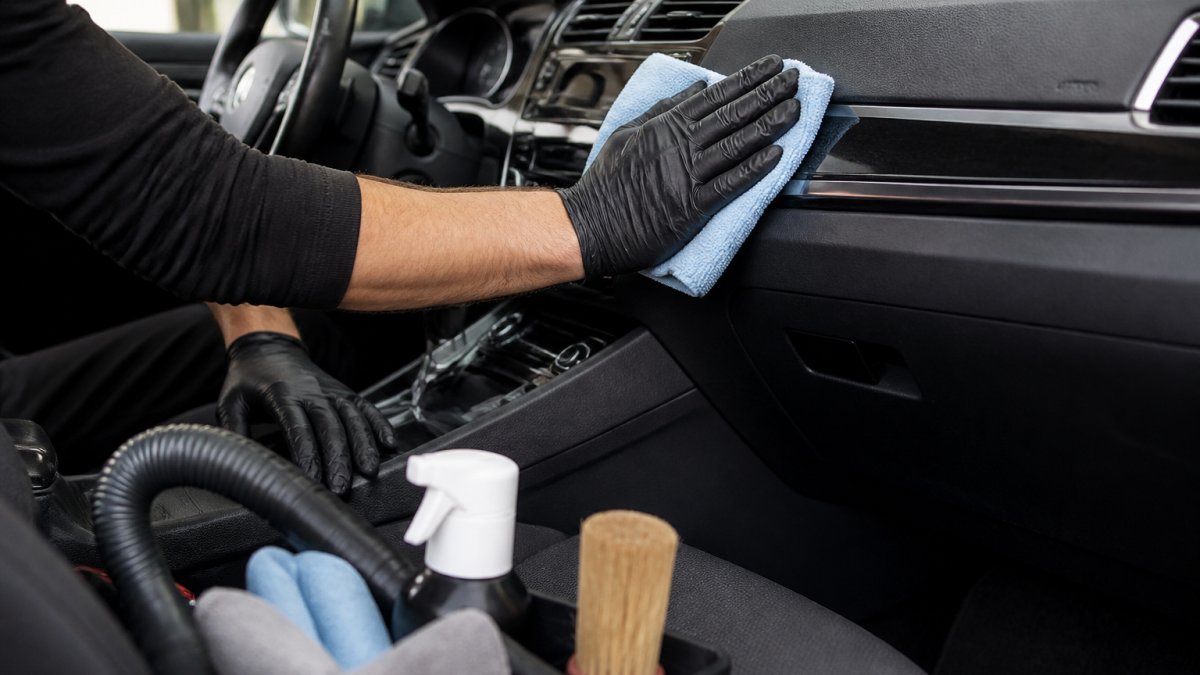
Door Panels, Pockets, and Jambs
Door panels collect more grime than any other surface because hands touch them every trip. Wipe with a damp microfiber and mild cleaner; for pockets, use a small brush to lift crumbs first.
Door jambs, the painted strips between door and frame, trap dirt and moisture, leading to rust. A quick monthly wipe keeps the metal dry.
Interior Glass and Windows
Interior glass builds a film from plasticizers, smoke, and dust. Standard glass cleaner works, but technique matters more than product.
- Spray the cloth, not the glass, to avoid drips into electronics.
- Wipe in one direction, then buff in the other with a dry cloth.
- Do the windshield in two halves so you can see streaks clearly.
How to Clean Fabric Car Seats and Upholstery
Learning how to clean fabric car seats starts with the right order: vacuum, spot-treat, then deep clean.
Vacuum thoroughly, then test any cleaner on a hidden spot. For stains, blot, don't rub, rubbing spreads the stain and frays fabric.
For odors trapped in upholstery, a bio-based odor eliminator beats a masking spray. Zero Smell's Z-Spray uses microorganisms to break down odor at the source.
Material-Specific Care for Leather, Vinyl, and Screens
Every interior surface is engineered differently, and the wrong product does damage that shows up weeks later, cracked leather, hazy screens, chalky trim. Match the cleaner to the finish, not the color.
Leather (including perforated and coated leather)
Most modern car leather is coated, a pigment layer sealed with a clear topcoat, not open-pore hide. That topcoat is what you're cleaning, and what alcohol, ammonia, and all-purpose degreasers strip away. Once it fails, the pigment layer dries, cracks, and transfers onto clothing. Preserving this protective barrier is just as critical as removing upholstery hair when you are deep cleaning your cabin to prevent long-term surface degradation.
- Clean with a pH-neutral leather cleaner and a soft microfiber. Work in sections, not the whole seat at once.
- Follow with a leather conditioner only if the surface feels dry or tacky. Over-conditioning coated leather leaves a greasy film that attracts dust.
- On perforated seats, spray the cloth, not the seat. Liquid pushed into the perforations soaks the foam underneath and becomes a mildew source.
Vinyl and synthetic leather
Vinyl is a plastic skin over fabric backing. It's more chemical-tolerant than leather but far more UV-sensitive, plasticizers migrate out with heat and sun, which is why older vinyl goes stiff and shiny before cracking.
- Clean with mild soap and water or a dedicated vinyl cleaner. A soft brush handles grain texture.
- Protect with a UV-blocking interior dressing. Skip silicone-heavy dressings that leave a wet, greasy shine, they off-gas onto glass and create the film you keep wiping off your windshield.
- Avoid: abrasive pads, bleach, and solvent-based cleaners that dull the finish.
Fabric, cloth, and Alcantara
Fabric seats trap moisture, which is why odors linger there longer than on leather. Alcantara (and similar microfiber suede) is different, a woven material that mats down if scrubbed.
- Standard cloth: fabric cleaner, soft brush, blot dry. Don't soak.
- Alcantara: a dedicated foam cleaner and a soft brush, then brush the nap back up while damp. Never use a wet vacuum on it.
- Avoid: over-wetting, harsh solvents, and stiff brushes that pill the fibers.
Touchscreens, piano-black trim, and gloss plastics
These are the easiest surfaces to scratch permanently. Piano-black trim is soft enough that a dry paper towel leaves micro-scratches visible in direct sun.
- Screens: dry or barely damp microfiber only. Never spray directly on the display, liquid wicks into the bezel.
- Piano-black and gloss trim: fresh microfiber, light pressure, no dry wiping. If dust is heavy, lift it with a damp cloth first.
- Avoid: glass cleaner on screens (ammonia and alcohol can cloud anti-glare coatings), paper towels, and shop rags.
Matte and textured trim
Matte finishes hide dust well but show hand oil. Use a damp microfiber with pH-neutral cleaner and no dressing, most dressings turn matte trim glossy.
| Material | Clean With | Protect With | Avoid | Frequency |
|---|---|---|---|---|
| Coated leather | pH-neutral leather cleaner | Leather conditioner (only if dry) | Alcohol, all-purpose spray, Magic Eraser | Every 4-6 weeks |
| Perforated leather | Cleaner on cloth, not seat | Light conditioner on surface only | Soaking perforations | Every 4-6 weeks |
| Vinyl / synthetic leather | Mild soap and water | UV-blocking dressing | Abrasive pads, bleach, silicone shine | Every 2-3 weeks |
| Cloth fabric | Fabric cleaner + soft brush | Fabric protector (optional) | Over-wetting, harsh solvents | Monthly |
| Alcantara | Foam cleaner + soft brush | None | Wet vacuum, stiff brushes | As needed |
| Screens / gloss trim | Dry or damp microfiber | None | Glass cleaner, paper towels | As needed |
| Matte trim | Damp microfiber + pH-neutral cleaner | None | Any dressing | Monthly |
Remove Car Interior Odors Without Chemicals
To remove car interior odors without chemicals, find the source first. Most cabin smells come from moisture, food, pets, or gear left in the car, masking sprays don't fix any of those.
Remove the source: toss old food, dry wet mats, empty the trash. Then clean where odor clings: seats, carpets, headliner, and vents.
For lingering smells, a bio-based eliminator is the practical choice. The Z-Smell On The Go ($9.98) fits in a glovebox and handles gym bags, pet beds, and back seats. For a full cabin reset, the Z-Pouch & Case ($19.98) hangs and works continuously in small spaces.


How Often to Detail Car Interior: A Maintenance Schedule
How often you detail the interior depends on three variables: how many people ride in the car, what they bring in, and the climate you park in. A solo commuter can stretch intervals; a family with a dog, a carpool, and a parking spot under a tree cannot. Use the cadence below as a baseline, then tighten it for your situation.
Daily (30 seconds)
- Shake out floor mats over the curb before you drive.
- Toss trash into a dedicated bag, not the door pocket.
- Wipe the steering wheel and shifter if your hands were greasy.
Weekly (5-10 minutes)
- Wipe the dashboard, console, and door armrests with a damp microfiber.
- Vacuum the driver's footwell and seat, where 80% of tracked-in grit lands.
- Check for food wrappers, receipts, and cups before they pile up.
Every Two Weeks (15-20 minutes)
- Full vacuum: seats, carpets, floor mats, trunk, plus the crevice tool along seat rails and console gaps.
- Wipe door panels and pockets.
- Spot-clean new spills before they set.
Monthly (30-45 minutes)
- Wipe door jambs, the painted strips between door and frame that trap moisture and lead to rust.
- Clean interior glass, including the rear window and side mirrors.
- Dust vents with a soft brush or foam swab.
Every Three Months (60-90 minutes)
- Deep clean upholstery: vacuum, spot-treat, then fabric-safe cleaner with a soft brush. Blot dry.
- Condition leather seats and leather-trimmed surfaces.
- Clean the headliner with a barely damp microfiber, it holds smoke, pet dander, and drive-thru odors.
Seasonally
- Spring: Deep clean after winter road salt and slush. Salt residue dries into white streaks on carpets and accelerates rust on door jambs.
- Summer: Protect vinyl and leather with UV-blocking products. Sun exposure is the biggest cause of interior fading and cracking.
- Fall: Clear leaves and debris from the cowl and door drains before rain season. Wet leaves push water into the cabin and cause musty odors.
Adjust for these situations
- Pet owners: Vacuum weekly, not every two weeks. Dander and saliva cling to fabric, and a quick wipe won't lift them.
- Kids and carpoolers: Treat the back seat like a high-traffic zone, vacuum and wipe door panels and seatbacks weekly, and keep a trash bag within reach of the second row.
- Rideshare or delivery drivers: Wipe high-touch surfaces daily and vacuum every few days. Passenger turnover accumulates grime fast.
| Task | Frequency | Time |
|---|---|---|
| Shake mats, toss trash | Daily | 30 sec |
| Wipe dash, console, armrests | Weekly | 5 min |
| Vacuum driver's footwell and seat | Weekly | 5 min |
| Full vacuum (seats, carpets, trunk) | Every 2 weeks | 15 min |
| Wipe door panels and pockets | Every 2 weeks | 5 min |
| Wipe door jambs | Monthly | 10 min |
| Clean interior glass | Monthly | 10 min |
| Dust vents and high-touch surfaces | Monthly | 10 min |
| Deep clean upholstery | Every 3 months | 60 min |
| Condition leather | Every 4-6 weeks | 15 min |
| Clean headliner | Every 3 months | 15 min |
| Full odor reset | As needed | 5 min |
Common Mistakes to Avoid
The biggest mistake is cleaning wet. Spraying cleaner on a dusty surface turns dust into mud that settles into seams.
Other common mistakes:
- Using paper towels on screens and glass
- Over-wetting fabric and trapping moisture
- Skipping the headliner, which holds smoke and pet odor
Fix the order and the products, and most of these disappear.
Frequently Asked Questions
How often should a car interior be detailed?
A full interior car maintenance detail is best every three to four months for most drivers. If you have kids, pets, or frequently eat in the car, aim for every two months. A quick weekly routine of vacuuming mats, wiping surfaces, and emptying trash keeps things manageable between deep cleans. Monthly spot-cleaning of high-touch areas like the steering wheel and door handles also helps prevent grime buildup.
How do you remove odors from a car interior without chemicals?
Start by removing the source: vacuum crumbs, wipe spills, and air out the cabin. For lingering smells, use a bio-based odor eliminator that breaks down odor molecules at the source instead of masking them with fragrance. Zero Smell's Z-Spray uses beneficial microorganisms to neutralize odors on contact. Spray a few times on carpets, seats, and upholstery, then let it dry. It is unscented, non-toxic, and safe around kids and pets.
How do you clean fabric car seats without damaging them?
Vacuum the seats first to remove loose debris. For stains, mix a small amount of mild dish soap with warm water, apply to a microfiber cloth, and blot gently. Avoid soaking the fabric, which can cause mildew. Work in small sections and let the seats dry fully with windows open. For odors trapped in upholstery, follow up with a bio-based spray like Zero Smell Z-Spray, which neutralizes smells without harsh chemicals.
What should you use to clean a car dashboard and other interior surfaces?
Use a microfiber cloth dampened with water or a mild interior cleaner for most surfaces. For vinyl and plastic trim, a dedicated interior cleaner with UV protection helps prevent cracking and fading. Avoid ammonia-based products on tinted windows or screens. For screens and electronics, use a dry microfiber cloth only. A soft detailing brush reaches dust in vents and crevices without scratching.
Your car's interior takes a beating from kids, pets, gear, and daily commutes. A simple weekly wipe and a monthly vacuum keep it livable, and treating odors at the source keeps it fresh without harsh chemicals. Zero Smell's bio-based formula is unscented, non-toxic, and safe around family and pets, and it works on car interiors, gym bags, pet beds, and more. Get started with Zero Smell and neutralize odor at the source with a few sprays.