

Safe Odor Control Solutions for Newborn Rooms
Last Updated: November 18, 2026
Quick Summary
Safe odor control solutions for newborn rooms remove odor at its source instead of covering it with fragrance. Start by cleaning diaper pails, bedding, and hampers, then ventilate daily and use fragrance-free, unscented neutralizers on surfaces and fabrics. Skip plug-ins, diffusers, and masking sprays near the crib.
- Fragrance-free means no scent added, while unscented products may use masking agents.
- Empty the diaper pail daily, wipe the inside, and check the lid seal.
- Open a window for a few minutes each day and keep indoor humidity moderate.
- Plug-ins, diffusers, and scented sprays are generally not recommended in a nursery.
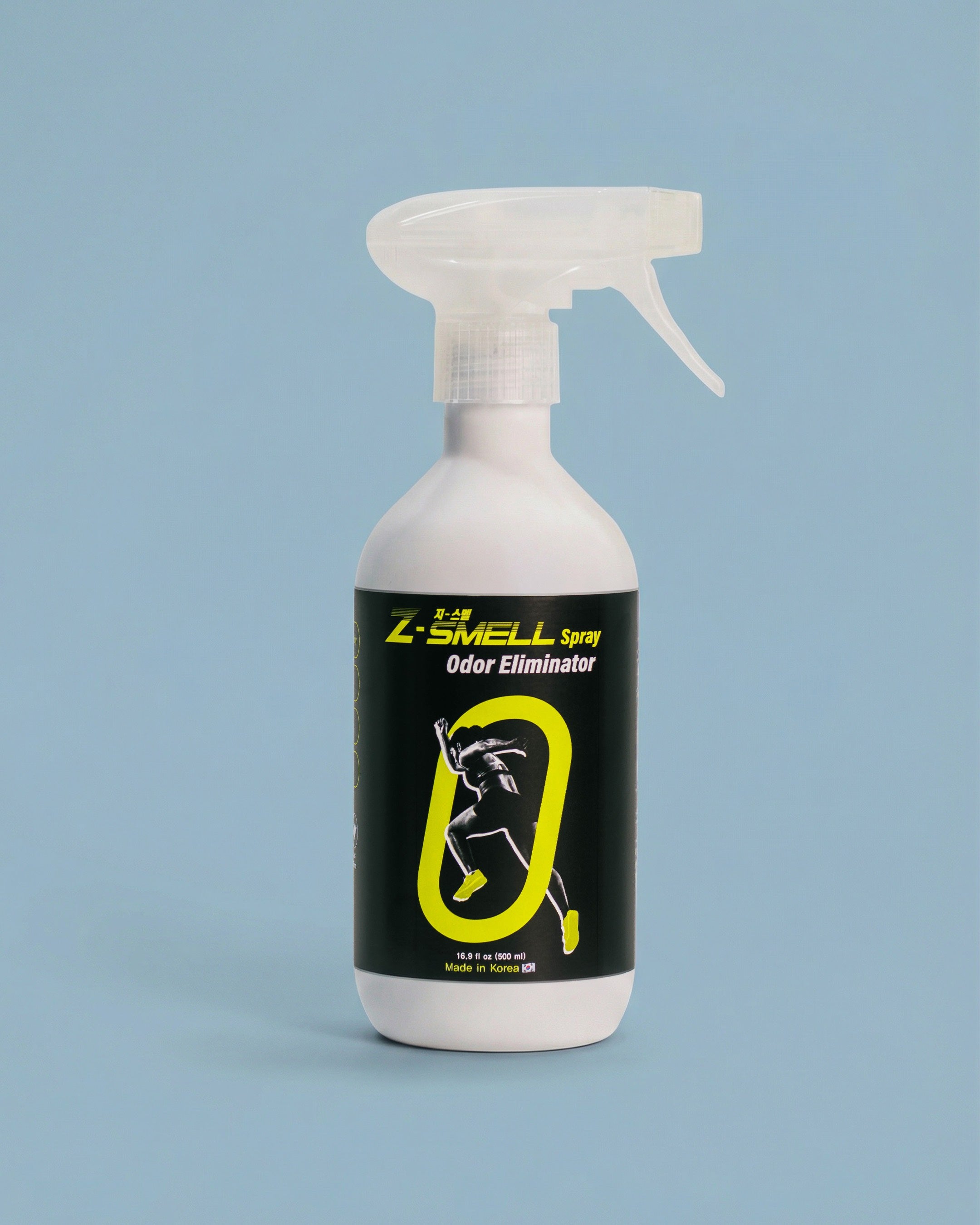
- Z-Spray 16.9oz/500ml costs $19.98 and is unscented, non-toxic, and alcohol-free.
Table of Contents
- Why Newborn Room Odor Control Needs a Different Approach
- Fix the Source First: A Room-by-Room Odor Troubleshooting Plan
- Diaper Odor Control Without Perfume
- Baby-Safe Air Freshener Alternatives Ranked by How They Work
- Comparing the Options: Cost, Coverage, and Best Use
- Choosing a Fragrance-Free Odor Eliminator for the Nursery
- Essential Oils in a Baby Room: What Parents Should Know
- Which Zero Smell Product Fits Your Nursery
- Frequently Asked Questions
Why Newborn Room Odor Control Needs a Different Approach
Safe odor control solutions for newborn rooms start with one rule: remove the odor at its source instead of covering it with fragrance. When removing the source is not enough, choosing non-toxic home fragrance solutions with minimal added scent can help keep the room comfortable without masking odors with stronger fragrances.
Here is the uncomfortable truth most buying guides skip: the nursery is usually the smallest, least-ventilated room in the house, and it holds the most concentrated odor sources. Diaper pails, spit-up on crib sheets, and a warm, closed door all trap smells in a space where your infant spends most of the day. That combination makes "air freshener" a loaded word in this room.
Below, we break down what the research says, which product types actually work, and how to pick a fragrance-free odor eliminator you can feel good about. The comparison table near the middle will help you weigh cost against coverage before you buy anything.
What the Research Says About Fragrance Exposure in Infancy
The American Academy of Pediatrics guidance on infant environmental exposures consistently emphasizes limiting unnecessary chemical exposures in the first year of life, when respiratory and immune systems are still maturing. Many pediatric and environmental health sources also flag synthetic fragrances as a common trigger for irritation in sensitive infants. The practical takeaway for parents is simple: fewer added scents in a newborn's room is the safer default.
That does not mean every scented product is dangerous. It means the burden of proof sits with the product, not your baby. If a label cannot tell you what is inside, it does not belong next to the crib.
Fragrance-Free, Unscented, and Masking: Know the Difference
These three terms get used interchangeably, and that is exactly why parents get confused.
- Fragrance-free means no scent has been added. The product may still have a faint base smell from its ingredients.
- Unscented means the product was formulated to have little or no noticeable odor, though some unscented products use masking agents to hide a base smell.
- Masking means the product adds a stronger scent to cover the original odor. The smell is still there; you just cannot detect it.
For a newborn room, fragrance-free and unscented products that neutralize odor are the goal. Masking sprays are the ones to leave on the shelf.
Fix the Source First: A Room-by-Room Odor Troubleshooting Plan
The fastest way to a fresher nursery is often not a better spray. It is finding and removing the source. A common mistake is treating the air when the smell is coming from a diaper pail liner, a damp burp cloth, or a full laundry hamper. Work through this checklist before you buy any product.
- Diaper pail: Empty daily, wipe the inside, and check the lid seal.
- Crib and bedding: Wash sheets and mattress covers weekly; air the mattress in sunlight.
- Laundry hamper: Keep it ventilated and wash cloth diapers or soiled clothes promptly.
- Carpet and rug: Vacuum regularly; spot-treat spit-up quickly.
- Trash and food: Empty the room's trash can daily and remove any bottles or snacks.
- Diaper bag: Empty and air it out after each outing.
Once the source is gone, a fragrance-free odor eliminator handles the residual smell on surfaces and fabrics. For a deeper walkthrough of building a low-chemical home, see our complete guide to non-toxic living for families with babies.
Ventilation and Humidity Management That Actually Works
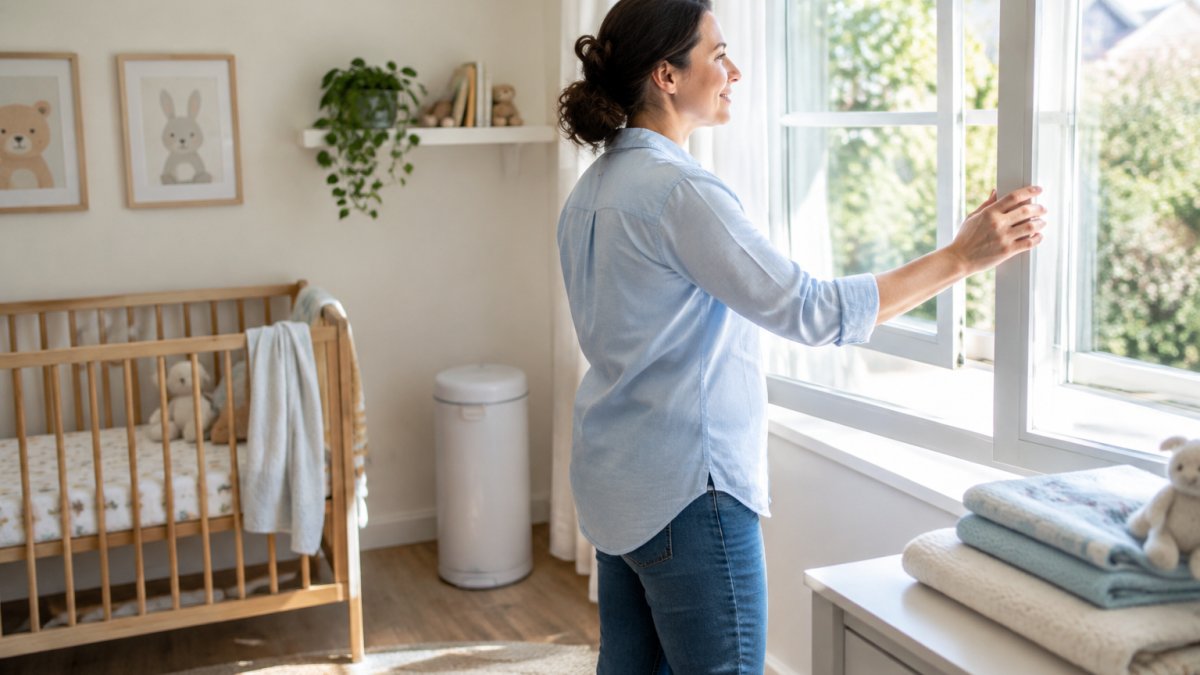
Airflow and moisture control do more for nursery odor than any spray. A common approach is to open a window for a few minutes each day, even in cool weather, and to keep indoor humidity in a moderate range so dampness does not feed musty smells. Run the bathroom fan during baths, avoid over-watering houseplants in the room, and keep the crib away from exterior walls that collect condensation. If a musty smell lingers after cleaning and ventilating, that is your cue to check for a leak or damp spot rather than reach for another product.
Diaper Odor Control Without Perfume
Diaper odor control without perfume comes down to containment and neutralization. Line the pail, empty it often, and treat the pail, the bag, and the changing pad with an unscented product that breaks down odor molecules instead of layering a scent on top. For on-the-go changes, a travel-size option keeps the diaper bag from becoming its own odor source; our guide to travel size odor eliminators for diaper bags covers what to pack.
Watch out: sealing a warm diaper pail tighter to trap the smell usually makes it worse when you open it, because the odor builds up inside. Ventilation and regular emptying beat a stronger lid every time.
Baby-Safe Air Freshener Alternatives Ranked by How They Work
Baby-safe air freshener alternatives fall into a few clear categories, and ranking them by how they work is more useful than ranking by scent. Here is our honest order for a newborn room.
- Source removal and cleaning: The most effective option, and free. Nothing beats removing the smell's origin.
- Ventilation and humidity control: Low cost, high impact, no product required.
- Bio-based neutralizers: These break down odor at the source. Unscented sprays and mineral pouches fall into this category.
- Passive absorbers: Activated-carbon and mineral-based pouches trap odors in small spaces like pails and closets.
- Air purifiers with carbon filters: Helpful for airborne particles, but not a substitute for source control.
- Plug-ins, diffusers, and scented sprays: These are generally not recommended in a nursery. They add fragrance rather than remove odor.
For nursery-specific picks, our roundup of natural odor eliminators for nurseries goes deeper on the safest options.
Comparing the Options: Cost, Coverage, and Best Use
Before you buy, match the product to the job. The table below compares product types by what they cost, how much of the room they cover, and where they work best.
| Option | Typical Cost | Coverage | Best Use | Fragrance |
|---|---|---|---|---|
| Bio-based spray | Low, one-time | Surfaces and fabrics | Diaper pail, changing pad, crib sheets | Unscented |
| Mineral pouch | Low, one-time | Small enclosed spaces | Pail, closet, diaper bag | Light citrus |
| Activated-carbon absorber | Low to moderate | Small spaces | Closets, storage bins | None |
| Air purifier | Higher upfront | Whole room air | Airborne particles | None |
| Plug-in or diffuser | Low, ongoing | Whole room | Not recommended for nursery | Added fragrance |
The pattern is clear: the options that actually remove odor cost less over time than the ones that keep adding scent.
Choosing a Fragrance-Free Odor Eliminator for the Nursery
A fragrance-free odor eliminator for the nursery should do three things: neutralize odor at the source, list its ingredients, and be safe around children. When you compare products, check the label for a clear ingredient list, confirm it is unscented rather than merely masked, and look for a formula that is non-toxic and alcohol-free. Zero Smell's Z-Spray is unscented, non-toxic, and alcohol-free, and it uses bio-based materials to break down the root of the smell rather than cover it.
If you are ready to compare top picks side by side, our guide to the best fragrance-free odor eliminator lays out the options. The EPA Safer Choice program is also a useful reference for spotting products designed with safer ingredients.
Essential Oils in a Baby Room: What Parents Should Know
Essential oils are not automatically safer than synthetic fragrance. Lavender, chamomile, and vanilla smell soothing, but concentrated oils are potent, and diffusing them in a small, closed nursery raises questions about exposure for a newborn. Many parents assume "natural" means risk-free; in practice, essential oils can irritate sensitive skin and airways. If you want a calming scent, a better path is to keep the room clean and well-ventilated and to skip diffusers near the crib. When in doubt, fragrance-free wins in a newborn's room.
Which Zero Smell Product Fits Your Nursery
We make a few products, and each suits a different job in the nursery. Match the product to the space and the source.
- Z-Spray 16.9oz/500ml ($19.98): A few sprays can be used on surfaces such as the diaper pail, changing pad, crib sheets, carpet, and couches. It is unscented and non-toxic. See the Z-Spray 16.9oz/500ml.
- Z-Smell On The Go 3.38oz/100ml ($9.98): The diaper-bag bottle. Same unscented formula in a travel size for changes on the go.
- Z-Pouch & Case ($19.98 for three pouches and a case): Mineral pouches for small enclosed spaces. It has a light citrus smell.
The Z-Spray 16.9oz/500ml product page has the product details.
Your newborn's room deserves odor control that removes the smell instead of hiding it behind perfume. At Zero Smell, we built an unscented, non-toxic, bio-based formula that breaks down odors at the source, is safe to use around children and pets, and works with just a few sprays. With 10,000+ households served, we help families keep the nursery, the diaper bag, and the whole home genuinely fresh. Get started with Zero Smell and neutralize nursery odors without adding a single drop of fragrance.
Frequently Asked Questions
What are some natural air fresheners that are safe for a baby room?
The safest approach is to remove the odor source and improve ventilation rather than add fragrance. Open a window for 10 to 15 minutes daily, run a HEPA air purifier, and use a mineral-based or activated-carbon pouch to absorb lingering smells. If you want a spray, choose an unscented, non-toxic odor eliminator that breaks down odor molecules instead of covering them. Avoid plug-ins, scented candles, and aerosol sprays in a newborn room, since these add VOCs and fine particles to the air your baby breathes.
How can I remove diaper odors from a newborn's room without fragrance?
Start with diaper odor control at the pail: empty it daily, wipe the lid and liner with a damp cloth, and sprinkle baking soda in the bottom. Place a mineral-based pouch near the pail to absorb residual smells, and crack a window while you change diapers. For soft surfaces, use an unscented, non-toxic spray that neutralizes odor at the source. Wash cloth diapers and pail liners in hot water with a fragrance-free detergent, and dry them fully before reuse.
Are essential oils safe to use in a newborn's room?
Many parents choose to avoid essential oils, diffusers, and scented plug-ins around infants. A newborn's lungs and airway are still developing, and concentrated plant oils can irritate them or trigger coughing and wheezing. Some oils, like eucalyptus and camphor, are especially risky for babies under two. If you want a soothing scent association, keep it out of the baby's sleep space entirely and rely on cleaning, ventilation, and unscented odor removal instead.
Is there a safe plug-in air freshener for babies?
No plug-in air freshener is recommended for a newborn room. Plug-ins release continuous fragrance and volatile organic compounds into a small, often closed space, and pediatric guidance commonly discourages scented products in rooms where infants sleep. If a room smells stale, address the source and ventilate instead. A passive mineral pouch placed away from the crib absorbs odors without adding anything to the air, which makes it a better fit for a nursery.
What is the safest non-toxic room freshener for a nursery?
Look for an unscented, non-toxic, fragrance-free odor eliminator that states it neutralizes odors rather than masking them, and check the ingredient list for anything you cannot identify. Zero Smell's Z-Spray 16.9oz/500ml ($19.98) is unscented, alcohol-free, and made with bio-based materials. The Z-Pouch & Case ($19.98) contains bentonite and zeolite minerals. Whatever you choose, spray away from the crib and let the room air out before putting your baby down.
Zero Smell product prices