

Top 7 Odor Neutralizers for Enclosed Closets
Table of Contents
- How to Keep Closets Smelling Fresh Naturally
- Understanding Closet Odor Sources and Odor Absorption vs. Masking
- Quick Comparison Table of Top Odor Neutralizers
- 1. Bio-Based Spray Odor Eliminator for Small Spaces
- 2. Mineral and Microorganism Pouches for Closet Odor Absorption
- Musty Closet Smell Remover: Addressing Humidity and Dampness
- Charcoal Bags for Closet Odors: Absorption and Reactivation
- Shoe Deodorizer for Closets: Targeting Stubborn Athletic Gear Odors
- Frequently Asked Questions
Last Updated: October 19, 2026
How to Keep Closets Smelling Fresh Naturally
Closets trap odors: stale air, moisture, and accumulated fabric scent make bad smells linger and intensify. At Zero Smell, we've helped 10,000+ households neutralize closet odors at the source using bio-based solutions that break down odor molecules rather than masking them.

The top 7 odor neutralizers for enclosed closets work through different mechanisms, from mineral absorption to beneficial microorganism action.
Understanding Closet Odor Sources and Odor Absorption vs. Masking
Why Enclosed Spaces Trap Odors
Enclosed closets create a perfect storm for odor accumulation. Poor air circulation traps smells, humidity feeds mold and mildew, and fabrics absorb sweat, perfume residue, and environmental odors, especially when gym gear, shoes, or seasonal clothing sits undisturbed for months. Piling clothes tightly blocks what little airflow exists, and temperature fluctuations cause condensation that accelerates bacterial growth.
Odor Neutralization vs. Fragrance Masking
Odor masking covers up bad smells with stronger scents: fragrance-based fresheners overpower the problem temporarily, but the source remains and the bad smell returns as the fragrance fades. Odor neutralization breaks down the chemical compounds that create the smell. Zero Smell's bio-based formula uses beneficial microorganisms and mineral compounds to attack odor at the molecular level, so the smell actually disappears rather than hiding beneath artificial scent.
Quick Comparison Table of Top Odor Neutralizers
| Product Type | Best For | Duration | Mechanism |
|---|---|---|---|
| Bio-based spray | Quick application to gear and fabrics | 2-4 weeks per application | Breaks down odor molecules |
| Mineral pouches | Passive absorption in hanging spaces | 3-6 months per pouch | Absorbs moisture and odors |
| Charcoal bags | General closet freshness | 1-3 months | Absorbs odors through porous structure |
| Dehumidifier pouches | Moisture control and dampness | 2-4 weeks | Removes excess humidity |
| Cedar blocks | Long-term natural freshness | 6-12 months | Emits natural insect-repelling oils |
| Baking soda | Budget-friendly absorption | 1-2 months | Neutralizes acidic odor compounds |
| Activated charcoal | Heavy-duty odor absorption | 2-4 months | High surface area captures odor molecules |
1. Bio-Based Spray Odor Eliminator for Small Spaces
A spray-based odor eliminator offers the fastest results for targeted problem areas. Unlike passive absorbers, sprays deliver immediate neutralization where you need it most. Zero Smell spray contains beneficial microorganisms that attack the root of the smell; a few sprays on gym bags, shoes, or athletic gear creates noticeable freshness within minutes. Because it's non-toxic and alcohol-free, it's safe on fabrics, equipment, and even pet bedding.
The Z-Spray 16.9oz/500ml bottle ($19.98) handles multiple problem areas, while the portable 3.38oz/100ml single ($9.98) works for targeted closet treatments. The 3-pack of portable bottles ($23.98) offers better value for persistent odors across several spaces, and the 33.8oz/1000ml bottle ($34.98) suits extensive problems or multiple closets. Application is simple: shake lightly, spray a few times on the surface or fabric, and let the formula work. The Z-Smell Spray is unscented, non-toxic, alcohol-free & environmentally friendly, leaving genuine freshness rather than artificial fragrance.

2. Mineral and Microorganism Pouches for Closet Odor Absorption
Passive odor absorbers work best as a set-it-and-forget-it solution. Pouches containing minerals like bentonite and zeolite combined with active microorganisms absorb moisture while the microorganisms neutralize odor compounds, addressing both humidity and smell. The Z-Pouch & Case system hangs conveniently in your closet: the single pouch with case ($9.98) works for smaller closets or specific problem zones, and the three-pouch bundle ($19.98) handles larger closets or multiple areas.

Musty Closet Smell Remover: Addressing Humidity and Dampness
Musty odors are a moisture signal, not a fragrance problem. Damp closets support mold and mildew, which produce the earthy, stale compounds that transfer onto clothing and shoes. Before any odor neutralizer can hold its ground, bring humidity down and find where the moisture is coming from.
Identify the source before you buy another product
Recurring musty closets usually have a moisture source that never gets addressed. Check these before adding a deodorizer:
- Damp clothing stored too soon. Gym clothes, towels, and rain-soaked jackets release moisture into the enclosed space. Dry them completely first.
- Shared walls and floors. Closets on exterior walls, below-grade closets, and closets sharing a wall with a bathroom or laundry room pick up moisture through the building assembly. A cheap hygrometer placed inside for a week shows whether the closet runs wetter than the room.
- Leaks and condensation. Water stains, rust on wire shelving, peeling paint, or condensation on exterior walls signal a building issue, not a deodorizer issue.
Above roughly 60% relative humidity, treat moisture control as the primary job and odor neutralization as secondary. In the 40-55% range with a musty smell, the source is more likely stored items than the room.
Match moisture-absorbing capacity to closet volume
Ratings matter more than marketing copy when sizing moisture absorbers:
- Small reach-in closets (roughly 25-50 square feet): one calcium chloride hanging dehumidifier rated for a small room, or one to two silica gel or mineral pouches, usually holds humidity steady.
- Walk-in closets (roughly 50-100 square feet): two hanging dehumidifiers or a larger refillable absorber, plus a pouch on each shelf run where air stalls.
- Large walk-ins and closets with exterior walls: a refillable dehumidifier with a visible water reservoir so you can see how much moisture is being pulled.
Calcium chloride dehumidifiers are the most aggressive passive option and collect visible water; empty them every two to four weeks and replace the refill when the beads stop absorbing. Silica gel and mineral pouches are gentler, work well in the 40-60% range, and typically need replacement every one to three months. Charcoal and mineral odor absorbers help with odor but will not keep up with a genuinely damp closet.
Use a two-part approach: dry the air, then neutralize the odor
Once the source is addressed and humidity is under control, odor neutralization has a chance to work. Pair a moisture absorber with an odor neutralizer rather than expecting one product to do both jobs. Zero Smell pouches combine mineral absorption with microorganism action, a reasonable fit for closets that are dry but still carry a musty note from stored fabrics.
Safety and material compatibility in damp closets
- Keep absorbers out of reach of children and pets. Calcium chloride beads and silica gel packets are not food-safe, and spilled reservoir water should be cleaned up promptly.
- Ventilate when you first open a new dehumidifier or refill. Some products off-gas slightly when new; a few minutes with the closet door open resolves it.
- Do not use moisture absorbers inside sealed garment bags or storage bins with leather or suede. Trapped humidity plus an absorber can overdry and crack leather over time.
A musty closet usually needs two fixes, not one: bring the moisture down and remove the source, then neutralize the residual odor.
Charcoal Bags for Closet Odors: Absorption and Reactivation
Activated charcoal is a physical adsorbent: microscopic pores trap odor molecules as air passes over the surface. The mechanism is real, but charcoal adsorbs rather than chemically neutralizes, needs airflow to work, and has finite capacity.
How charcoal actually works, and where it stops working
Odor molecules stick to the pore walls, which is why charcoal takes the edge off general staleness, shoe-cabinet smell, and the lingering note of stored fabrics.
A typical hanging charcoal bag is sized for a small closet or a single shelf run, not a walk-in. Use one bag per enclosed zone, or supplement with a mineral or microorganism-based pouch that works through contact rather than airflow.
Placement that actually moves air across the charcoal
- Hang bags at mid-height, not at the ceiling. Odor molecules concentrate where air stalls, which is usually around the clothing itself, not above the rod.
- Leave a gap between the bag and the wall or clothing. A bag pressed against garments has almost no exposed surface.
- Put one bag near shoes and one near stored seasonal items. These are the two zones that generate the most odor in most closets.
Reactivation: what sunlight can and cannot restore
Sunlight reactivation is real but partial. A day or two in direct sun encourages some trapped volatile compounds to desorb, restoring a portion of capacity, but each cycle returns less than the last, and heavily loaded bags from damp or smoky closets may not recover meaningfully at all.
A workable schedule:
- Month 1-2: bag is at full capacity; no action needed.
- Every 4-6 weeks after that: sun the bag for a full day on each side.
- After 6-12 months, or two or three sunning cycles: replace the bag. If the closet still smells within a week of a fresh bag, you likely need moisture control or an active neutralizer.
Signs a bag is spent: it smells faintly of the closet even after sunning, the fabric feels damp, or the odor returns within days of hanging it back up.
Material compatibility and safety
- Keep charcoal bags off light-colored fabrics and leather. Charcoal dust can transfer and is difficult to remove from white shirts, silk, and suede. Hang bags above or beside clothing rather than resting them on garments.
- Do not place bags inside shoe interiors for long periods. The bag blocks the shoe from drying and can leave dust on the lining. Use a dedicated shoe absorber or a spray for shoes instead.
- Keep bags away from children and pets. The contents are not toxic in the way people fear, but the bags are not toys and the dust is a nuisance if punctured.
Disposal and end of life
Spent charcoal bags are not hazardous household waste in most cases. Empty the charcoal into the trash rather than a compost pile, since it is not a compost feedstock, and check the bag's label for any local disposal guidance. Do not try to refresh a bag in the oven or microwave; those methods are unreliable and can scorch the fabric.
When charcoal is the right choice, and when it is not
Charcoal bags earn their place in dry, ventilated closets where the goal is keeping general staleness in check with a low-effort, reusable product. They are a poor fit for damp closets, tightly packed closets where air cannot reach the bag, and stubborn athletic-gear odor that needs molecular neutralization rather than adsorption.
Shoe Deodorizer for Closets: Targeting Stubborn Athletic Gear Odors
Athletic shoes and gym gear produce some of the most stubborn closet odors.
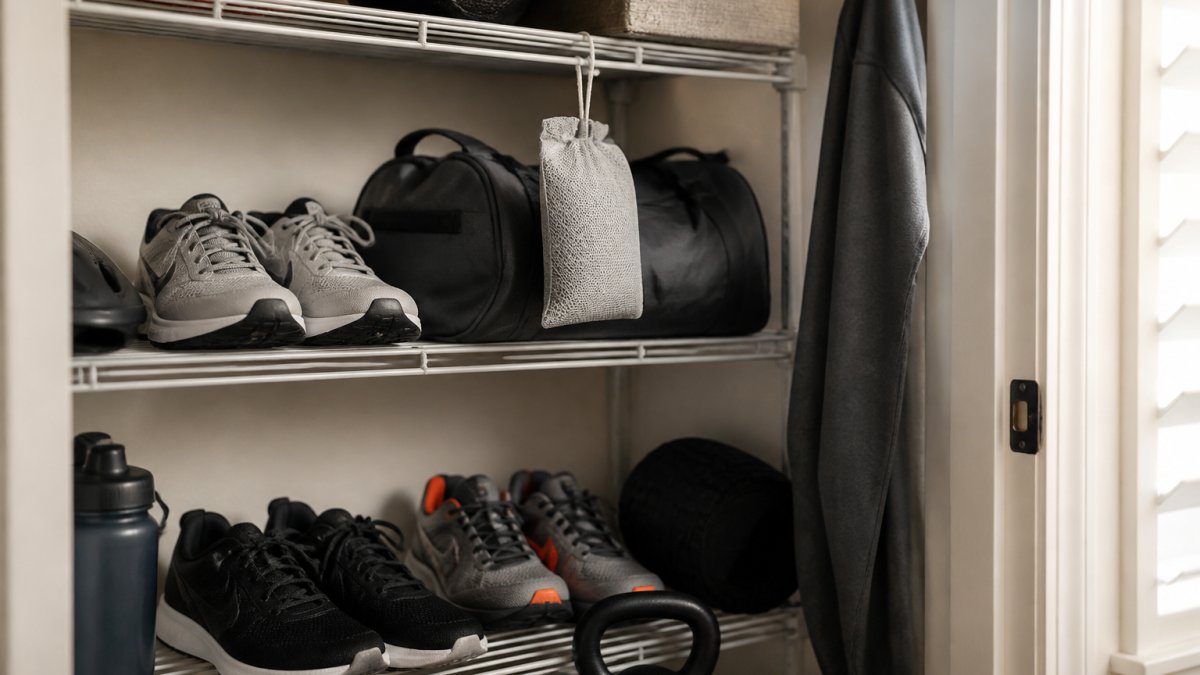
Spray-based neutralizers work exceptionally well on shoes and gear because you can apply them directly to the source.
The key difference comes down to mechanism: fragrance-based products create a temporary scent layer, while bio-based neutralizers break down the sweat compounds and bacterial byproducts causing the smell.
Closet odors don't require harsh chemicals or synthetic fragrances to disappear.
Zero Smell offers solutions across all these categories. Get started with Zero Smell and transform your closet into a genuinely fresh storage space that keeps your clothes, gear, and shoes smelling clean. SHOP NOW
Frequently Asked Questions
How do odor neutralizers actually eliminate closet odors instead of just masking them?
True odor neutralizers break down the chemical compounds that create smells, rather than covering them with fragrance. Bio-based odor eliminators use microorganisms and minerals to neutralize odors at the source. Fragrance masking, by contrast, simply adds a stronger smell over the existing odor, which is why the original smell often returns. When shopping for odor neutralizers for enclosed closets, look for products that neutralize rather than freshen.
What is the best shoe deodorizer for closets with athletic gear?
The best shoe deodorizer for closets targets persistent sweat and athletic odors using bio-based formulas or mineral absorption. Spray-based options work well for direct application to shoes and gear before storage, while pouches or hanging absorbers work continuously in the closet space. For athletic equipment stored in enclosed closets, a combination approach, spraying the gear itself and hanging an absorption pouch, delivers faster, longer-lasting results than either method alone.
How long do odor absorbers last, and when should I replace them?
Many products include date-tracking stickers so you can monitor when they were opened. Spray-based odor neutralizers typically last longer per application but require periodic reapplication. Once an absorber stops working effectively, replace it rather than attempting to reactivate it, as the active ingredients become depleted over time.
How do I know if a closet odor comes from moisture, mildew, or something else?
Musty or stale odors in enclosed closets usually signal moisture and mildew growth, while sharp, persistent smells often come from stored items like shoes or sports gear. Check for visible dampness, discoloration, or a musty smell concentrated in corners or on shelves. If moisture is the issue, address humidity control alongside odor neutralization by ensuring ventilation and using moisture-absorbing products. Odor neutralizers work best when the underlying source, dampness, poor air circulation, or stored items, is also managed.
Are non-toxic odor neutralizers safe to use around children and pets?
Yes, non-toxic, bio-based odor neutralizers are safe for households with children and pets when used as directed. They contain no harsh chemicals, alcohol, or synthetic fragrances that could trigger allergies or sensitivities. Always check ingredient lists and avoid products with unknown additives. Bio-based formulas using minerals and microorganisms are gentler than chemical sprays and won't harm fabrics, skin, or pet bedding when the product comes into contact with these surfaces.