

Best Way to Remove Car Odors: A 2026 Guide
Table of Contents
- Why Car Odors Keep Coming Back
- Step 1: Find the Source Before You Spray
- Step 2: Deep Clean Upholstery, Carpet, and Floor Mats
- How to Get Smoke Smell Out of Car Interiors
- Removing Pet Odors From Car Seats and Trunk Liners
- The Best Odor Eliminator for Cars: What to Look For
- Step 3: Treat the Air Conditioning and Cabin Air Filter
- Step 4: Absorb, Ventilate, and Maintain
- Frequently Asked Questions
Last Updated: September 25, 2026
Why Car Odors Keep Coming Back
The best way to remove car odors is to eliminate the source, not the smell. Most drivers spray a fragrance and call it solved, but the odor returns within a week because the cause, mildew, smoke residue, pet dander, or bacteria feeding on spilled organic matter, was never touched. This guide from Zero Smell covers finding the source, deep cleaning, treating the AC system, and maintaining the result.
The Difference Between Masking and Neutralizing
Masking coats a surface with a stronger fragrance that fades within hours, leaving the original odor intact. Odor neutralization destroys the compounds causing the smell, so nothing is left to return.
Step 1: Find the Source Before You Spray
Odor hunting starts with your nose and a flashlight, not a spray bottle. Odors concentrate in predictable places: the headliner above a smoker's seat, the carpet under a spilled coffee, the trunk liner where wet gear sat, and the ventilation system. A musty smell points to mildew, a sour smell to bacteria in fabric, and a sharp smell when you turn on the fan to the AC system.
Step 2: Deep Clean Upholstery, Carpet, and Floor Mats
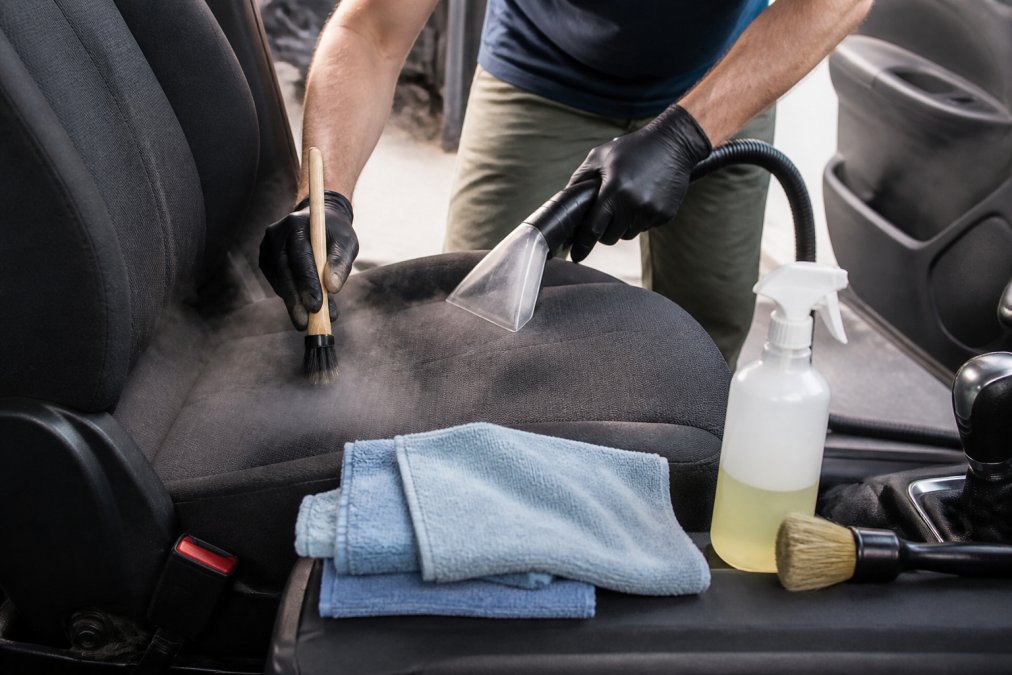
Deep cleaning removes the food source that odorous bacteria and mildew live on. Vacuum with a crevice tool, treat fabric with a fabric shampoo or diluted vinegar, agitate with a detailing brush, and extract the moisture. Floor mats come out and get scrubbed separately. Work top to bottom so loosened dirt does not recontaminate clean surfaces.
Material-Specific Cleaning Chart
| Surface | Best Method | Avoid | Drying Time |
|---|---|---|---|
| Cloth upholstery | Fabric shampoo + steam, then extract | Soaking the padding | 4-6 hours |
| Leather seats | pH-balanced leather cleaner, wipe dry | Vinegar, alcohol | 1-2 hours |
| Carpet and floor mats | Scrub, rinse, extract, air dry outside | Leaving mats damp in the car | Overnight |
| Headliner | Light foam on a microfiber towel, dab only | Saturating the adhesive | 2-3 hours |
| Trunk liner | Vacuum, then spray and wipe | Harsh solvents on rubber | 1-2 hours |
How to Get Smoke Smell Out of Car Interiors
Smoke residue settles into every porous surface, which is why how to get smoke smell out of car is a different job than clearing a food spill. Tar and ash cling to the headliner, seat fabric, and inside of the windows. Wipe every hard surface, including glass, with a vinegar solution, then deep clean the fabric. Replace the cabin air filter, which has been trapping smoke particles and will re-release them every time the fan runs.
Removing Pet Odors From Car Seats and Trunk Liners
Removing pet odors from car seats and trunk liners means breaking down pet dander and the proteins in urine or saliva, not covering them. These compounds bond tightly to fabric fibers and survive a normal vacuum. Vacuum with a rubber-bristle brush attachment to lift embedded hair, then apply an enzyme-based deodorizer and let it dwell per the label before blotting.
The Best Odor Eliminator for Cars: What to Look For
The best odor eliminator for cars neutralizes odor molecules at the source, is safe on your surfaces, and does not rely on fragrance to hide the problem. Read the label for how it works, not how it smells, a fragrance-free or lightly scented formula beats a heavy perfume, because a strong scent is often doing the masking.
Enzyme-Based vs. Bio-Based Formulas
Enzyme-based deodorizers use proteins that break down specific organic compounds, usually pet waste and food. Bio-based formulas use beneficial microorganisms that consume the organic matter causing the odor. Both neutralize rather than mask and both need dwell time. The difference: enzymes often target one odor type, while a bio-based formula handles a broader range of everyday odors across fabric, carpet, and gear.
No neutralizer works on contact. Spray, then walk away for several minutes. Rushing the dwell time is the single most common reason people conclude a product "didn't work."
Step 3: Treat the Air Conditioning and Cabin Air Filter
The air conditioning system is the most overlooked odor source in any car, and the cabin air filter is the part most drivers never touch. The evaporator core stays damp after you park, growing mildew, which is why the first blast of air smells musty. The filter sits upstream of that evaporator, so when it is loaded with dust, pollen, and smoke particles, every fan setting pushes that residue back into the cabin.
How to Replace the Cabin Air Filter
- Buy the right filter first. Look up the part number for your year, make, and model, or match the dimensions on the old one. Standard particulate filters catch dust and pollen; activated-carbon filters add a layer that adsorbs odors and smoke, worth the small upcharge if odor is your problem.
- Find the access panel. On most vehicles it is behind the glovebox: open it, squeeze the sides inward or release the damper arm, and let it drop. On some models it sits under the passenger-side dashboard or beneath the cowl panel in the engine bay. Your owner's manual lists the exact location and replacement interval.
- Open the filter door. You will see a rectangular access cover held by a tab, a screw, or a couple of clips. Release it and set the hardware aside so it does not end up in the vent.
- Note the airflow arrow. Every filter has an arrow on the frame showing airflow direction, usually toward the blower or down toward the floor. Photograph the old filter before pulling it so you reinstall the new one the same way.
- Pull the old filter and inspect it. Expect leaves, insect parts, pet hair, and a gray mat of dust. If it is damp or smells sour, that is your odor source confirmed.
- Vacuum the housing. Use a crevice tool to pull debris out of the empty slot before the new filter goes in. Debris left behind will just load the new filter.
- Seat the new filter arrow-side correct, close the door, and reinstall the glovebox.
Filters often look fine on the surface but are saturated deeper in the pleats. Hold it up to a light; if you cannot see through it, replace it. Most manufacturers call for replacement every 15,000 to 30,000 miles, but drivers in dusty regions, heavy pollen seasons, or with pets should check it every oil change.
Clearing the Rest of the System
A new filter stops the source, but mildew already on the evaporator needs treatment. With the engine running, set the system to fresh air (not recirculate), fan on high, windows down. Spray a vent-cleaning product into the fresh-air intake at the base of the windshield, follow the label's dwell instructions, then run the system several minutes to flush the ducts.
Step 4: Absorb, Ventilate, and Maintain
Maintenance separates a car that smells clean for a week from one that stays fresh. Cleaning removes the current odor; what you do next decides whether it comes back, handling spills immediately, controlling moisture year-round, and keeping an odor absorber working between deep cleans.
Post-Spill Emergency Response
The first ten minutes after a spill matter more than any product you buy later. Odorous bacteria need moisture and organic matter to multiply, so remove both before they set.
- Milk, juice, or sugary drinks: Blot immediately with microfiber towels, then flush with clean water and extract. Sugar residue left in the padding ferments and smells sour within a day or two. If it soaked into seat foam or carpet padding, treat it as a deep-clean job, not a wipe-up.
- Vomit: Remove solids, blot, then treat with an enzyme-based cleaner and let it dwell per the label. The odor comes from stomach acid and partially digested food, so a fragrance spray will not touch it. Clean the seat belt webbing too, since it wicks liquid.
- Pet accidents: Blot, then flood the spot with an enzyme cleaner and let it work. Urine crystals can reactivate with humidity, which is why a spot that seemed clean smells again on a rainy day.
- Chemical or fuel spills: Ventilate hard, absorb with baking soda or cat litter, and avoid scrubbing the spill deeper into the fabric. Some solvents damage upholstery dye, so test on a hidden area first.
- Any spill: Leave the windows down and run a fan across the area until it is bone dry. Damp padding is the single most common reason a cleaned car still smells.
Absorbing What Cleaning Missed
After cleaning, place an odor absorber in the cabin to catch what the deep clean could not reach. Baking soda works short-term in a shallow dish, and activated charcoal pulls odor from the air over time; both need surface area and air movement, so do not bury them under a seat. For a longer-lasting option, the Z-Pouch & Case ($19.98) uses minerals and active microorganisms to keep working in a small space, and it can hang in the cabin or sit in the trunk.

Ventilation and Moisture Control
Air circulation does the rest. Park with the windows cracked when you safely can, run the fan on fresh air regularly, and never leave wet gear, towels, or pet bedding in the car overnight. In humid months, run the AC even on mild days; the evaporator pulls moisture from the air and keeps the interior drier than venting alone. In heavy rain or snow, rubber floor mats you can pull and rinse beat carpet mats that stay damp for days.
A Simple Maintenance Rhythm
- Weekly: Shake out floor mats, remove trash and food wrappers, and check for anything damp under the seats.
- Monthly: Vacuum the carpet and seats, wipe hard surfaces, and check the cabin air filter if you drive in dust or with pets.
- Seasonally: Deep clean upholstery, replace or refresh the cabin air filter, and swap in fresh odor absorbers.
Ozone Generator Safety Protocols
Ozone generators neutralize odors by oxidizing them, and they work, but they are not a casual tool. Ozone is a lung irritant, so run the machine only in an empty, sealed car, never with people or pets inside. After treatment, air the vehicle out completely before anyone gets back in, and follow the manufacturer's run time rather than guessing. Ozone can also degrade rubber seals and plastic trim with repeated use, so it is a last resort for severe odors, not a routine step.
Frequently Asked Questions
How can I neutralize the smell of my car?
Neutralizing means breaking down the odor molecules instead of covering them with fragrance. Start by finding the source, then deep clean upholstery, floor mats, and the headliner. Replace the cabin air filter and treat the air conditioning vents. Finish with a bio-based odor eliminator like Z-Spray, which uses microorganisms to break down the root of the smell. Regular vacuuming and air circulation keep odors from returning.
What is the strongest odor eliminator for vehicle interiors?
The strongest option is a bio-based formula that destroys odor-causing bacteria rather than masking them. Z-Spray uses microorganisms to break down odors at the source and is 99% effective at eliminating odors. It is unscented, non-toxic, and safe around kids and pets. For persistent odors, apply after deep cleaning and let it sit. A few sprays handle most car interiors, and the 16.9oz bottle costs $19.98.
What do car detailers use to remove odors?
Detailers follow a process: vacuuming, steam cleaning, enzyme-based deodorizers, and cabin air filter replacement. They treat the headliner, floor mats, trunk liner, and vents because odors hide in organic matter and moisture. Many now use bio-based sprays that neutralize odors without harsh chemicals. Z-Spray fits this approach and is safe for fabric, carpet, and vehicle interiors.
Is it better to use an odor eliminator or an air freshener?
An odor eliminator is better because it removes the source of the smell. Air fresheners add fragrance that temporarily covers odors, but the underlying bacteria and residue remain. For smoke residue, pet dander, or mildew, an eliminator like Z-Spray breaks down the chemical bonds that create odors. Air fresheners can also trigger allergies, while Z-Spray is unscented and non-toxic.
How do I remove deep-seated odors from car upholstery?
Deep-seated odors need a multi-step approach. First, vacuum thoroughly, then use a steam cleaner or fabric shampoo on the upholstery. For pet odors from car seats, apply an enzyme-based or bio-based deodorizer and let it dry completely. Replace the cabin air filter and ventilate the car. Repeat if needed. Z-Spray is safe for upholstery and breaks down odors at the source.