
How to Get Gym Smell Out of Gear: 7 Steps
Table of Contents
- Why Gym Smell Won't Wash Out with Regular Detergent
- Step 1: Pre-Treat Gear Before Washing
- Step 2: Choose the Best Laundry Detergent for Gym Clothes
- Step 3: Wash with the Right Water Temperature and Settings
- Step 4: Remove Sweat Smell from Synthetic Fabrics
- Step 5: Dry Your Gear Properly to Prevent Mildew
- How to Clean Smelly Gym Bags and Storage
- Use an Odor Eliminator for Stubborn Perma-Stink
- Frequently Asked Questions
Last Updated: September 27, 2026
Why Gym Smell Won't Wash Out with Regular Detergent
Regular detergent isn't designed to break down the bacteria and sweat residue that cause gym smell out of gear. Standard laundry products mask odors with fragrance instead of eliminating them at the source.
When you work out, sweat combines with bacteria on your skin and fabric. This creates a biofilm that regular washing can't fully remove. The problem gets worse over time. Each wash leaves behind more bacteria buildup, and the smell becomes harder to eliminate.
Many athletes notice that gym smell out of gear appears fine right after washing but starts stinking again within hours. This happens because the detergent only cleaned the surface. The bacteria living deep in synthetic fibers survived the wash cycle.
Hard water makes this worse. Minerals in hard water prevent detergent from working effectively, leaving more bacteria behind. Even with the best detergent, if your water quality is poor, odor-fighting becomes nearly impossible.
The solution requires a different approach. You need to target the bacteria and sweat residue directly, not just cover the smell with fragrance.
Step 1: Pre-Treat Gear Before Washing
Pre-treating removes sweat residue and bacteria before they set into the fabric. This is the most important step most people skip.
Soak your gym clothes in white vinegar and water for 30 minutes before washing. Mix one part distilled white vinegar with four parts water. The vinegar breaks down the bacteria and helps neutralize odors naturally.
For stubborn perma-stink, increase the soak time to one hour. Really smelly items need longer exposure to the vinegar solution.
After soaking, don't rinse the vinegar out. Wash the clothes directly with your regular detergent. The vinegar works during the wash cycle to break down odor-causing bacteria.
Baking soda offers another pre-treatment option. Sprinkle baking soda directly onto damp gym clothes and let it sit for 15-30 minutes. The baking soda absorbs sweat odors and moisture. Then brush off the excess and wash normally.
For moisture-wicking fabrics, pre-treatment is especially critical. These synthetic materials trap sweat deep in the fibers where regular detergent can't reach. The pre-soak gives the vinegar or baking soda time to penetrate the fabric and break down bacteria.
Step 2: Choose the Best Laundry Detergent for Gym Clothes
Not all detergents work equally well on gym smell. You need an enzymatic detergent that breaks down sweat proteins and bacteria.
Enzymatic detergents contain special proteins that dissolve organic matter like sweat, blood, and body oils. Standard detergents use surfactants that lift dirt but don't break down the biological compounds causing gym odors.
Look for detergents labeled "enzymatic" or "sport-specific." These are formulated to handle the unique challenges of athletic gear. Sport detergents are designed specifically for moisture-wicking fabrics and synthetic blends.
Avoid fabric softeners entirely. This is critical. Fabric softeners coat fibers with a waxy layer that traps bacteria and sweat inside the fabric. This makes odor worse over time, not better. The coating prevents water and detergent from reaching the bacteria deep in the fibers.
Use the correct detergent dosage. Many people overdose on detergent thinking more soap means cleaner clothes. Too much detergent leaves residue in the fabric that traps bacteria and moisture. Follow the bottle's instructions for your water hardness and load size.
For best results with gym gear, use half the recommended amount of detergent plus an enzymatic booster. The booster enhances the detergent's ability to break down sweat proteins without adding extra residue.
| Detergent Type | Best For | Key Benefit |
|---|---|---|
| Enzymatic sport detergent | Moisture-wicking fabrics | Breaks down sweat proteins |
| Standard enzymatic detergent | Cotton and synthetic blends | Handles organic matter |
| Detergent + enzymatic booster | Stubborn gym odors | Enhanced bacteria breakdown |
| High-efficiency detergent | HE machines | Prevents residue buildup |
Step 3: Wash with the Right Water Temperature and Settings
Water temperature affects how well detergent breaks down bacteria and sweat residue. Hot water kills more bacteria but can damage synthetic fabrics.
Warm water is the best compromise for gym clothes. It's hot enough to help detergent work effectively but won't damage moisture-wicking materials. Aim for 90-110°F water temperature.
Cold water saves energy but struggles to dissolve sweat residue and activate enzymes in detergent. If you must use cold water, increase your soak time and use an enzymatic booster.
Use the gentle or delicate cycle for synthetic fabrics. Aggressive agitation damages moisture-wicking fibers and breaks down their odor-fighting properties. The fabric needs gentler movement to prevent pilling and fiber breakdown.
For really smelly gear, use the normal or heavy-duty cycle. The extra agitation helps break down stubborn bacteria buildup. This is a trade-off between fabric care and odor removal.
Run an extra rinse cycle. This removes detergent residue that traps bacteria and moisture. One standard rinse often leaves soap behind that feeds bacteria growth.
Turn gym clothes inside out before washing. This exposes the inner surfaces where sweat soaks through to the fabric. The inside of the garment touches your skin directly and accumulates more sweat and bacteria than the outside.
Step 4: Remove Sweat Smell from Synthetic Fabrics
Synthetic fibers like polyester and nylon trap sweat differently than cotton. They absorb moisture-wicking compounds that prevent sweat from evaporating, which creates an ideal environment for bacteria growth.
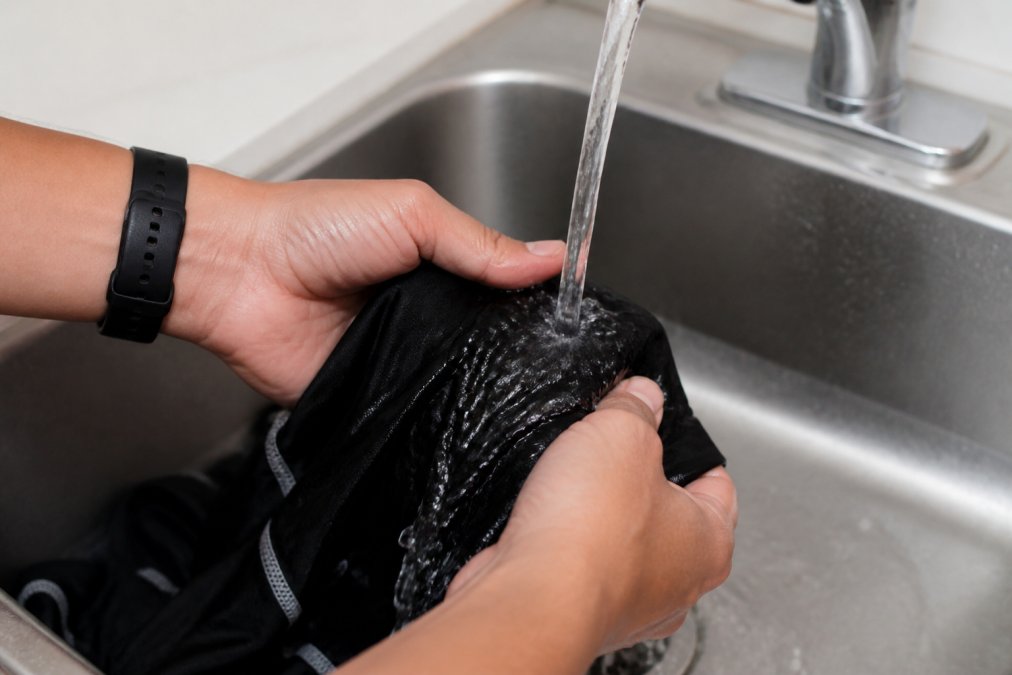
Synthetic fabrics need special treatment because standard washing doesn't fully remove sweat from inside the fiber structure. The moisture-wicking technology that keeps you dry during exercise also traps sweat molecules deep in the material.
Soak synthetic gym clothes in a vinegar solution for one hour before washing. The vinegar penetrates the fiber structure and breaks down sweat compounds that regular detergent misses. This is more effective than a 30-minute soak for cotton or cotton blends.
Use hot water for the final rinse of synthetic fabrics. The heat helps flush out remaining sweat residue and bacteria. Be careful not to use boiling water, which can damage the fabric.
For polyester and nylon blends, consider laundry stripping. This advanced technique uses hot water, detergent, and borax to pull out accumulated residue. Mix hot water with one cup of detergent, half cup of borax, and half cup of washing soda. Soak gym clothes for 4-6 hours, stirring occasionally. The water will turn gray or brown as residue comes out. Rinse thoroughly and wash normally.
Laundry stripping works on heavily soiled synthetic gear that regular washing can't fix. It's a one-time deep clean for items with serious perma-stink.
Never use high heat on synthetic fabrics. Heat damages the moisture-wicking properties and can melt the fibers. Air drying is always better for athletic gear made from synthetic materials.
Step 5: Dry Your Gear Properly to Prevent Mildew
How you dry gym clothes is just as important as how you wash them. Improper drying creates moisture that feeds mildew and bacteria growth.
Air dry whenever possible. Hang clothes in a well-ventilated area with direct sunlight if available. Sunlight naturally kills bacteria and helps eliminate odors. Open windows or use a fan to increase air circulation around the drying clothes.
Never leave damp clothes in a pile or sealed bag. This creates a moist environment where bacteria and mildew thrive. If you can't dry clothes immediately after washing, hang them to dry first.
For gym bags and storage areas, use a dehumidifier or open windows regularly. Moisture in enclosed spaces feeds odor-causing bacteria. Good ventilation prevents mildew and keeps gear fresh longer.
If you must use a dryer, use the lowest heat setting.
How to Clean Smelly Gym Bags and Storage
Gym bags themselves trap bacteria and sweat that contaminate clean clothes. A smelly gym bag will make freshly washed clothes smell bad again.
Use an Odor Eliminator for Stubborn Perma-Stink
When washing and drying aren't enough, you need an odor eliminator designed to destroy bacteria at the source.
Frequently Asked Questions
Why do my gym clothes still smell even after washing?
Bacteria and biofilm buildup in synthetic fibers resist standard detergent. Sweat residue contains body oils and compounds that bond to moisture-wicking fabrics, creating odor that persists through normal washing. The problem worsens if clothes stay damp or if you use fabric softener, which traps bacteria. Enzymatic detergents and proper rinse cycles break down these compounds more effectively than regular detergent alone.
What is the best laundry detergent for gym clothes?
Enzymatic detergents specifically designed for athletic wear work best because they break down the proteins and oils in sweat rather than just masking odor. Look for formulas that target synthetic blends and moisture-wicking fabrics. Avoid fabric softeners, which coat fibers and trap bacteria. Wash in hot water when fabric care allows, as higher temperatures improve enzyme activity and kill more odor-causing bacteria.
Does vinegar or baking soda actually remove gym smell, or do they just cover it up?
Distilled white vinegar and baking soda work differently than fragrance-based products. Vinegar's acidity helps break down some sweat residue and bacteria, while baking soda absorbs odors. However, neither fully eliminates the root cause, biofilm and bacteria buildup in synthetic fibers. For stubborn perma-stink, combine these methods with enzymatic detergent, proper drying, and an odor-neutralizing product like Z-Spray, which uses bio-based materials to eliminate odors at the source.
How long does one bottle of odor eliminator last if I'm treating multiple problem areas?
Z-Spray's 16.9oz bottle ($19.98) typically lasts several weeks with regular use across multiple items like gym gear, bags, and lockers, usually just a few sprays per application. The 33.8oz size ($34.98) lasts roughly twice as long. Since the formula works at the source rather than masking, you need fewer applications than fragrance-based sprays, making one bottle go further across multiple problem areas.