

How to Remove Mildew Smell from Hockey Gloves
Table of Contents
- Identify Mildew vs. Regular Sweat Odor
- How to Wash Hockey Gloves by Hand
- Machine Washing Hockey Gloves Safely
- Treat Stubborn Odor Spots with Baking Soda
- How to Dry Hockey Gloves Completely
- Using a Hockey Glove Deodorizer Between Games
- How to Prevent Hockey Gear Odor Long-Term
- When to Replace or Seek Professional Help
- Frequently Asked Questions
Last Updated: October 20, 2026
Identify Mildew vs. Regular Sweat Odor
Learning how to remove mildew smell from hockey gloves starts with understanding whether the smell is sweat or mildew, different problems needing different fixes.
To tell them apart:
- Mildew appears as dark spots or discoloration on the interior
- Mildew smell lingers even after airing out
- Sweat odor is strongest right after playing
If your gloves have both problems, wash them thoroughly AND treat the mildew spots. Learning how to remove mildew smell from hockey gloves follows a clear process, here it is step by step.
How to Wash Hockey Gloves by Hand
Hand washing gives you the most control and is safest for your gloves. This method works well for removing both sweat and early-stage mildew odor.
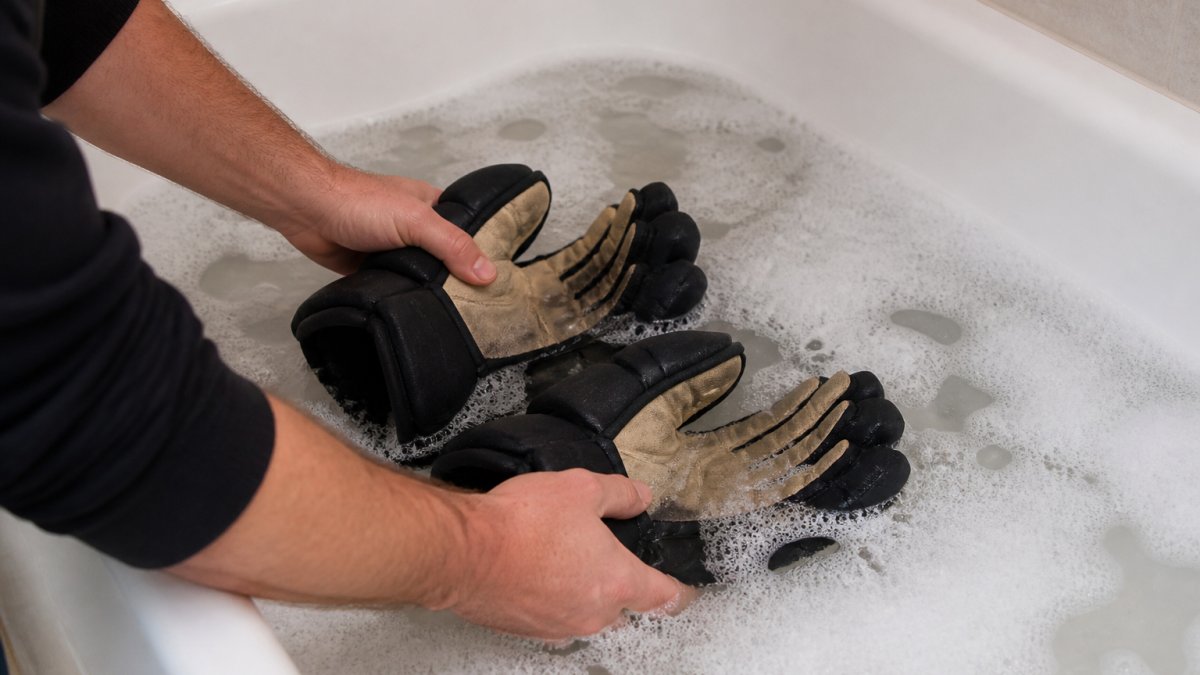
Prepare Your Gloves for Cleaning
Gather mild detergent or sports-gear cleaner, cold or lukewarm water, a bathtub, sink, or large bucket, a soft brush or cloth, and towels.
Fill your tub with cold water, hot water damages the padding.
Submerge your gloves and let them soak for 15-20 minutes. This loosens the sweat and bacteria stuck to the fabric and padding.
Soak and Scrub the Glove Palms
The palms are where sweat builds up most, and where mildew often starts.
After soaking, gently scrub the palms with a soft brush or cloth in circular motions, focusing on seams, creases, and dark or discolored spots. Don't scrub too hard, clean without damaging the material.
If your gloves have a textured palm (like Nash palm material), scrub a bit more firmly since the texture traps more sweat and odor.
Rinse Thoroughly Until Water Runs Clear
Rinsing is critical, leftover soap traps moisture and worsens odor.
Drain the soapy water, refill with fresh cold water, and work the water through the padding by hand. Squeeze gently, don't wring or twist. Drain and refill until the water runs clear with no soap bubbles, usually 3-4 rinses.
Water should flow easily through the interior; if it pools or drains slowly, keep rinsing.
Machine Washing Hockey Gloves Safely
Machine washing is faster but requires care: cold water and a gentle cycle only.
Place gloves in a mesh laundry bag, use cold water and mild detergent, and skip fabric softener, its residue traps odor.
Machine washing handles sweat odor well, but for mildew, hand wash first to treat stubborn spots, then machine wash as a follow-up.
Treat Stubborn Odor Spots with Baking Soda
Baking soda is a natural deodorizer that neutralizes odor-causing compounds rather than masking them.
Mix it with a little water into a thick paste that stays on the glove without dripping.
Once dry, rinse thoroughly with cold water, leftover powder attracts moisture. For lighter odors, sprinkle dry baking soda inside and let it sit a few hours.
How to Dry Hockey Gloves Completely
Proper drying is the most important step. Incomplete drying is the number one reason mildew returns, and it's the step most players rush.
Why Gloves Stay Wet Inside
Hockey gloves are built from layered foam, mesh, synthetic leather, and palm materials like Nash or clarino, layers that hold water like a sponge. The outer shell can feel dry while the foam core and finger gussets stay damp, and mildew needs only a little trapped moisture to regrow.
Set Up for Maximum Airflow
Never use a clothes dryer, heat breaks down foam, shrinks synthetic leather, and warps palms. Skip prolonged direct sunlight too, since UV fades shells and weakens stitching.
Instead, build an airflow station:
- Open each glove wide and pull the fingers apart so air reaches the gussets.
- Stand the gloves cuff-down over a drying rack, a boot dryer set to no heat, or a wire cooling rack so air moves through the wrist opening and out the fingers.
- Point a box fan or floor fan at the gloves from two to three feet away, moving air removes moisture far faster than still air.
Use Towels and Desiccant Packs Correctly
Stuff each glove loosely with clean, dry microfiber or terry towels, packed tight, they block airflow. Change them every few hours the first day, then every six to eight hours.
For a hands-off option, place a rechargeable silica desiccant pack or cedar sachet inside each glove overnight. Recharge desiccants per the manufacturer's directions; cedar adds scent but doesn't replace airflow.
How Long Drying Actually Takes
Plan on 24 to 48 hours at room temperature with a fan; heavy sweat or a full soak can push it to 72 hours. Gloves that still feel cool or damp against your wrist will regrow mildew within days.
How to Confirm the Interior Is Fully Dry
Surface feel isn't enough. Before the gloves go back in your bag:
- Press your thumb deep into the palm and finger foam. It should feel room temperature and dry, not cool or clammy.
- Smell the cuff and finger gussets. Any musty or earthy note means moisture is still present.
- Slide a dry paper towel into each finger and press. Any dark damp patch means keep drying.
Material-Specific Drying Cautions
- Nash palm: The textured surface holds water in its grain. Blot the palm with a dry towel before racking, and give it an extra fan cycle.
- Clarino or synthetic leather palm: These dry faster but can stiffen if overheated. Keep them away from space heaters and radiators.
- Mesh and ventilated shells: Air moves through easily, but the foam underneath still needs the full drying window.
Using a Hockey Glove Deodorizer Between Games
Deodorizers help prevent odor and mildew between washes.
Spray-based deodorizers work quickly. A product like Z-Spray 16.9oz/500ml uses bio-based microorganisms to break down odor at the source.

Shake lightly before use, spray a few times inside each glove, and let it work.
For portable convenience, the Z-Smell On The Go 3.38oz/100ml fits in your hockey bag.

Pouches are another option. The Z-Pouch & Case uses minerals and active microorganisms to absorb odor.

These deodorizers are safe around kids and pets. They contain no harsh chemicals.
Use a deodorizer 2-3 times per week during hockey season.
How to Prevent Hockey Gear Odor Long-Term
Prevention is where you win against mildew. Cleaning removes the problem; a repeatable routine stops it from coming back.
The Between-Games Routine (Every Skate)
Build this into your post-game habit so it takes under five minutes:
- Empty the bag immediately. Pull gloves, skates, shin guards, and elbows out. Gear left in a closed bag stays warm and damp, which is exactly what mildew needs.
- Wipe the palms. Blot the inside of each glove with a dry microfiber towel to pull surface sweat before it soaks into the foam.
- Rack, do not bag. Stand gloves cuff-down on a rack or over a fan with the fingers spread. Let them air while you shower and eat.
- Spray a maintenance deodorizer. A bio-based spray applied to the interior after each skate keeps odor organisms from building up between washes.
- Repack only when fully dry. Use a ventilated gear bag or a mesh laundry bag for gloves so air keeps moving in transit.
Sweat Control vs. Mildew Prevention
These are related but not the same. Sweat control means reducing how much moisture gets into the glove; mildew prevention means denying fungi the damp, dark conditions they need.
- Sweat control: wear moisture-wicking glove liners, keep your hands dry between shifts, and rotate two pairs of gloves if you skate several times a week.
- Mildew prevention: dry fully after every skate, store in airflow, and wash on a schedule before odor sets in.
If you only do one, do the drying. A dry glove rarely mildews, even after a lot of sweat.
Wash on a Schedule, Not on Smell
Do not wait for the glove to smell before washing. During the season, wash gloves every two to three weeks if you skate once or twice a week, and weekly if you skate three or more times. A regular cadence removes sweat salts and skin cells before they feed odor bacteria and mildew.
Store Gear Where Air Moves
- Use a ventilated gear bag or a wire shelving unit instead of a sealed plastic bin.
- Keep gear out of car trunks, lockers, and damp basements.
- Hang gloves from a hook or rack in a closet with the door cracked for airflow.
Material-Specific Prevention Notes
- Nash palm: Wipe and dry the palm first because the texture traps sweat. Consider a palm-only wipe after every skate.
- Synthetic leather and mesh: These tolerate airflow well but still need the interior foam dried fully.
- Leather palms: Keep them away from heat and direct sun, and store only when fully dry to avoid cracking and mildew in the grain.
Rotate and Inspect
If you skate frequently, rotate two pairs of gloves so each pair gets a full drying window. Inspect the interior monthly for dark spots, discoloration, or a musty smell that lingers after drying. Catching early mildew lets you treat it with a wash and baking soda before it penetrates the foam.
When to Replace or Seek Professional Help
Most mildew and odor problems can be fixed with the steps above, but sometimes replacement makes more sense. Replace your gloves if:
- Mildew smell returns within days of washing
- Dark mildew spots don't fade after multiple treatments
- The padding feels spongy or deteriorated
Professional cleaning services use industrial washers and specialized treatments. They cost more than home washing but work for valuable gloves you want to keep.
For most players, regular hand washing and proper drying prevent mildew before it becomes severe. Most odor problems disappear within one or two thorough cleanings.
If you're dealing with heavy mildew or stubborn odor, use a combination approach: hand wash, treat with baking soda, dry completely, then use a deodorizer spray like Z-Spray to maintain freshness between washes.
Frequently Asked Questions
How do I know if my hockey gloves have mildew or just regular sweat odor?
Mildew smell is musty, earthy, and persistent even after airing out, it doesn't fade like fresh sweat odor. Mildew typically develops when gloves stay damp for extended periods and moisture gets trapped inside. Regular sweat odor is sharper and often improves with ventilation. If you see dark spots or discoloration on the interior, that's a sign mildew is present. The key difference: mildew requires active treatment to eliminate, while sweat odor often responds to simple drying and airing.
Can I put hockey gloves in the washing machine?
Yes, but use caution. Machine washing works for hockey gloves, but only on a gentle or delicate cycle with cold water. Use mild detergent or a sports-gear cleaner, and skip the dryer, heat damages the padding and materials. Place gloves in a mesh laundry bag for extra protection. Hand-washing is gentler and gives you more control over water temperature and agitation, which is why it's often the safer choice for high-quality gloves. Always check the manufacturer's care label first.
How long does it take hockey gloves to air-dry completely?
Complete air-drying typically takes 24 to 48 hours, depending on humidity and airflow. Moisture trapped deep inside the glove takes longer to escape than the exterior. Speed up drying by placing gloves on a drying rack in a well-ventilated area, away from direct sunlight. Stuff the interior with dry towels and replace them every few hours to absorb moisture. Avoid heat sources like radiators or dryers, which can damage materials and padding. Gloves are fully dry when the interior feels dry to the touch and no moisture smell remains.
What's the best way to prevent hockey gloves from smelling musty again?
Prevention starts immediately after play. Rinse the glove interior with cold water to remove sweat residue, then air-dry completely before storing. Store gloves in a breathable bag or open container, never sealed plastic. Between games, use a hockey glove deodorizer spray or pouch to neutralize odors at the source rather than masking them. Wash gloves every 2-3 weeks during the season. Keep gloves in a cool, dry space away from moisture. If you notice any damp smell developing, treat it immediately with baking soda or a bio-based deodorizer to prevent mildew from taking hold.
Mildew in hockey gloves is frustrating, but it's fixable. The key is catching it early and drying your gloves completely. At Zero Smell, we understand how important it is to keep your gear fresh without harsh chemicals. Our bio-based deodorizers are designed for exactly this, neutralizing odor at the source while staying safe for your family and equipment. Start with regular washing and proper drying, then add a deodorizer spray to your routine. Your gloves will stay fresh all season long.