

Natural Ways to Neutralize House Odors: A 2026 Guide
Table of Contents
- Why Odors Linger and How to Neutralize House Odors at the Source
- Step 1: Find and Remove the Odor Source
- Step 2: DIY Odor Neutralizer Spray Recipes That Work
- Step 3: How to Remove Pet Odors Naturally From Carpet, Beds, and Kennels
- Step 4: Absorb and Neutralize Odors With Charcoal, Baking Soda, and Pouches
- Step 5: Ventilation, Humidity Control, and Air Circulation
- Step 6: Cleaning Fabrics, Surfaces, and Textiles
- The Best Natural Odor Eliminator 2026: What to Look For
- Frequently Asked Questions
Last Updated: October 1, 2026
Why Odors Linger and How to Neutralize House Odors at the Source
Most store-bought air fresheners mask smells for an hour and leave a headache behind. That is why so many families are looking for natural ways to neutralize house odors that actually work.
Step 1: Find and Remove the Odor Source
You cannot neutralize house odors while the source is still there. A hidden spill, a damp towel, or a full trash can will keep feeding the smell no matter what you spray.
Start by playing detective:
- Sniff close to carpets, baseboards, and furniture seams
- Check under sinks, behind appliances, and inside closets
- Look for damp spots, mildew, or old food
- Empty trash cans, diaper bags, and pet bowls
Step 2: DIY Odor Neutralizer Spray Recipes That Work
A good DIY odor neutralizer spray uses simple ingredients that break down odor molecules instead of masking them. You probably already have most of them at home.
Try this basic recipe:
What you'll need:
- 1 cup distilled water
- 2 tablespoons white vinegar
- 10 drops lemon or lavender essential oil
- A clean spray bottle
Steps:
- Pour the water and vinegar into the bottle
- Add the essential oil drops
- Shake gently before each use
- Spray lightly on fabrics and surfaces
- Let air dry
Step 3: How to Remove Pet Odors Naturally From Carpet, Beds, and Kennels
Pet odors are stubborn because they soak deep into fibers. To remove pet odors naturally, you need to neutralize the uric acid crystals, not just the surface smell.
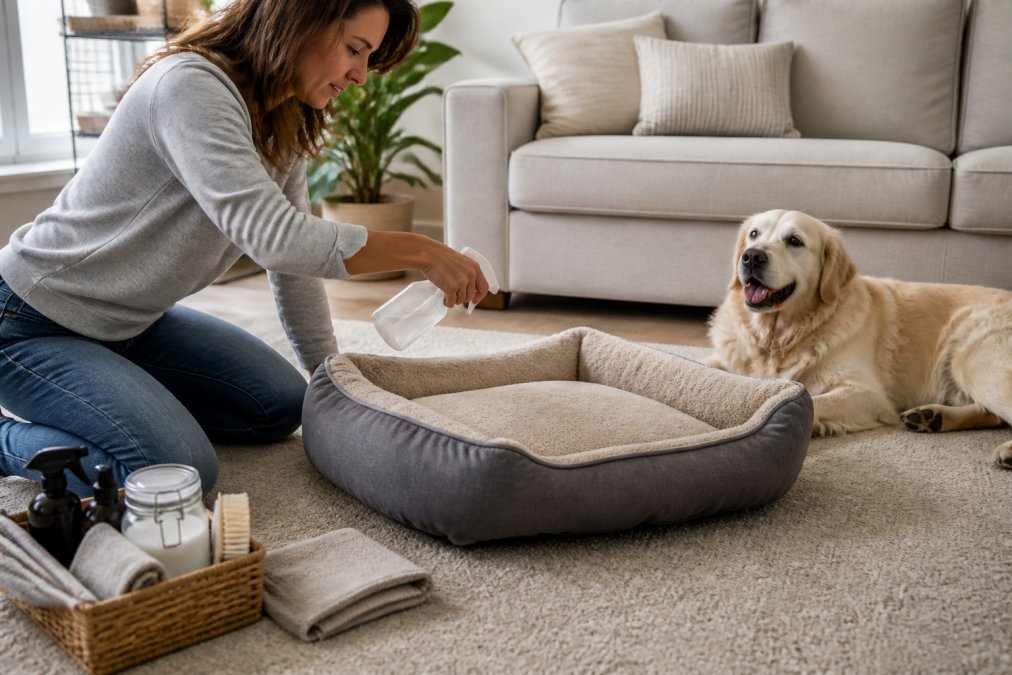
Here is a simple method:
- Blot fresh accidents with a clean cloth
- Mix 1 cup water with 1/4 cup vinegar
- Spray the area and let it sit for 10 minutes
- Sprinkle baking soda over the spot
- Wait until dry, then vacuum
Step 4: Absorb and Neutralize Odors With Charcoal, Baking Soda, and Pouches
Absorbing odors is the quiet workhorse of natural odor removal. Unlike sprays that chemically break down odor molecules, absorbent materials trap them. Activated charcoal, baking soda, and mineral pouches pull odor molecules out of the air without adding any fragrance of their own.
Why Absorption Works: The Mechanism
Activated charcoal is made by heating carbon-rich material (coconut shell, wood, or peat) to high temperatures in the absence of oxygen. That process etches millions of microscopic pores into every gram, a single gram of activated charcoal can have a surface area of 500 to 1,500 square meters. Odor molecules in the air drift into those pores and stick to the carbon through van der Waals forces, a weak electrical attraction.
Matching the Material to the Job
| Method | Best For | How Long It Lasts | Trade-Off |
|---|---|---|---|
| Baking soda | Carpets, mattresses, trash cans, fridge | Replace weekly | Loses potency once it absorbs moisture |
| Activated charcoal | Closets, cars, small rooms, drawers | 1-3 months | Pores saturate and stop working; some brands can be reactivated in sunlight |
| Zeolite pouches | Gym bags, lockers, gear, litter areas | 1-2 months | Best on ammonia and amine odors, less effective on smoke |
| Bentonite clay | Basements, garages, damp spaces | 1-2 months | Swells when wet and loses absorbency |
| Vinegar bowls | Kitchens, bathrooms | 1-2 days | Only neutralizes alkaline odors; the vinegar smell fades as it evaporates |
DIY Absorbent Pouches You Can Make Tonight
You do not need to buy anything to get started. A simple sock or cotton drawstring bag filled with two to three tablespoons of baking soda or activated charcoal pellets will absorb odors in a drawer, closet, or gym bag. Refresh the baking soda monthly by pouring it out and refilling. Charcoal pellets can often be revived by spreading them on a tray in direct sunlight for a few hours, the heat drives off trapped molecules, though most pellets lose effectiveness after two or three cycles.
Step 5: Ventilation, Humidity Control, and Air Circulation
Fresh air does more for indoor air quality than any spray. Good ventilation moves airborne particles out and stops moisture from feeding mildew. But the right routine changes with the season, and that is where most odor guides stop short.
The Seasonal Split: Winter vs. Summer Odors
In winter, homes stay sealed. Windows stay shut, the furnace runs for months, and the same air recirculates through the house. That traps cooking odors, pet dander, and volatile organic compounds indoors. Winter air is also dry, which sounds helpful but actually makes some odors worse, dry air lets odor molecules stay airborne longer instead of settling, and dry nasal passages make you more sensitive to smells.
A Simple Seasonal Routine
Winter:
- Open windows on opposite sides of the house for 10 to 15 minutes daily
- Run the kitchen exhaust fan every time you cook, and the bathroom fan for 15 minutes after every shower
- Replace HVAC filters every 60 to 90 days (more often if you have pets)
- Keep closet doors and interior doors open so air does not stagnate
Summer:
- Run a dehumidifier in basements and bathrooms; empty the reservoir daily
- Keep indoor humidity between 30% and 50% with a hygrometer
- Check under sinks, behind appliances, and around windows for condensation
- Wash and dry damp towels, bath mats, and shower curtains weekly, do not let them sit
Air Circulation Basics That Apply Year-Round
- Use a HEPA filter or carbon filter in your HVAC system; carbon filters specifically target odor molecules that HEPA filters miss
- Move furniture a few inches away from vents so air can flow
- Run ceiling fans on low to keep air moving even when windows are closed
- Leave closet doors open for air circulation, especially in humid months
The CDC's guidance on mold and moisture control explains that keeping humidity low is one of the most effective ways to prevent mildew and the musty smells that come with it.
Ventilation is not a one-size-fits-all habit. In winter, you are flushing out trapped odors. In summer, you are starving mold and bacteria of the moisture they need. Match the routine to the season and you will need far less spray.
Step 6: Cleaning Fabrics, Surfaces, and Textiles
Fabrics hold odors longer than hard surfaces. Curtains, couch cushions, rugs, and bedding trap odor-absorbing particles that keep releasing smell for weeks.
Follow this routine:
- Wash bedding and pet blankets weekly in hot water
- Steam clean carpets every 3 to 6 months
- Wipe hard surfaces with a vinegar-water mix
- Vacuum upholstery with a HEPA filter vacuum
- Air out pillows and cushions in sunlight
The Best Natural Odor Eliminator 2026: What to Look For
The best natural odor eliminator in 2026 does three things: it breaks down odor molecules, it stays safe around family and pets, and it works on more than one surface.
Here is what to check before you buy:
- Bio-based ingredients that target the source, not just the smell
- Fragrance-free or lightly scented formulas for sensitive skin
- Non-toxic and alcohol-free labels
- Multi-surface use for fabric, carpet, car, and gear
- Clear directions for how much to use
Frequently Asked Questions
What is the best natural odor neutralizer?
The best natural odor neutralizer depends on the odor source, but bio-based formulas that break down odor molecules at the source tend to outperform masking sprays. Look for products with minerals like bentonite and zeolite, active microorganisms, or simple ingredients like baking soda and vinegar. For pet odors, enzyme-based or bio-based sprays work well on carpets and beds. For airborne smells, activated charcoal pouches absorb odors without fragrance. A combination approach, removing the source, cleaning surfaces, and using an odor-absorbing product, delivers the most consistent results.
Does vinegar actually neutralize odors or just mask them?
Vinegar neutralizes many odors rather than masking them. Its acetic acid reacts with alkaline odor compounds, including ammonia found in pet urine, which changes their chemical structure. This is why diluted white vinegar works well for cleaning surfaces and freshening fabrics. However, vinegar has a strong scent of its own that fades as it dries. For deep-set odors in carpets or upholstery, vinegar alone may not reach the source. Pair it with a bio-based spray that breaks down odor molecules for stubborn smells.
How do I remove pet odors naturally without harsh chemicals?
Start by locating and removing the source, whether that is an accident on carpet, a soiled pet bed, or a litter box. Blot fresh messes with a cloth, then clean the area with a diluted vinegar solution or a bio-based spray designed for pet odors. Wash pet beds and blankets in hot water with fragrance-free detergent. For lingering smells, place odor-absorbing pouches near litter boxes, kennels, or pet beds. Products made with minerals and microorganisms, like Zero Smell pouches, break down odor molecules instead of covering them, and they are safe around pets and children.
What is the hardest smell to get rid of in a house?
Smoke and pet urine are among the hardest household odors to remove. Smoke particles penetrate drywall, fabric, and furniture, and the smell can return on humid days. Pet urine soaks into carpet padding and subfloor, where surface cleaning does not reach. Mold and mildew odors also linger because they signal ongoing moisture problems. For all three, removing the source matters more than masking. Clean or replace affected materials, control humidity, and use odor-absorbing products like charcoal or bio-based pouches to neutralize what remains in the air and on surfaces.
Stubborn odors from pets, gear, and everyday messes can make any home feel less comfortable. Zero Smell offers a bio-based formula that neutralizes odors at the source instead of masking them, with a non-toxic blend that is safe around kids and pets and works on fabric, carpet, and gear. Get started with Zero Smell and enjoy a fresher home with just a few sprays.