
Professional Odor Removal: A Step-by-Step Guide
Table of Contents
- Professional Odor Removal: What the Process Actually Involves
- Odor Source Identification: Finding the Root Before You Treat It
- The Professional Odor Removal Process, Step by Step
- Odor Removal Equipment: What Pros Use and What You Can Use at Home
- Smoke Smell Removal Cost: What Drives the Price
- DIY vs. Professional Odor Removal: A Side-by-Side Comparison
- Frequently Asked Questions
Last Updated: October 5, 2026
Professional Odor Removal: What the Process Actually Involves
Professional odor removal is the process of identifying and eliminating the source of a smell rather than covering it up.
Most people reach for a spray the moment something smells, which is why so many odors keep coming back.
The American Lung Association's guidance on indoor air quality makes a related point about the home environment: how a space smells often reflects what's actually in the air.
Odor Source Identification: Finding the Root Before You Treat It
Odor source identification is the step most people skip, and it's the one that determines whether treatment works. Before you spray anything, locate where the smell is coming from.
Common Sources You Can Find Yourself
Start with the obvious: pet urine soaked into carpet padding, a gym bag left in a hot car, unrinsed trash cans, or a litter box that needs a deeper clean than scooping.
A common mistake is treating the air instead of the object. If the smell returns within a day, the source is still there.
When the Source Is Hidden or Structural
Some odors live where you can't see them: urine wicks into subflooring, smoke residue settles into drywall and ductwork, and musty smells often point to moisture trapped behind walls or under flooring. If the smell persists after cleaning every visible surface, the source is likely porous or structural, and that's when professional equipment matters.
The Professional Odor Removal Process, Step by Step
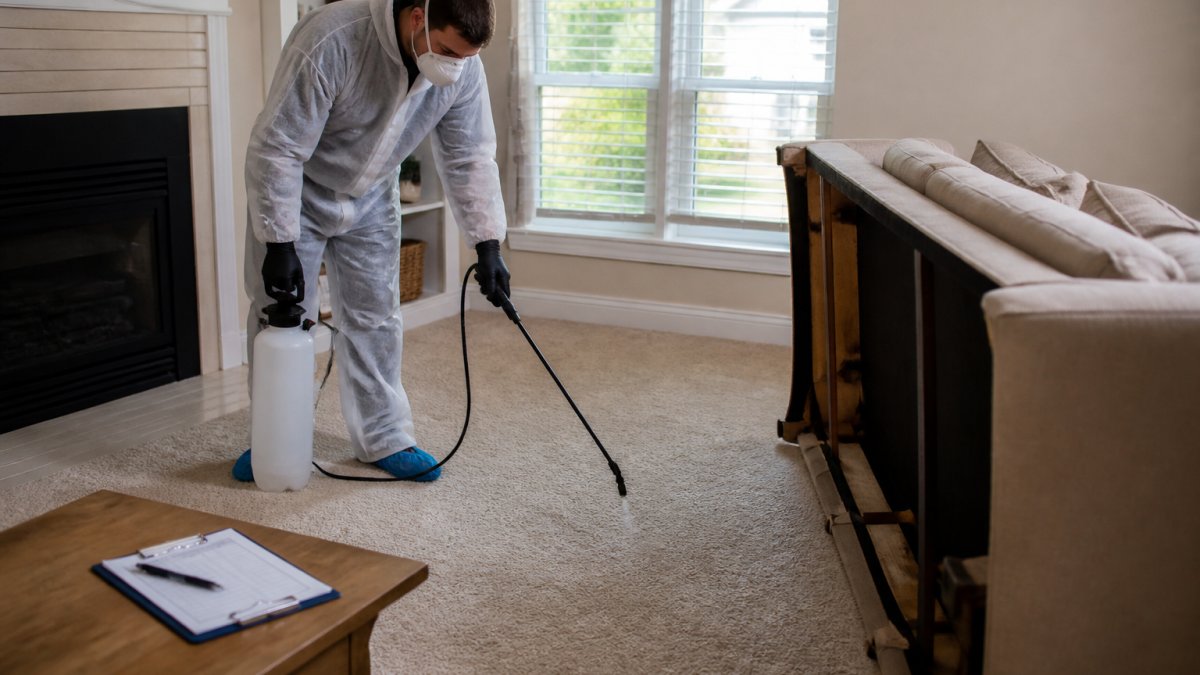
A professional odor removal process follows a consistent sequence: assess, treat, verify, prevent. Skipping verification is how jobs get called back.
Assessment and Inspection
Technicians use moisture meters, UV lights, and sometimes thermal imaging to trace where contamination spread. UV light makes urine deposits glow, which is why it's standard on pet odor calls. This stage answers one question: how far did it go?
Treatment, Verification, and Prevention
Treatment depends on the source: porous materials may need extraction, enzyme-based treatment, or in severe cases removal and replacement. Afterward, a good provider verifies with a follow-up inspection or controlled smell test, then explains how to keep the odor from returning.
Odor Removal Equipment: What Pros Use and What You Can Use at Home
Equipment matters less than matching the tool to the source. A hydroxyl generator on a juice spill is overkill; a spray bottle on urine soaked into subflooring is a waste of time. Here's what each category does, and where it stops working.
Source Removal and Extraction
Before any deodorizing step, contaminated material has to come out or come up. Truck-mounted or portable hot-water extractors flush carpet and upholstery and pull suspended soil and residue into a recovery tank. Extraction works on odors in the fiber and pad, making it the first step on most pet and food-spill calls. It does not reach subflooring, wall cavities, or the underside of a pad, so a smell that survives extraction usually means contamination went deeper than the carpet.
Cleaning and Disinfection
Cleaning removes the residue that feeds the odor; disinfection reduces microorganisms that produce their own smells. These are separate steps with separate products, and using a disinfectant on a dirty surface limits how well it works. On porous materials, over-wetting risks trapped moisture and a musty problem worse than the original. Controlled application and adequate drying matter as much as product choice.
Deodorization: Enzymatic, Bio-Based, and Oxidizing
- Enzymatic and bio-based treatments use biological activity to break down odor compounds. They work best on organic sources such as urine, pet waste, food, and sweat, and need dwell time to do their job. They are not a good fit for smoke residue or chemical odors.
- Oxidizing treatments such as ozone and hydroxyl generators attack odor molecules in the air and on surfaces. Ozone is a respiratory irritant and should only be used in unoccupied spaces with proper ventilation afterward; hydroxyl generators are marketed for occupied spaces but still require correct sizing and run time. Neither removes the source, so if contamination is still present, the smell returns.
- Masking and pairing agents add fragrance or bind to odor molecules temporarily. They change what you smell without changing what is there, which is why they are the least durable option.
Air Treatment: Scrubbers and Filtration
Air scrubbers move room air through HEPA filtration for particles and activated carbon for many odor-causing gases. They reduce airborne residue and speed clearance during and after remediation, but they are a support tool, not a fix. Carbon filters have finite capacity and need replacement; a saturated filter stops helping and can begin releasing what it captured.
Detection Tools
Moisture meters, UV lights, and thermal imaging help a technician trace where contamination traveled. UV light makes many urine deposits fluoresce, moisture meters find wet material that can turn musty, and thermal imaging reveals temperature differences behind finished surfaces. These tools guide the scope of the job; they do not treat anything on their own.
DIY-Friendly Tools and Products
For everyday odors, you don't need a truck full of equipment, just a product that breaks down the odor at its source, plus patience to let it dwell and dry.
This is where we'd point you to our own line. The Z-Spray 16.9oz/500ml is built for exactly this: a bio-based formula that uses microorganisms to break down the root of the smell instead of covering it. For multiple problem areas, the 1 Gallon size covers more ground per bottle.


| Situation | Best Approach | Why |
|---|---|---|
| Fresh pet accident on carpet | DIY spray plus blotting | Surface-level, treatable immediately |
| Set-in urine in padding | Extraction, then enzyme or bio-based treatment | Source is below the surface |
| Smoke residue after a fire | Professional remediation | Residue is in walls, ducts, and porous materials |
| Gym gear and shoes | DIY spray, repeat as needed | Fabric holds sweat odor but responds well |
| Musty smell with no visible cause | Inspection first | Usually points to hidden moisture |
Matching the Method to the Odor
A simple way to choose: if the odor comes from something you can see and reach, clean and treat it at the source. If it comes from something you cannot reach, you need detection, not deodorization. If it comes from the air after the source is gone, air treatment can help clear the space. Most failed DIY attempts skip the first question and jump to the last.
Smoke Smell Removal Cost: What Drives the Price
Smoke smell removal cost varies widely because no two jobs are the same. The main factors: size of the affected area, how long smoke had to settle, what materials absorbed it, and whether ductwork or insulation is involved.
A single room with light smoke exposure is a much smaller job than a whole-house situation after a fire. Providers typically quote after inspection, reflecting labor, equipment, and any materials that need replacing rather than cleaning.
For everyday odors rather than fire damage, the comparison is simpler: a bottle of bio-based spray costs a fraction of a service call and handles most household odor problems on its own.
DIY vs. Professional Odor Removal: A Side-by-Side Comparison
DIY odor removal works for surface-level and fabric odors. Professional odor removal is the right call when the source is structural, when health is a concern, or when the smell has survived your best attempts. The harder question is where that line sits for your situation.
| Factor | DIY | Professional |
|---|---|---|
| Best for | Pet accidents, gym gear, cars, trash | Structural, smoke, mold-related odors |
| Cost | Low, per bottle | Higher, quoted after inspection |
| Speed | Immediate for surface odors | Scheduled, often same week |
| Equipment | Spray, cloths, ventilation | Extractors, generators, scrubbers |
| Verification | Your own nose | Follow-up inspection |
| Health risk | Low with non-toxic products | Higher during treatment, space may need vacating |
A Simple Decision Path
- Find the source. If you can see and reach it, start DIY. If you cannot, stop and get an inspection.
- Treat the source, not the air. Clean, extract, or remove the contaminated material, then apply a treatment that breaks down the odor at its source.
- Let it dry and ventilate. Many odors seem to linger simply because the material is still wet.
- Re-check after 24 hours. This is the step most people skip. A smell that returns within a day means the source is still there.
- Escalate if it survives a second attempt. Two honest tries is a reasonable cutoff before calling a professional.
When DIY Is the Right Call
Fresh accidents, washable fabrics, hard surfaces, trash cans, gym bags, and car interiors are all reasonable DIY targets. The common thread: contamination is on or near the surface and the material can be cleaned or replaced. Use a product safe around kids and pets, follow the label's dwell time, and ventilate while it dries.
When to Call a Professional
- The odor comes back within a day of treatment.
- The source is behind drywall, under flooring, or inside ductwork.
- The smell follows a fire, flood, sewage backup, or long-term moisture problem.
Health and Safety Precautions
Keep children, pets, and anyone with respiratory conditions out of the treated area until surfaces are dry and the space is ventilated. Never mix cleaning chemicals, and never use an ozone generator in an occupied space. If a persistent odor comes with visible mold, water stains, or damp air, treat it as a moisture problem first; deodorizing without fixing the moisture will not hold.
How to Verify the Job Is Done
Whether you did the work or hired it out, verification looks the same: leave the space, ventilate it well, then return after a few hours and check again the next day. A treated room can smell neutral while wet and reveal a remaining source once it dries. A provider offering a follow-up inspection or documented re-check signals a thorough job.
Preventing Recurrence
Prevention is about removing what feeds the odor, not adding fragrance on top.
For most households, the practical answer is both. Keep a bio-based spray on hand for everyday odors, and call a professional when a smell survives a thorough DIY attempt.
Two things matter when choosing a provider: ask what equipment they use and whether they verify results afterward. Those questions separate a thorough operation from a quick spray-and-leave.
Frequently Asked Questions
How much does it cost to professionally remove smoke smells from a house?
Smoke smell removal cost depends on the size of the affected area, how long the smoke has penetrated surfaces, and whether ductwork or insulation needs treatment. Minor jobs like a single room may cost a few hundred dollars, while whole-house smoke remediation after a fire can run into the thousands. Costs rise when porous materials like drywall, carpet padding, or upholstery have absorbed smoke and need replacement rather than cleaning. Always request an itemized quote that separates inspection, labor, and materials.
Does professional odor removal eliminate odors or just mask them?
Proper professional odor removal eliminates odors at the source rather than covering them with fragrance. The process starts with odor source identification, then uses treatment methods that break down or remove the odor-causing residue from surfaces and porous materials. Masking agents only add a pleasant scent on top of the problem, and the original smell returns once the fragrance fades. Ask any provider whether their method neutralizes or masks, and request details on how they verify results after treatment.
When should I hire a professional instead of treating an odor myself?
Hire a professional when the odor keeps returning after you have cleaned and treated the visible source, or when the smell comes from inside walls, floors, or HVAC systems. These situations often mean contamination has reached porous materials that surface cleaning cannot reach. For everyday odors on gear, pet beds, car interiors, and upholstery, a bio-based spray that breaks down odor molecules at the source can handle the job without the cost of a full remediation service.
How long does professional odor removal take?
Most professional odor removal jobs take anywhere from a few hours to several days. A single-room treatment for pet odor might finish in half a day, while smoke or mold remediation across a whole house can take three to five days once you include inspection, treatment, drying time, and verification. Factors that extend the timeline include the size of the affected area, how deeply the odor has penetrated, and whether materials need to be removed and replaced. Get a written timeline in your quote.