

Is Fragrance-Free Cleaner Worth It for Asthma?
Table of Contents
- Why Fragrance-Free Cleaner Is Worth Trying If You Have Asthma
- Cleaning Products That Trigger Asthma: What to Look For
- Unscented vs Fragrance-Free Cleaners: They Are Not the Same
- How to Clean With Asthma: A Step-by-Step Routine
- Fragrance Sensitivity or Another Asthma Trigger? How to Tell
- Do Fragrance-Free Cleaners Actually Work? Effectiveness and Cost
- Conclusion
- Frequently Asked Questions
Last Updated: October 6, 2026
Why Fragrance-Free Cleaner Is Worth Trying If You Have Asthma
If you have asthma, a fragrance-free cleaner is worth trying because the scent added to ordinary household cleaners can irritate already-sensitive airways. The swap is cheap, simple, and one of the few asthma triggers you can remove from your home in a single shopping trip.
Fragrance is one of the most common ingredients in cleaning products, and it is also one of the most common complaints among people with asthma. The American Lung Association's guidance on fragrances and lung health notes that scented products can trigger breathing problems in some people, especially those with existing lung conditions.
Here is the honest version: fragrance-free cleaners will not cure asthma. Nothing will. But they remove one avoidable trigger from your home, and that matters when your lungs are already working harder than they should.
Below, we explain how fragrance triggers symptoms, how to spot hidden scents, and how to clean without setting off a flare-up.
Cleaning Products That Trigger Asthma: What to Look For
The cleaning products most likely to trigger asthma symptoms are those that release fragrance into the air, including spray cleaners, air fresheners, scented laundry detergents, and plug-in devices. The scent is not the only issue; many of these products also contain other volatile chemicals that can irritate the lungs.
When you spray a scented cleaner, tiny droplets and fragrance molecules float through the room. You breathe them in. For most people, that is harmless. For someone with asthma, it can set off coughing, wheezing, or chest tightness within minutes.
Fragrance as a Respiratory Irritant
Fragrance is a respiratory irritant, and in some people it also acts as an allergen. The CDC's National Institute for Occupational Safety and Health information on indoor environmental quality has documented that fragrances are among the indoor air contaminants that can cause breathing reactions in sensitive people.
The tricky part is that "fragrance" on a label can stand for dozens of different chemicals. Manufacturers are not required to list them individually. So you cannot always tell from the label whether a specific scent will bother you.
Hidden Fragrance Sources Beyond the Cleaning Aisle
Fragrance hides in more places than most people expect. If you are trying to reduce exposure, check these too:
- Laundry detergent and dryer sheets
- Fabric softener
- Scented candles and wax melts
- Air fresheners, including plug-ins and sprays
- Personal care products like shampoo, lotion, and deodorant
- Scented trash bags
- Pet shampoos and deodorizers
A common mistake is switching only the kitchen spray and wondering why symptoms persist. The dryer sheets and the plug-in in the hallway may be doing more damage than the counter spray ever did.
Unscented vs Fragrance-Free Cleaners: They Are Not the Same
Unscented and fragrance-free cleaners are not the same thing, and the difference matters if you have asthma. "Unscented" usually means a masking agent was added to cover the smell of the raw ingredients. "Fragrance-free" means no scent was added at all.
That distinction trips up a lot of shoppers. You pick up a bottle labeled "unscented," assume it is safe, and use it. But the masking chemical can still irritate your lungs.
Here is how to tell them apart:
| Label | What It Usually Means | Good for Asthma? |
|---|---|---|
| Fragrance-free | No scent added | Yes |
| Unscented | Scent masked with another chemical | Not always |
| Naturally scented | Essential oils added | Depends on the oil |
| "Fresh scent" | Added fragrance | No |
If you want to be sure, look for the words "fragrance-free" on the front of the label.
How to Clean With Asthma: A Step-by-Step Routine
A cleaning routine built for asthma focuses on reducing what gets into the air, not just what gets wiped off the counter. The goal is fewer airborne irritants, more ventilation, and less physical strain. Most ranking articles stop at "avoid fragrance" and never explain how to actually clean. This routine fills that gap.
Before You Start: Set Up the Room
- Open windows first, and keep them open. Cross-ventilation moves stale air out and fresh air in. If you only have one window, aim a box fan outward to pull air out of the room rather than blowing it around.
- Put on a mask if dust bothers you. A simple N95 or KN95 helps during sweeping and dusting. A basic surgical mask does not seal well enough to filter fine particles.
- Clear the clutter. Fewer objects means fewer surfaces for dust to settle on and less time spent moving things around.
- Have a damp cloth and a bucket of water ready. Dry dusting sends particles into the air. Damp cloths trap them.
The Cleaning Order That Matters
Start high, finish low. Dust shelves and ceiling fans before floors so debris falls to where you will clean last. Work in this sequence:
- Ceiling fans and light fixtures with a damp microfiber cloth or an extendable duster.
- Shelves, frames, and windowsills with a damp cloth, rinsing it often.
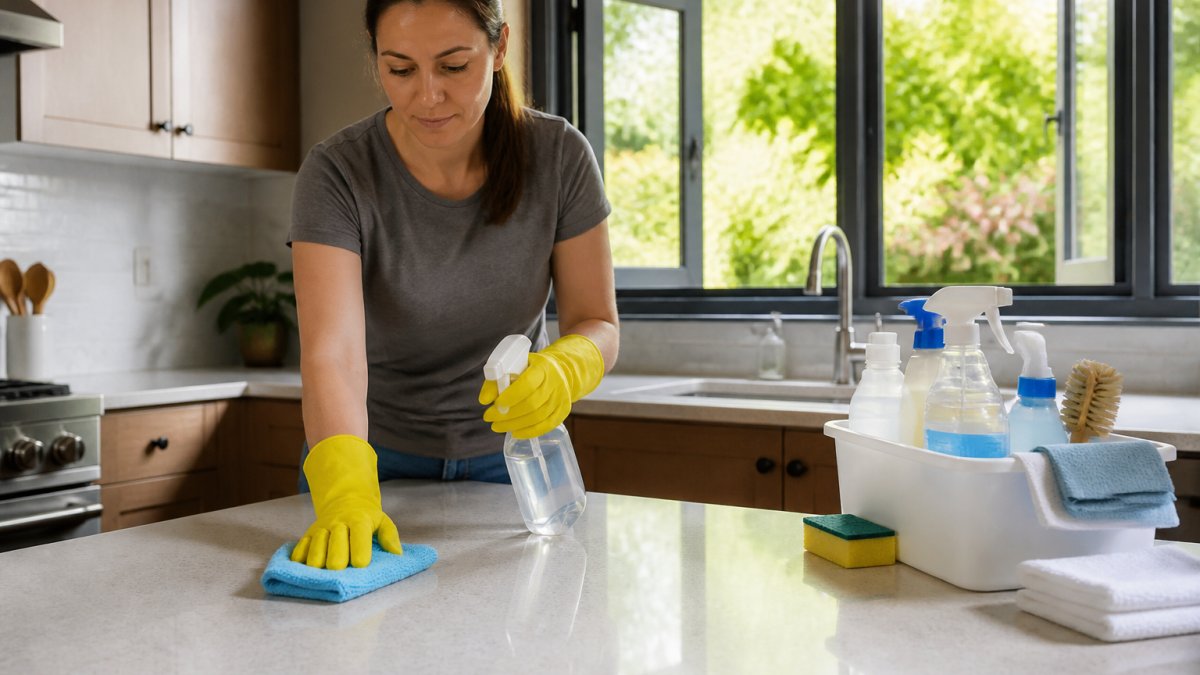
- Counters and tables with a fragrance-free cleaner. Spray the cloth, not the air, to avoid aerosolizing droplets.
- Floors last. Vacuum with a HEPA filter, then damp-mop if needed. HEPA traps fine particles instead of blowing them back out.
Product-Use Practices That Reduce Exposure
- Choose non-spray formats when you can. Pump sprays, gels, creams, and pre-moistened wipes release far fewer airborne droplets than aerosol cans or trigger sprays.
- Use the minimum amount needed. More product does not clean better; it just leaves more residue and more volatile chemicals in the air.
- Never mix cleaning products. Bleach plus ammonia-based cleaners releases toxic gases. Bleach plus vinegar releases chlorine gas. Check labels before you combine anything.
- Ventilate during and after. Keep windows open for at least 15 to 30 minutes after you finish, and run a bathroom or kitchen exhaust fan if you have one.
- Let surfaces dry before you re-enter. If you can smell the product, it is still releasing chemicals into the air.
Take Breaks and Protect Yourself
Cleaning is physical work. Pause if you feel short of breath, and keep your rescue inhaler nearby. Wash your hands and change clothes when you finish to keep dust and residue off your skin and furniture.
Fragrance Sensitivity or Another Asthma Trigger? How to Tell
Telling fragrance sensitivity apart from other asthma triggers comes down to timing, pattern, and location. If symptoms show up right after you spray a cleaner or walk into a scented room, fragrance is a strong suspect. If they show up after exercise, cold air, or pollen season, the trigger is likely something else. If they show up every time you clean regardless of the product, the trigger may be dust, exertion, or the cleaning activity itself.
Patterns That Point to Fragrance
- Symptoms start within minutes of entering a scented space or using a scented product.
- Symptoms improve when you leave the room or switch to a fragrance-free product.
- Symptoms are worse in rooms with air fresheners, plug-ins, or scented candles.
- Symptoms flare when someone else wears perfume or cologne nearby.
- Symptoms are consistent across different brands of scented cleaners.
Patterns That Point Elsewhere
- Symptoms follow exercise, cold air, or seasonal pollen.
- Symptoms are worse in damp rooms or after vacuuming without a HEPA filter.
- Symptoms track with respiratory infections or poor sleep.
- Symptoms appear only during certain months or weather changes.
Keep a Simple Log
For two weeks, note when symptoms start, what you were doing, and what was in the air around you. Patterns usually emerge fast. A basic log can include:
| Date | Time | Activity | Product Used | Symptoms | Severity (1-10) |
|---|---|---|---|---|---|
Many people have more than one trigger. Fragrance may be one piece of a larger puzzle, which is why removing it does not always solve everything on its own. If symptoms persist after you switch to fragrance-free products, the next step is to look at dust, mold, pets, and outdoor allergens.
Do Fragrance-Free Cleaners Actually Work? Effectiveness and Cost
Fragrance-free cleaners work as well as scented ones for most everyday cleaning tasks. The fragrance in a conventional cleaner does not clean anything.
Where fragrance-free products sometimes fall short is odor control. A fragrance-free cleaner will not leave your kitchen smelling like lemon.
Our bio-based formula neutralizes odors at the source instead of masking them, and it contains no added fragrance.
Cost-wise, fragrance-free cleaners generally sit in the same range as their scented counterparts. Some cost slightly more because they use simpler ingredient lists.
Effectiveness and cost trade-offs to keep in mind:
- Fragrance-free products clean just as well for routine tasks
- Odor control requires treating the source, not the air
- Specialty formulas may cost a little more
- Buying concentrates often saves money over time
For families managing asthma, the trade-off usually favors fragrance-free. You are not sacrificing cleaning power.
Conclusion
Asthma makes every breath a negotiation. Removing fragrance from your cleaning routine is one of the few changes that costs almost nothing and can make a real difference in how you feel at home. Start with the products you use most, check the labels, and open a window while you work.
Our formula is non-toxic, fragrance-free, and designed to destroy odors at the source rather than cover them up. With 10,000+ households served, we have helped families breathe easier without harsh chemicals.
SHOP NOW and take the first step toward a home that smells like nothing at all.
Frequently Asked Questions
Does fragrance actually affect asthma?
Fragrance is a common asthma trigger. The mix of chemicals that creates a scent can irritate the lungs and airways, leading to coughing, wheezing, shortness of breath, and other breathing reactions in people with asthma. Because fragrance is not a single ingredient but a blend that can contain dozens of compounds, it is hard to know which specific chemical causes a reaction. For people with fragrance-triggered asthma, switching to a fragrance-free cleaner is one of the simplest ways to reduce exposure at home.
Are unscented cleaners the same as fragrance-free cleaners?
No. This is one of the most common mix-ups in the unscented vs fragrance-free cleaners debate. An unscented cleaner may still contain fragrance ingredients that have been added to mask or neutralize another smell, so the product has no noticeable scent but still releases fragrance chemicals into the air. A fragrance-free cleaner is formulated without those added fragrance ingredients from the start. If you have asthma or fragrance sensitivity, look for the words fragrance-free on the label, not just unscented.
What cleaning products are safe for people with asthma?
Fragrance-free cleaners are the safest starting point, along with plain soap and water for most everyday surfaces. Avoid aerosol sprays, scented powders, air fresheners, and products with strong perfumes or colognes. Ventilate while you clean, use the smallest amount of product needed, and rinse surfaces after disinfecting. If a product's ingredients are not listed, treat that as a warning sign. For stubborn odors that need neutralizing rather than covering up, a bio-based, non-toxic odor eliminator is a better fit than a scented spray.
How can I clean my home without irritating my asthma?
Open windows or run a fan before you start, and clean in short sessions so you are not breathing concentrated fumes for long stretches. Use a fragrance-free cleaner on a damp cloth rather than spraying into the air, since airborne fragrance is what reaches your lungs fastest. Wear gloves, avoid mixing products, and leave the room while surfaces dry if a smell lingers. Keep a rescue inhaler nearby the first few times you try a new product, and stop immediately if you notice any breathing reaction.