

How Long Does Odor Spray Last? A 2026 Guide
Table of Contents
- How Long Does Odor Spray Last? The Real Answer
- Odor Eliminator vs Air Freshener: Why One Lasts and One Fades
- How to Neutralize Odors at the Source
- Surface Material and Absorption: A Longevity Guide
- Humidity, Airflow, and Other Conditions That Cut Longevity Short
- How to Make Odor Spray Last Longer
- Safety, Chemical Composition, and Duration Limits
- Frequently Asked Questions
Last Updated: October 4, 2026
How Long Does Odor Spray Last? The Real Answer
Most odor sprays last from a few minutes to several hours, and the timeline depends far more on chemistry than on how much you spray.
A fragrance-based spray may seem to work for 30 to 60 minutes before the smell returns. A true neutralizer can keep a surface odor-free for hours, sometimes days, because it changes the odor molecules rather than covering them.
Odor Eliminator vs Air Freshener: Why One Lasts and One Fades
An odor eliminator destroys the source of a smell; an air freshener only masks it with a stronger scent. Masking agents overwhelm your nose with fragrance, and when it evaporates the original odor is still there, which is why a bathroom or gym bag smells "fresh" for a few minutes and then reverts. A neutralizer reacts with the volatile organic compounds that create the smell, breaking their chemical bonds so they no longer register as odor.
How to Neutralize Odors at the Source
To neutralize odors at the source, you have to reach the molecules causing the smell, not just the air around them. That means treating the surface where odor-causing compounds have settled.
Follow these steps:
- Identify the true source. A musty smell in a car is often in the seats or carpet, not the air.
- Remove loose debris first. Wipe, vacuum, or shake out the item so the spray can reach the fabric.
- Shake the bottle lightly, then spray a few times directly onto the surface.
- Let the product work. No scrubbing is needed; the formula breaks down the odor on its own.
- Allow the area to dry with some airflow if possible.
Why Molecular Bonding Matters More Than Fragrance Strength
Molecular bonding separates real odor elimination from temporary cover-up. Odor molecules are held together by chemical bonds, and a neutralizer breaks those bonds so the compound can no longer produce a smell.
Fragrance strength is a poor measure of performance: a heavily perfumed spray can smell stronger while doing less, because intensity and elimination are unrelated.
For readers with chemical sensitivities, this distinction is practical, not academic. If you want to understand how airborne particles and indoor air quality interact, the EPA indoor air quality resources explain the broader picture.
Surface Material and Absorption: A Longevity Guide
Fabric and porous surfaces hold odors far longer than hard surfaces, so how long an odor spray lasts depends heavily on what you are treating.
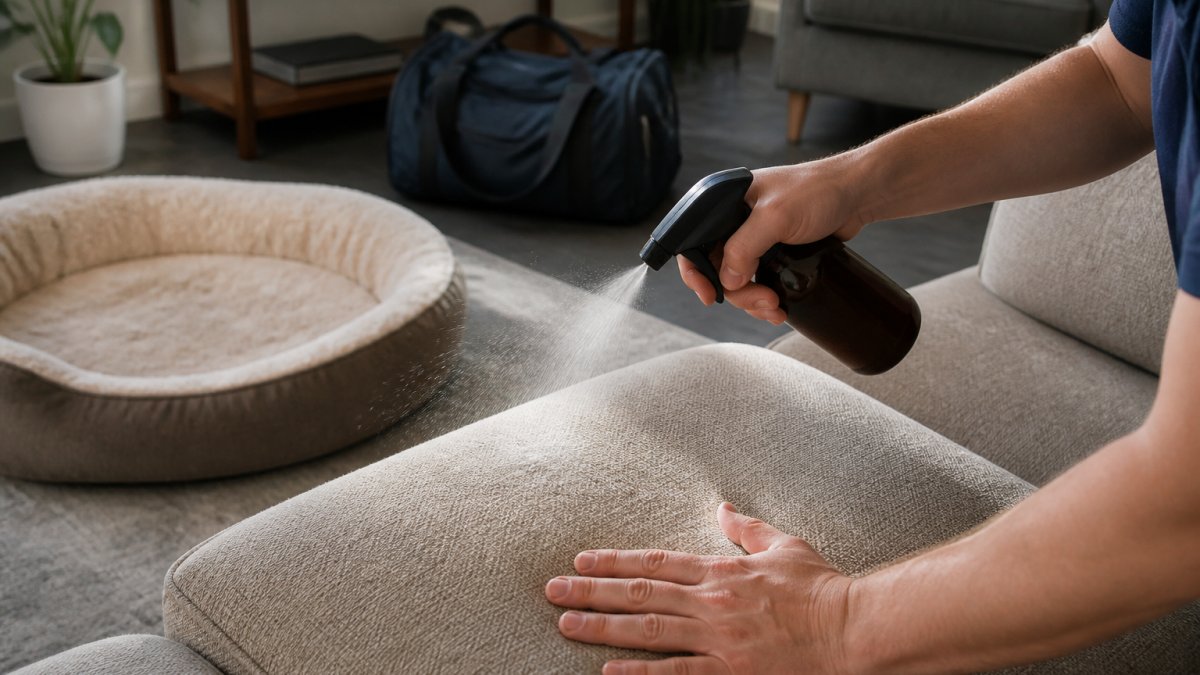
Here is a practical guide by material, with the mechanism that drives each timeline:
| Surface | Absorption | Why it behaves this way | Typical longevity after a full treatment | Reapplication signal |
|---|---|---|---|---|
| Hard surfaces (tile, sealed plastic, glass, metal) | Low | Odor compounds rest on the surface; no interior to penetrate | Many hours to several days | When a wipe-down no longer removes the smell |
| Carpet and rugs | High | Cut pile traps particles at the base of the fiber; backing pad holds moisture | Several hours to about a day | When walking on the area releases odor |
| Upholstery and couches | High | Foam cushion cores absorb sweat and spills; fabric surface dries before the core does | Several hours to about a day | When sitting down pushes odor back into the air |
| Sport gear and pads (helmets, shin guards, gloves) | Very high | Closed-cell foam and nylon liners trap sweat; liners are often non-removable | About a day, longer with full saturation | When gear smells again right after drying |
| Pet beds and blankets | Very high | Dander, saliva, and urine proteins bind to fiber and to the fill | About a day, longer if washed first | When the pet avoids the bed or the smell returns overnight |
| Mattresses and pillows | Very high | Multiple foam and fiber layers; only the top layer is reachable by spray | About a day on the surface; deeper layers need repeat passes | When the smell returns within hours of treatment |
| Grout, unsealed concrete, and raw wood | Very high | Open pores wick liquid odor sources below the surface | Variable; often needs multiple treatments | When the surface still smells after drying |
Saturation matters more than volume. A light mist on a thick foam pad will not reach the odor at the core, so the smell returns quickly.
Matching the spray to the surface
Not every surface tolerates the same treatment:
- Hard, sealed surfaces: a light mist is enough. Wiping first removes the film that odor molecules cling to, and the spray finishes the job.
- Carpet and rugs: spray in overlapping passes, then let airflow do the rest. Do not scrub, which drives the odor deeper into the backing.
- Upholstery: unzip and treat the cushion core if the cover allows it. The cover dries fast; the core is where the smell lives.
How long a bottle actually lasts
Longevity is also about how far the product goes. A 16.9 oz bottle typically covers a couch, a car interior, and a set of sport gear with a few sprays per surface, because a neutralizer only needs to contact the odor source, not saturate the room.
For a compact option that fits in a gym bag or car, our Z-Smell On The Go 3.38oz spray is built for exactly this kind of quick, on-the-spot treatment.

Humidity, Airflow, and Other Conditions That Cut Longevity Short
High humidity and poor airflow both shorten how long an odor spray lasts by slowing evaporation and trapping odor molecules near the surface. In a damp, closed room, treated surfaces stay wet longer and odors linger.
Conditions that reduce longevity:
- High humidity levels, which slow drying and keep odor compounds active
- Low ambient airflow, which traps airborne particles indoors
- Warm, enclosed spaces such as a car in summer
Opening a window or running a fan after treatment helps the surface dry and carries away loosened odor particles. In humid climates, expect to reapply sooner than in dry ones.
How to Make Odor Spray Last Longer
To make odor spray last longer, treat the source thoroughly and reduce the conditions that bring odor back. Most people under-apply on the first pass and then wonder why the smell returns.
Try these habits:
- Treat the whole item, not just the visible surface. Flip cushions and open gear bags.
- Clean before you spray. Dirt and residue block contact with odor molecules.
- Improve airflow during and after drying.
Reapplication Intervals for Persistent Odors
For persistent odors, reapply every one to two days until the smell stops returning, then drop to a weekly maintenance spray. Ongoing sources like a litter box or a daily gym bag need more frequent treatment than a one-time spill.
A simple treatment cycle:
- Day 1: Full treatment of the source.
- Day 2: Check and spot-treat any returning odor.
- Day 3 onward: Treat every one to two days until neutral.
- Maintenance: Once weekly, or after each heavy use.
For a compact option that fits in a gym bag or car, our Z-Smell On The Go 3.38oz spray is built for exactly this kind of quick, on-the-spot treatment.
Safety, Chemical Composition, and Duration Limits
Safety and chemical composition affect how long you can safely keep treating a space. The useful questions are how long a treated room should stay closed, how often you can reapply, and what accumulates when you spray the same small space day after day.
How long before a treated room is safe to occupy
The answer depends on the formula, not the fragrance:
- Alcohol-based sprays: the alcohol carrier evaporates quickly, but the fragrance oils and any propellants linger. A common pattern is to ventilate for 15 to 30 minutes after spraying a small, closed room before spending time in it.
- Water-based neutralizers: these dry without a solvent flash. Ventilation is still good practice, but the room is typically comfortable to re-enter within a few minutes.
- Aerosol propellants: these disperse widely and settle on surfaces. In a car or a small bathroom, treat with the door open and let the space air out before closing it up.
Cumulative exposure in enclosed spaces
A single spray in a large room is a very different exposure than daily spraying in a car, closet, or small bathroom. Synthetic fragrance compounds are designed to be persistent, that is what makes them smell "fresh" for hours, and in a closed space they can build up on upholstery, carpet, and ventilation surfaces over weeks. For people with asthma, fragrance sensitivity, or allergies, that buildup is often the trigger, not the single spray.
- One treatment per surface per day for routine odors. More frequent spraying does not speed neutralization; it just adds product to the surface.
- Ventilate during and after any treatment in a space smaller than a typical bedroom.
- Switch to an unscented formula if you are treating the same enclosed space more than a few times a week.
- Wash removable items rather than relying on spray alone for items used daily, like gym clothes or pet bedding.
What to look for on the label
A bio-based formula uses microorganisms to break down odor at the source rather than relying on synthetic fragrance or alcohol. That means no harsh chemicals, and it is safe around children and pets.
When choosing any spray, check the label for:
- Whether it neutralizes or only masks
- Whether it contains alcohol, aerosol propellants, or synthetic fragrance
- Whether it is safe on the surfaces and fabrics you plan to treat
- Clear usage and ventilation guidance
Zero Smell's spray is unscented, non-toxic, and alcohol-free, and it works on everything from sport pads and helmets to pet beds, car interiors, and couches. A few sprays treat a surface, so one bottle goes a long way.
Frequently Asked Questions
Does odor spray actually remove smells or just mask them?
It depends on the formula. Traditional air fresheners use synthetic fragrance and masking agents that coat your nose's receptors, so the original smell returns once the perfume fades. A true odor eliminator uses a deodorizing agent to break down the volatile organic compounds causing the smell. Zero Smell's bio-based formula is designed to neutralize odors at the source rather than cover them, which is why the results hold up longer on gym gear, pet beds, and car interiors.
How often should you reapply odor eliminator spray?
For everyday odors on hard surfaces, one treatment usually holds until the next cleaning. For persistent odors like sweat in sport pads or pet accidents on fabric, treat once, let it dry fully, then repeat after 24 hours if the smell returns. High-traffic items such as gym bags, helmets, and litter boxes may need a light spritz every two to three days until the odor source is fully broken down.
What factors cause odor spray to dissipate quickly?
Evaporation rate, ambient airflow, and humidity levels all play a role. A spray applied to a non-porous surface in a room with strong airflow will dissipate faster than one worked into fabric. High humidity slows drying but can also trap musty odor molecules, while dry air speeds evaporation. Surface absorption matters too: porous materials like carpet and upholstery hold the formula longer than tile or glass.
Is a non-toxic odor spray as effective as chemical-heavy options?
Bio-based formulas can match conventional sprays when they target the odor at the molecular level instead of relying on fragrance. Zero Smell uses microorganisms and a deodorizing agent to break the chemical bonds that create persistent odors, and the brand reports 99% effectiveness. Because it is unscented, non-toxic, and alcohol-free, it is safe around children and pets, which matters for households treating cribs, pet beds, and car seats.