

7 Steps to Safely Clean Your Home for Allergic Dogs
Quick Summary
Safe cleaning for an allergic dog means choosing fragrance-free, dye-free products, following dilution directions exactly, and rinsing surfaces with water so no residue is left for paws and fur to pick up. Keep your dog out of treated rooms until surfaces are fully dry, and watch for itching or redness afterward.
- Residue left on floors transfers to paw pads, and dogs can swallow it when they groom.
- Fragrance-free is the safer target, since unscented products can still contain masking fragrance.
- Bleach should never be used on surfaces a dog will contact while wet.
- Rinse or wipe surfaces with water wherever the label says to, because that step prevents most residue problems.
- Watch for redness, licking or paw chewing over the next 24 hours after using a new cleaner.
Table of Contents
- Why Cleaning Products Can Trigger Your Dog's Skin Problems
- What Cleaning Products Are Toxic to Dogs?
- Choosing and Verifying Pet-Safe Cleaning Products
- Hypoallergenic Floor Cleaner for Dogs: Room-by-Room Cleaning and Rinsing
- Cleaning Dog Bedding for Allergies Without Irritating Skin
- Pet-Safe Carpet Cleaner for Urine and Other Accidents
- Building a Cleaning Routine for Your Dog's Allergy Triggers
- Frequently Asked Questions
Why Cleaning Products Can Trigger Your Dog's Skin Problems
Many dogs with allergies react to the cleaning products used around the home, and the reaction often shows up as itching, redness or irritated paws. Safe cleaning starts with understanding why the reaction happens in the first place.
Dogs spend much of their time on floors, rugs and bedding, and they pick up whatever those surfaces carry. A cleaner that leaves residue on a floor can transfer to paw pads and skin each time the dog walks across it. Dogs also groom their paws, which means residue can be swallowed as well as touched.
A common mistake is assuming that a product labeled "natural" is automatically safe for a sensitive dog. Some dogs react to a single ingredient, and a cleaner can be gentle for people yet still irritate an allergic animal.
Allergy, Irritation, or Cleaner Exposure: How to Tell the Difference
These three problems can look alike, but they have different causes. An allergy is an immune response that usually shows up over time, often in the same spots, such as the paws, belly, ears or face. Irritation from a cleaner tends to appear quickly after contact with a specific surface. Cleaner exposure can cause redness, drooling, vomiting or lethargy, and those signs need a veterinarian's attention right away.
Look at timing and location. If skin changes appear within hours of mopping or spraying a particular room, the cleaner is the likely suspect. If the itching continues across seasons and in many environments, an allergy is more likely.
What Cleaning Products Are Toxic to Dogs?
Some cleaning products are dangerous for dogs even when used as directed, and others are only a problem when a dog licks a wet surface or ingests a large amount.
Exposure usually happens through four routes: paw contact and later grooming, lying on a damp surface, chewing or mouthing a sprayed toy or bedding, and inhaling fumes in a small, poorly ventilated room. A dog that walks across a just-mopped floor and then licks its paws has effectively ingested the cleaner.
Here is how the most common ingredients break down:
- Bleach (sodium hypochlorite): Causes chemical burns on paw pads and in the mouth, and fumes irritate the airways. Never use it on surfaces a dog will contact while wet.
- Quaternary ammonium compounds (quats): Common in disinfecting wipes and floor cleaners. They leave a residue that transfers to paws and can cause drooling, vomiting, and mouth irritation. Many labels instruct users to rinse or wipe with water after use; that step is not optional around dogs.
- Phenols and pine oil: Found in some pine-scented cleaners. Dogs metabolize these poorly, and exposure can cause wobbliness, drooling, and lethargy.
- Citrus oils and d-limonene: Often marketed as natural degreasers. Concentrated citrus oils can irritate skin and cause drooling or vomiting if licked.
- Essential oils (tea tree, eucalyptus, peppermint, wintergreen): Highly concentrated and risky for dogs, especially small ones. Diffusers and sprays put oils into the air and onto surfaces where they settle.
- Drain cleaners and oven cleaners: Caustic and corrosive. Keep dogs out of the room entirely during use and until the area is rinsed and dry.
- Hydrogen peroxide: A useful stain remover at 3% dilution, but it should never be used as an oral emetic without veterinary direction, and it can bleach and irritate skin with repeated contact.
- Vinegar and baking soda: Generally low-risk household staples, but vinegar is acidic and can irritate broken skin or paws with repeated exposure, and baking soda left as a damp paste can dry and crack skin. Neither is automatically safe just because it is natural.
Watch out: "Natural" and "plant-based" are marketing terms, not safety certifications. A product can be plant-derived and still contain concentrated essential oils or surfactants that irritate an allergic dog.
Store all cleaners on high shelves or in locked cabinets, and keep the dog out of treated rooms until surfaces are fully dry and, where the label calls for it, rinsed. Keeping cleaners away from your dog also helps limit residue on paws and fur that can transfer to bedding, so Bambusasheets can be part of a broader effort to reduce dander where your dog sleeps.
Choosing and Verifying Pet-Safe Cleaning Products
Choosing a product for an allergic dog starts with reading the ingredient list, but the harder skill is knowing which label claims mean something and which are marketing. "Pet-safe" is not a standardized, independently verified claim, so a product can carry it without meeting any specific test.
Use this label-reading checklist when comparing products:
- Full ingredient disclosure: The label names ingredients rather than hiding them under "fragrance," "proprietary blend," or "inert ingredients." A short, named list is easier to evaluate.
- Fragrance-free vs. unscented: These are not the same. "Unscented" can mean a masking fragrance was added to cover a smell; "fragrance-free" means no fragrance was added. For an allergic dog, fragrance-free is the safer target.
- Dyes: Look for "no dyes" or a named colorant. Dyes are a common irritant and add nothing to cleaning performance.
- Dilution directions: A concentrate that is not diluted correctly leaves more residue. Follow the label ratio exactly rather than eyeballing it.
- Rinsing instructions: If the label says to rinse or wipe with water, do it. That step is where most residue problems are prevented.
- Residue and drying: Note whether the product is meant to air dry or be wiped dry. A surface that stays tacky is a surface a dog will pick up on its paws.
- Third-party certifications: Look for recognized certifications where they exist, and read what the certification actually covers rather than assuming it means pet-safe.
Zero Smell's Z-Spray is an example of the kind of product worth checking against that list. You can read the full Z-Spray 16.9oz/500ml product details before deciding whether it fits your dog's needs.
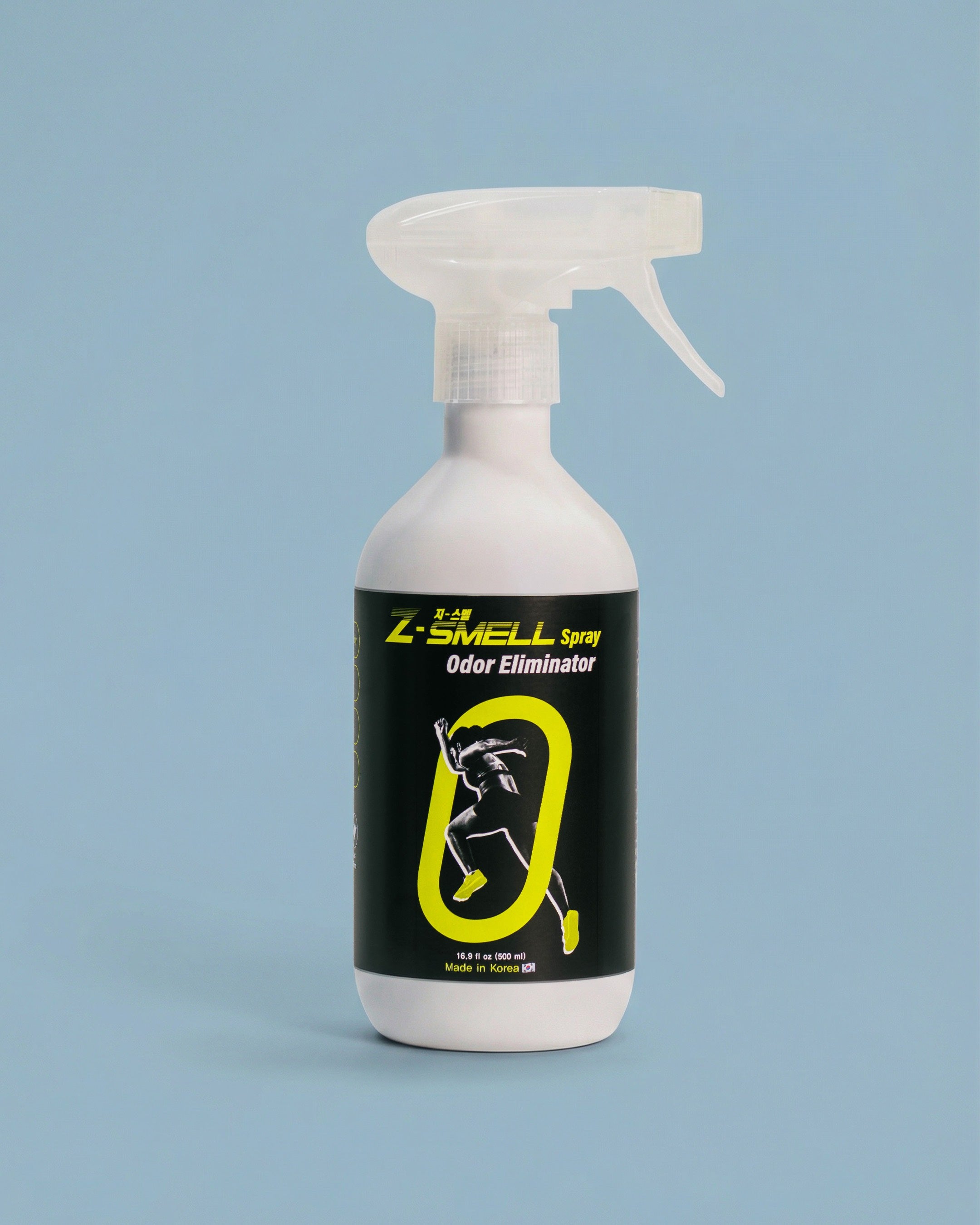
Watch out: A product that is gentle for people can still irritate an allergic dog, and a product that is safe when dry can be a problem when wet.
For a closer look at reading ingredient lists, see our guide to identifying toxic ingredients in cleaners.
The checklist below sums up the label features the article recommends checking before buying a cleaner for an allergic dog.
| Label feature | What to look for | Why it matters |
|---|---|---|
| Ingredient disclosure | Named ingredients, not "fragrance" or "proprietary blend" | Easier to evaluate |
| Fragrance-free vs. unscented | Fragrance-free | Unscented can mask added fragrance |
| Dyes | "No dyes" or a named colorant | Dyes are a common irritant |
| Dilution directions | Follow the label ratio exactly | Incorrect dilution leaves more residue |
| Rinsing instructions | Rinse or wipe with water if stated | Prevents most residue problems |
| Residue and drying | Surface should not stay tacky | Dogs pick up residue on their paws |
| Third-party certifications | Check what the certification covers | Not all certifications mean pet-safe |
Hypoallergenic Floor Cleaner for Dogs: Room-by-Room Cleaning and Rinsing
Floors are where many dogs have the most contact with cleaners, so a careful rinsing routine matters. Work room by room rather than cleaning the whole house at once. This lets you keep your dog in a single area while you work and avoid walking wet floors with paws.
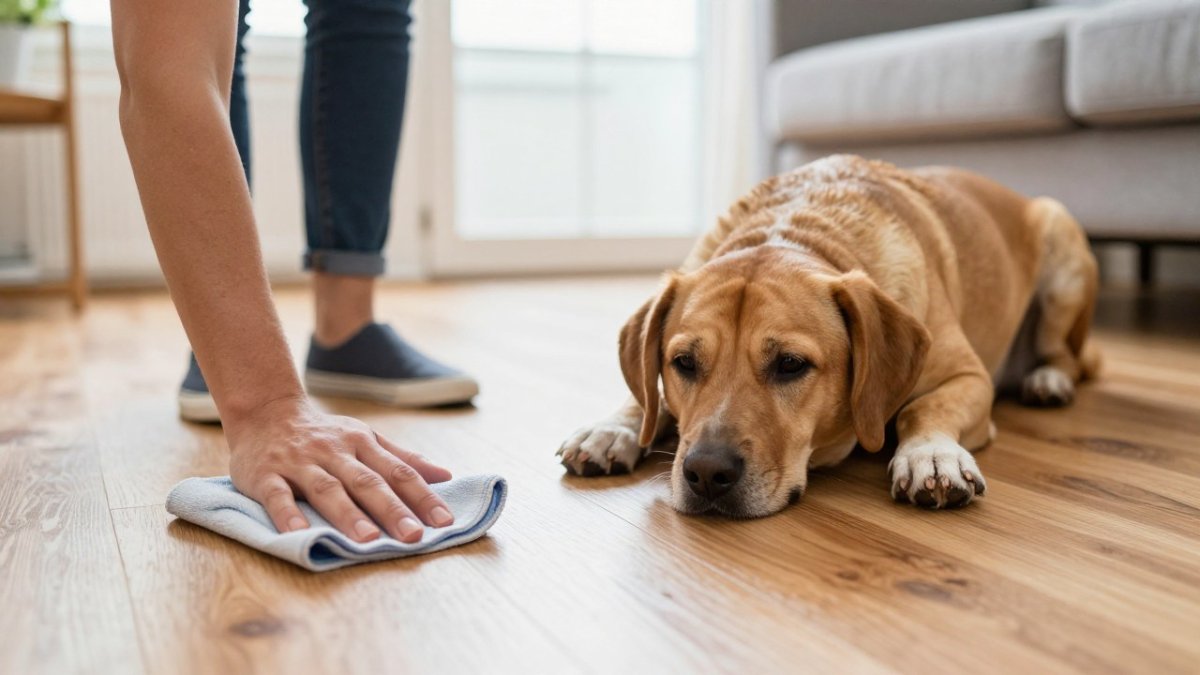
Dilute the cleaner as directed, apply it with a damp microfiber cloth, and wipe the surface. Then rinse the same area with clean water and wipe it dry. Residue left behind is the main reason dogs react to floor cleaners, so the rinse step is not optional.
Allow surfaces to dry fully before your dog returns. Good ventilation helps the drying process. Keep doors and windows open where weather allows.
Cleaning Dog Bedding for Allergies Without Irritating Skin
Dog beds collect dander, saliva and oils, and they can hold cleaner residue long after washing. Wash bedding in fragrance-free detergent and run an extra rinse cycle. Avoid fabric softeners, which leave a coating that can irritate sensitive skin.
For odors that persist after washing, a spray can help. Zero Smell's Z-Spray lists pet beds and blankets among its uses, and its listing describes it as unscented and free of harsh chemicals. Lightly mist the bed and let it air dry completely before your dog lies down again. Our step-by-step guide to neutralizing dog bed odors goes further on the cleaning method.
Pet-Safe Carpet Cleaner for Urine and Other Accidents
Carpets trap urine deep in the fibers, and the smell can draw a dog back to the same spot. Blot fresh accidents first, then apply an enzyme or microorganism-based cleaner rather than a product that only masks the smell. Let the product sit for the time the label recommends, then blot again and allow the carpet to dry fully.
Zero Smell's Z-Pouch works differently from a spray. It is a pouch of bentonite and zeolite minerals with active microorganisms that you place near the problem area, and its label says the longer it stays in place, the better the deodorizing effect. Many owners pair a spray for the spot with a pouch for the surrounding area. For the full method, see how to neutralize pet urine smell in carpet.
Avoid steam cleaning over urine stains, since heat can set the odor. Test any carpet product on an inconspicuous patch first.
Building a Cleaning Routine for Your Dog's Allergy Triggers
A routine keeps allergens and residue from building up. Vacuum with a HEPA filter two or three times a week, wash bedding weekly, and clean high-contact surfaces such as food bowls and doorways every few days. Keep a log of which products you use and when, so you can match any flare-up to a specific cleaner.
Odors often return after cleaning because the source was never fully removed. If a smell comes back within days, check for urine in the padding under the carpet or for moisture trapped in bedding. Understanding why pet odors come back helps you fix the source rather than repeating the same cleaning step.
If your dog's symptoms do not improve after you change products, speak with your veterinarian. Persistent itching can have causes that no cleaner can solve.
Frequently Asked Questions
What cleaning products are safe for dogs with allergies?
Look for products with short, readable ingredient lists and clear labels that say unscented, fragrance-free, and dye-free. Products marketed as non-toxic and free of alcohol are generally a better starting point for allergic dogs, but no label guarantees safety for every dog. Zero Smell's Z-Spray is unscented, alcohol-free, and made with purified water, EDTA tetrasodium salt, and 1,2-Benzisothiazol-3(2H)-one, and it is sold in 16.9oz/500ml ($19.98) and 33.8oz/1000ml ($34.98) sizes. Test any new product on a small area first and keep your dog away until surfaces are dry and rinsed.
Are homemade cleaning solutions safe for dogs with allergies?
Some homemade solutions are gentler than commercial sprays, but they are not automatically safe. Diluted distilled white vinegar and baking soda are common choices, yet undiluted vinegar can irritate skin and paws, and essential oils such as tea tree and citrus can be harmful to dogs. Hydrogen peroxide also needs careful dilution and thorough rinsing. Whatever you use, rinse surfaces with plain water and let them dry fully before your dog returns.
Can scented cleaning products trigger allergies in dogs?
Yes. Fragrances and dyes are common irritants, and a dog reacting to a cleaner may show itching, redness, paw licking, or ear irritation after contact. Because allergy and irritation look similar, note when symptoms appear and which products were used nearby. Switching to fragrance-free, dye-free products and rinsing thoroughly often reduces exposure, but a veterinarian should evaluate persistent itching.
How long should a dog stay away from a freshly cleaned floor?
Keep your dog off floors until they are completely dry and have been rinsed with plain water if the cleaner calls for it. Drying time depends on humidity, ventilation, and how much product was used, so ventilate the room with open windows or a fan. As a practical rule, avoid letting your dog walk on the floor until it no longer feels damp or tacky to the touch.